Union Budget 2026 Gives Major Push to Seaplane Sector with Manufacturing Incentives and VGF Scheme
In a significant move aimed at transforming regional connectivity and boosting tourism, the Union Budget presented on Sunday has announced a comprehensive package to revitalize the seaplane industry in India. Finance Minister Nirmala Sitharaman emphasized the government's commitment to enhancing last-mile and remote connectivity while promoting tourism through strategic incentives.
Key Budget Announcements for Seaplane Development
During her budget speech, Finance Minister Nirmala Sitharaman outlined two crucial initiatives for the seaplane sector:
- Incentives for Indigenous Manufacturing: The government proposes to provide specific incentives to encourage and support the domestic manufacturing of seaplanes within India.
- Viability Gap Funding Scheme: A dedicated viability gap funding (VGF) scheme will be introduced to provide operational support for seaplane services, making them financially feasible for operators.
The Finance Minister stated: "To enhance last-mile and remote connectivity, and promote tourism, I propose to give incentives to indigenise manufacturing of seaplanes. A seaplane viability gap funding scheme will be also be introduced to provide support for operations."

SkyHop Aviation Poised to Lead Seaplane Revival
Industry sources indicate that SkyHop Aviation could be among the first operators to restart seaplane services in the country following the budget announcements. The company is hopeful of obtaining its operational license from the Directorate General of Civil Aviation (DGCA) this month.
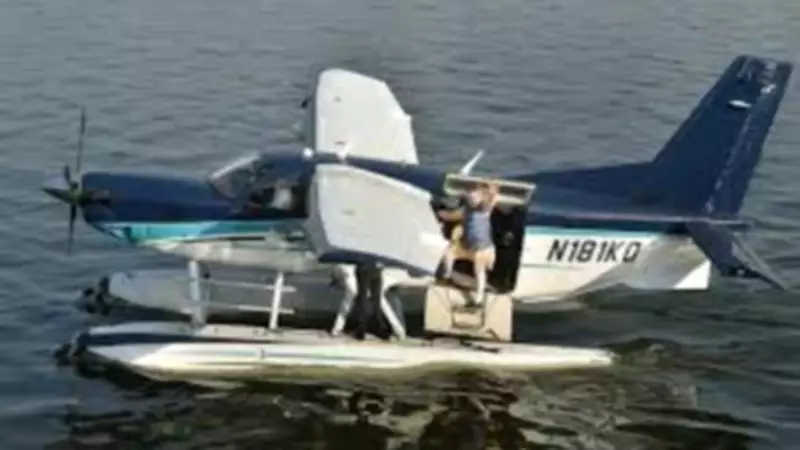
SkyHop Aviation plans to utilize three of the four De Havilland Canada DHC-6 Twin Otter aircraft previously operated by the erstwhile Fly Big airline. De Havilland is currently equipping these amphibious aircraft with floaters, enabling them to take off and land on water surfaces.
Industry Response and Strategic Importance
Avani Singh, CEO of SkyHop Aviation, welcomed the budget announcements, highlighting their significance for India's unique geographical landscape. "The seaplane push announced in Budget 2026 is a welcome and much-needed step," she said. "For a country like India, with a long coastline, numerous islands and extensive inland waterways, seaplanes can fundamentally change how remote and hard-to-reach regions are connected. This initiative can open up entirely new parts of our country to tourism."
Singh particularly emphasized the importance of the viability gap funding support: "The viability gap funding support is especially important as it makes these operations financially feasible and gives confidence to operators to invest and scale up. Over time, this can significantly boost regional connectivity, tourism and local economies, and provide a real boost to the aviation sector."
Notably, Avani Singh is the daughter of SpiceJet promoter Ajay Singh. The low-cost carrier had previously attempted to launch seaplane services in Gujarat several years ago but was unable to sustain the operations. The tourism industry now hopes that with the Union Budget's renewed focus on seaplanes, India might finally establish a viable and sustainable seaplane network.
Historical Context and Future Prospects
Seaplane services in India have historically experienced a challenging journey, starting with fits and starts but never achieving significant scale or sustainability. The current budget initiatives represent the most substantial governmental push to date for this niche aviation segment.
Industry experts believe that successful implementation of these measures could address critical connectivity gaps in India's coastal regions, island territories, and areas with substantial water bodies. The combination of manufacturing incentives and operational funding support creates a more holistic ecosystem for seaplane development than previous attempts.

As the details of the viability gap funding scheme and manufacturing incentives are finalized in the coming months, stakeholders across aviation, tourism, and regional development sectors will be closely monitoring implementation progress. The success of this initiative could potentially transform accessibility to India's numerous remote coastal communities and island destinations while creating new tourism circuits.