Seven New High-Speed Rail Corridors to Revolutionize Indian Train Travel with Massive Rs 16 Lakh Crore Investment
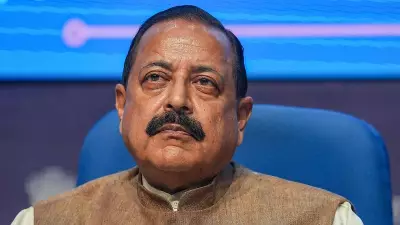
In a landmark announcement that promises to reshape the future of transportation in India, Railway Minister Ashwini Vaishnaw has revealed plans for seven new high-speed rail corridors as part of Union Budget 2026. The ambitious projects, with an estimated investment of approximately Rs 16 lakh crore, are set to dramatically reduce travel times and boost economic connectivity across the nation.
Budget 2026's Transformative Rail Vision
Addressing a press conference at Rail Bhawan on Sunday, February 1, Railway Minister Ashwini Vaishnaw detailed how these seven corridors will form the backbone of India's modern transportation infrastructure. The corridors span nearly 4,000 kilometers and represent one of the most significant infrastructure investments in recent history.
"These seven new corridors will fully transform the country's transportation sector," Vaishnaw emphasized during the conference. He added that developing all corridors simultaneously is crucial for achieving the 2047 vision of 'Viksit Bharat' (Developed India).

The Seven Corridors: Connecting India's Major Hubs
The identified high-speed rail corridors include:
- Mumbai-Pune
- Pune-Hyderabad
- Hyderabad-Bangalore
- Hyderabad-Chennai
- Chennai-Bangalore
- Delhi-Varanasi
- Varanasi-Siliguri
Vaishnaw highlighted that these routes have been strategically selected to maximize connectivity between India's major economic and cultural centers.
South High-Speed Diamond: A Game-Changer for Southern India
One of the most significant developments is the creation of what the Railway Minister termed a 'South High-Speed Diamond' connecting Chennai, Bengaluru, and Hyderabad. This triangular network will benefit five southern states—Karnataka, Telangana, Andhra Pradesh, Tamil Nadu, and Kerala—as well as the Union Territory of Puducherry.
The travel time reductions are substantial:
- Chennai to Bengaluru: Reduced to just 1 hour and 13 minutes
- Bengaluru to Hyderabad: Approximately 2 hours
- Chennai to Hyderabad: About 2 hours and 55 minutes
Western Corridor: Enhancing Mumbai-Hyderabad Connectivity
The Mumbai-Pune-Hyderabad corridor promises to revolutionize travel in western India. According to Vaishnaw, the journey between Mumbai and Pune will be slashed to just 48 minutes, while Pune to Hyderabad will take around 1 hour and 55 minutes.
The under-construction Ahmedabad-Mumbai high-speed rail corridor will extend connectivity to Pune and Hyderabad, with further links to Bengaluru and Chennai, creating an integrated high-speed network across western and southern India.
Northern Economic Corridor: Delhi to Siliguri
The Delhi-Varanasi-Siliguri corridor will create what Vaishnaw described as "a new economic corridor" stretching from Delhi through Uttar Pradesh and Bihar to West Bengal. Travel times will see dramatic improvements:
- Delhi to Varanasi: Reduced to 3 hours and 50 minutes
- Varanasi to Siliguri (via Patna): Approximately 2 hours and 55 minutes
"This belt will emerge as a new economic corridor. Healthcare, education and all types of economic activities will multiply, bringing significant benefits to the region," the minister stated.
Comprehensive Travel Time Reductions
The high-speed rail corridors will bring unprecedented efficiency to inter-city travel across India:
- Mumbai-Pune: 48 minutes
- Pune-Hyderabad: 1 hour 55 minutes
- Hyderabad-Bangalore: 2 hours
- Hyderabad-Chennai: 2 hours 55 minutes
- Chennai-Bangalore: 1 hour 13 minutes
- Delhi-Varanasi: 3 hours 50 minutes
- Varanasi-Siliguri: 2 hours 55 minutes
These time savings represent reductions of 50-70% compared to current train travel durations.
Economic Impact and National Development
The Rs 16 lakh crore investment in high-speed rail infrastructure is expected to generate substantial economic benefits beyond just transportation. The projects will create thousands of jobs during construction and operation, stimulate regional development, and position India as a leader in modern rail technology.

Vaishnaw emphasized that the expanded network would prove to be a major boon for people living in the region as well as across the country, facilitating business travel, tourism, and cultural exchange while reducing the carbon footprint compared to air travel.
With these seven corridors, India takes a giant leap toward realizing its vision of becoming a developed nation by 2047, with modern infrastructure that connects its people and powers its economy forward.