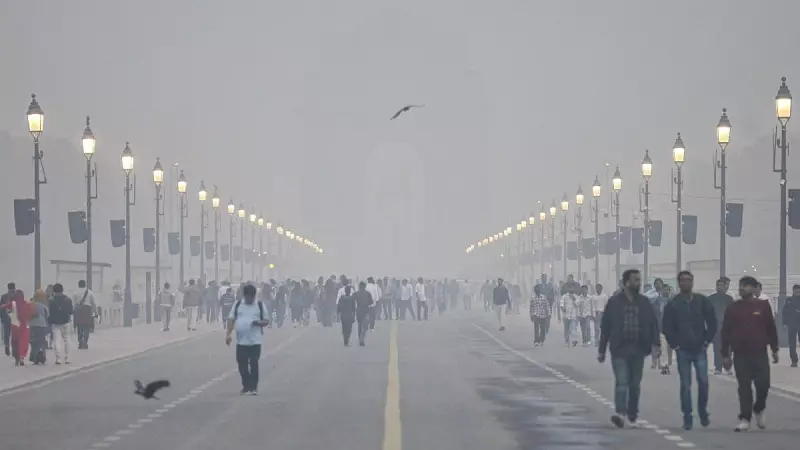
The Supreme Court of India has emphasized that the severe air pollution engulfing Delhi is a recurring annual event, demanding sustained and long-term strategic planning to address the root causes. The court's observations came while it deliberated on measures taken to protect public health during the current spike in toxic air levels.
Court Upholds Decision on School Closures
During the proceedings, the apex court specifically addressed the Delhi government's recent move to shut down schools for its youngest learners. The bench declined to interfere with the administration's decision to close educational institutions for students from nursery to Class 5.
The court reasoned that no further adjustments were necessary as the closure directive is limited to only a few days. Furthermore, the justices noted that winter vacations for schools are scheduled to begin from next week onwards, which would naturally extend the period children remain at home and away from the hazardous outdoor air.

A Recurring Problem Demanding Permanent Solutions
In its remarks, the Supreme Court underscored a critical point: the pollution emergency in the national capital is not a one-off incident but a predictable, yearly affair. This pattern highlights the failure of stop-gap measures and underscores an urgent need for a comprehensive, long-term action plan that goes beyond temporary fixes implemented during peak crisis periods.
The court's stance signals a growing judicial impatience with the cyclical nature of the pollution debate, where emergency steps are announced every winter without lasting improvements in air quality. The focus, as highlighted, must shift to systemic changes and rigorous execution of policies aimed at reducing pollution sources throughout the year.
Immediate Relief and Future Imperatives
The immediate consequence of the court's position is the validation of the short-term public health measure to protect young children, who are among the most vulnerable to respiratory illnesses caused by poor air quality. By allowing the school closures to stand, the court has prioritized children's health for the immediate few days.
However, the larger takeaway from the hearing is the clear directive for authorities. The judiciary has pointed out that reactive measures are insufficient. The real solution lies in developing and implementing a robust, long-term strategy that can prevent the capital from descending into a toxic haze every winter, ensuring the health and well-being of its residents is safeguarded permanently.