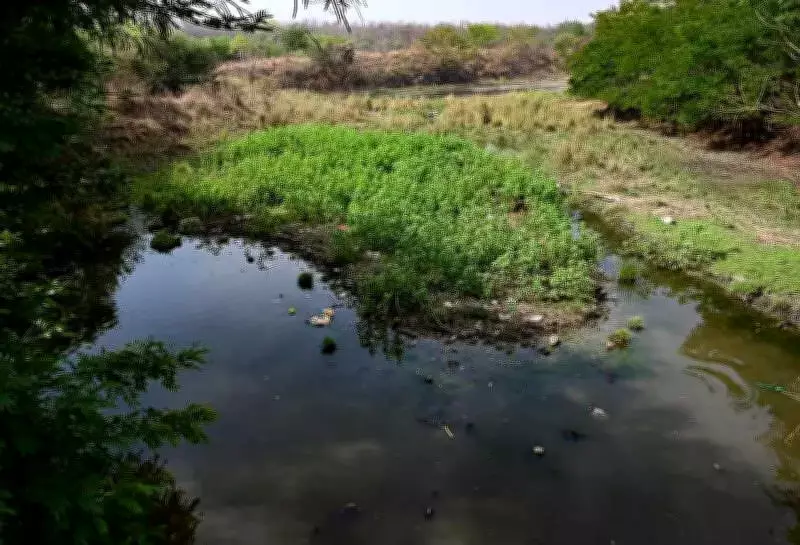
Nagpur's Water Management Crisis Exposes Deep Governance Failures
The water management crisis in Nagpur has been starkly exposed, raising serious concerns about public health and municipal governance. Official records reveal erratic extraction patterns and continued reliance on a contaminated water source without clear safeguards or strategic planning.
Erratic Extraction Patterns Reveal Planning Deficiencies
In 2025, the Nagpur Municipal Corporation's water works department extracted over 9,300 million litres from Gorewada Lake, despite laboratory tests confirming bacteriological contamination. Documents obtained through Right to Information requests show these withdrawals were neither systematic nor aligned with seasonal demand, highlighting fundamental planning failures within the civic administration.
The extraction pattern was sharply inconsistent throughout the year. The highest withdrawals occurred immediately after the monsoon season, with September alone accounting for 2,716.07 million litres. In July, 2,116.63 million litres were pumped from Gorewada Lake, followed by 816.08 million litres in August. This concentration during a period when reservoirs are typically replenished points to the absence of a stable sourcing framework and proper water management strategy.

Contradictory Seasonal Usage Patterns
In stark contrast, drawals dropped to negligible levels in March at just 2.27 million litres and remained low in October at 58.01 million litres. These periods represent times when water planning should anticipate demand fluctuations, yet the department failed to maintain consistent extraction patterns. Even during peak summer stress, when alternative sources should have been prioritized, the department turned to the contaminated lake, extracting 402.43 million litres in April and 651.44 million litres in June.
The fluctuating reliance on Gorewada Lake reflects an ad hoc approach rather than calibrated resource management. This inconsistency suggests the department lacks both a comprehensive water sourcing strategy and proper monitoring mechanisms to ensure sustainable water supply throughout the year.
Alarming Water Quality Concerns
More concerning than the erratic extraction patterns is the quality of water being accessed from Gorewada Lake. A November 2025 report from the civic body's Central Water Testing Laboratory recorded total coliform levels at 350 MPN per 100 ml and E. coli at 22 MPN per 100 ml. These are clear indicators of sewage or organic contamination that render raw water unsafe without rigorous treatment.
While other parameters such as pH (8.32), turbidity (2.74 NTU), and dissolved oxygen (7 mg/L) remained within acceptable limits, the bacteriological findings present significant public health risks. The presence of E. coli specifically indicates fecal contamination, meaning the water has likely come into contact with untreated sewage or waste.
Systemic Weaknesses and Governance Failures
The scale of withdrawals raises serious questions about whether treatment systems are equipped to handle such loads consistently, or whether water quality standards are being compromised under operational pressure. There is no publicly available clarity on the protocols governing extraction from a compromised source, nor on the safeguards ensuring that contaminated water is adequately treated before distribution to Nagpur's residents.
These findings point to systemic weaknesses within the NMC's water works department. Despite access to established supply systems, the civic body appears to be relying on a vulnerable reservoir without transparent decision-making or accountability mechanisms. The absence of clear protocols for dealing with contaminated water sources represents a significant governance failure that puts public health at risk.
Long-Term Implications for Nagpur's Water Security
As Nagpur's population grows and water demand intensifies, the need for resilient infrastructure and forward planning becomes increasingly urgent. Instead, the continued dependence on Gorewada Lake—despite documented contamination—signals a reliance on short-term fixes at the cost of long-term sustainability and public health.

The data presents an unambiguous picture: Nagpur's water management is not merely under strain; it is being handled in a manner that raises serious concerns about both safety and governance. The erratic extraction patterns combined with contamination issues create a perfect storm of water management failures that require immediate attention and comprehensive reform.
Understanding the Health Implications
Total Coliform (350 MPN/100 ml): Coliform bacteria are commonly found in the environment, including soil and vegetation, but their presence in water is a warning sign of contamination. High levels indicate that the water may have been exposed to sewage, decaying organic matter, or surface runoff.
E. coli (22 MPN/100 ml): Escherichia coli (E. coli) is a specific type of coliform bacteria found in the intestines of humans and animals. Its presence in water is a direct indicator of fecal contamination, meaning the water has likely come into contact with untreated sewage or waste.
Why These Findings Matter: Detection of both coliform and E. coli suggests the water is unsafe in raw form and can carry pathogens that cause diseases like diarrhea, cholera, and typhoid if not properly treated. Such readings clearly indicate sewage or organic pollution, making strict treatment and monitoring essential before any public water supply distribution.