Haryana Government Grants Approval for Revised Gurgaon Waste Management Project
The Haryana government has finally granted revised administrative approval for a comprehensive door-to-door municipal solid waste collection and transportation project in Gurgaon, valued at ₹315.2 crore. This decision comes after months of frustrating delays, multiple tender revisions, and growing public discontent over garbage accumulation throughout the city.
Revised Project Structure and Cost Details
Under the newly approved plan, Gurgaon will be divided into two operational clusters instead of the originally proposed four zones. This structural change represents a significant shift from the Municipal Corporation of Gurgaon's initial approach. Two specialized agencies will now be responsible for waste collection and transportation services across the entire city.
The estimated contract cost has been revised downward from ₹327 crore to ₹315.23 crore for a five-year operational period. Importantly, the agreement includes provisions for a potential four-year extension, contingent upon satisfactory performance and necessary approvals from relevant authorities.

Cluster 1, encompassing zones 1 and 2, has been allocated ₹144.6 crore, while Cluster 2, covering zones 3 and 4, will receive ₹170.6 crore. Haryana Chief Minister Nayab Singh Saini has emphasized the urgency of implementation, directing that tenders be issued promptly with a strict deadline of February 1.
Service Provisions and Compliance Requirements
A crucial aspect of the approved project is that selected agencies will provide waste collection services to households, institutions, and resident welfare associations completely free of charge. This eliminates financial burdens on residents while ensuring comprehensive waste management coverage.
The project incorporates several advanced compliance requirements designed to enhance efficiency and accountability. These include:
- Mandatory waste segregation at source by residents
- GPS and RFID-enabled vehicles for real-time tracking
- QR-code-based monitoring systems
- Daily disinfection of all equipment and vehicles
- Separate handling protocols for biomedical, hazardous, and electronic waste
Additionally, agencies must submit detailed waste data reports every month, providing transparency about collection volumes and processing efficiency.
Addressing Longstanding Civic Issues
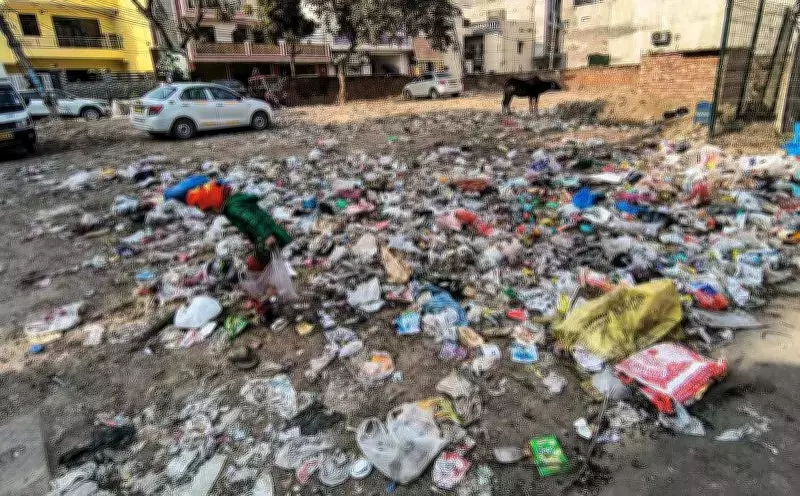
MCG Commissioner Pradeep Dahiya confirmed that the urban local bodies department has granted the necessary administrative approval, enabling the two-agency model to proceed. This approval follows months of persistent complaints about irregular waste collection, garbage pile-ups at vulnerable points, and general public frustration with the city's waste management system.
The current waste management crisis traces back to June 2024 when MCG terminated its contract with Ecogreen Energy due to unsatisfactory performance. A subsequent one-year replacement agency also failed to deliver adequate services, forcing the civic body to rely on temporary arrangements that residents have consistently described as inconsistent and ineffective.
Project Timeline and Approval Challenges
The approval process has revealed significant bureaucratic inefficiencies within the urban local bodies department. The initial request for proposal for the door-to-door waste collection project was issued on July 12, 2024. Since that date, the RFP underwent five separate revisions on May 14, June 10, September 25, and December 5, 2025.
Further complicating matters, the contract period was initially extended from five to seven years on January 7, 2025, before ultimately reverting to the original five-year timeframe. MCG first sought administrative approval for the project on July 7, 2025, receiving clearance on July 22. However, instead of moving forward immediately, the department instructed MCG to conduct vendor meetings and gather stakeholder feedback, creating additional delays.
Without final approval, MCG was compelled to issue six-month work orders worth ₹9.6 crore to four separate firms on January 8, with each firm handling one zone. These short-term contracts essentially extended temporary solutions for what should be a permanent, long-term civic service.

Additional Directives and Implementation Framework
The approval includes several important directives for MCG. The corporation must remove all identified garbage vulnerable points within 30 days of project commencement. Daily waste collection schedules must be published in local newspapers and shared with resident welfare associations, market associations, and municipal councillors.
A dedicated complaint redressal center will be established under the Right to Service Act, providing residents with a formal mechanism to report service issues and seek resolution. This represents a significant improvement over previous ad-hoc complaint systems.
The revised project approval follows MCG's December 22, 2025 request to the urban local bodies department for permission to appoint one agency for each of the city's four zones. That proposal, based on a revised model request for proposal, initially estimated the total project cost at ₹327 crore across all zones.
This comprehensive waste management initiative aims to address Gurgaon's persistent sanitation challenges while implementing modern technological solutions for more efficient service delivery. The successful implementation of this project could serve as a model for other rapidly developing urban centers facing similar waste management challenges.