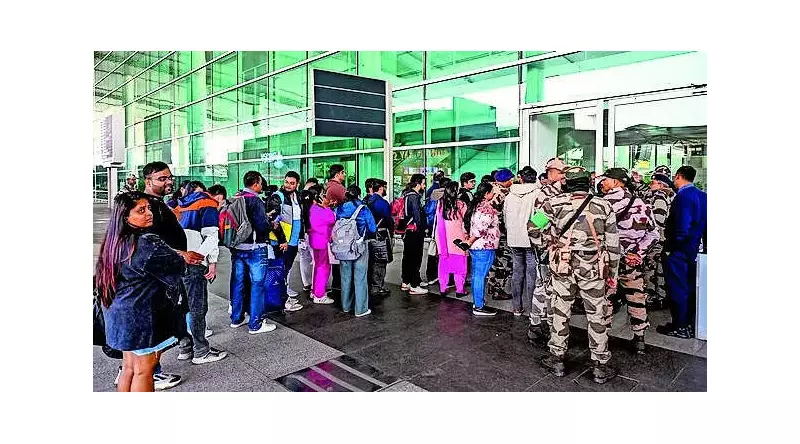
The Indian government has stepped in decisively to address the chaos in the skies, imposing a cap on domestic airfares and issuing a stern directive to IndiGo, the country's largest carrier. This action comes in response to mass flight cancellations and exorbitant ticket prices that have plagued passengers for days.
Government Cracks the Whip on Airlines
In a late evening meeting on Saturday, Civil Aviation Secretary Samir Kumar Sinha summoned IndiGo's top management, led by CEO Pieter Elbers. The ministry invoked the Bharatiya Vayuyan Adhiniyam, taking direct regulatory power instead of leaving the matter solely to the Directorate General of Civil Aviation (DGCA).
The government has mandated a fare cap of Rs 18,000 for domestic flights, excluding user development fee, passenger security fees, and taxes. This cap is stratified by distance: Rs 7,500 for flights up to 500km, Rs 12,000 for 500-1,000km, Rs 15,000 for 1,000-1,500km, and Rs 18,000 for distances above 1,500km. These limits will remain until IndiGo's operations stabilize.

IndiGo, which controls about 60% of domestic air traffic, was given only two days to fully restore its schedule, rejecting its request for 21 days. The airline has been ordered to ensure refunds for all cancelled tickets by 8 pm on December 7 and to return passenger bags within two days. Furthermore, it is barred from charging any rescheduling fees.
IndiGo's Operational Failures Under Scanner
The crisis stems from IndiGo's failure to comply with new Flight Duty Time Limitations (FDTL) norms for pilots and crew, despite having a two-year preparation window. Unlike other airlines that updated the DGCA periodically, IndiGo neither implemented the norms nor disclosed details to the regulator.
Officials indicated that a probe into the airline's operational collapse may be expedited, with the role of management under scrutiny. Penalties could follow based on the findings. To ensure compliance, IndiGo must now submit a fortnightly report on its pilot recruitment progress to meet resting norms.
Some relief came as the government kept certain provisions of the new FDTL norms for IndiGo's Airbus A320 fleet in abeyance until February 10, 2026. The airline expects to normalize operations by December 15. A slight improvement was seen on Saturday, with cancellations dropping to about 700 from over 1,000 the previous day.
Passengers Bear the Brunt of High Fares
For lakhs of passengers, the fare cap announcement comes too late. With IndiGo's dominant market share, the cancellation of hundreds of flights from earlier this week created a severe demand-supply mismatch. Travelers were forced to buy last-minute tickets on other airlines at skyrocketing prices, with fares on some routes touching Rs 90,000.
Geeta Srivastava, a passenger, expressed her frustration after buying a Delhi-Udaipur-Delhi ticket for Rs 11,000, only to later pay Rs 24,000 for a one-way Udaipur-Delhi ticket on another carrier. She criticized the aviation ministry for being a "mute spectator" during the crisis.
The aviation ministry stated it took "serious note of unusually high airfares" and acted to protect passengers from "opportunistic pricing." An official directive mandates all airlines to adhere strictly to the new fare caps, with any deviation attracting immediate corrective action.