

Punjab Governor Demands End to Bureaucratic 'Babugiri' in Chandigarh
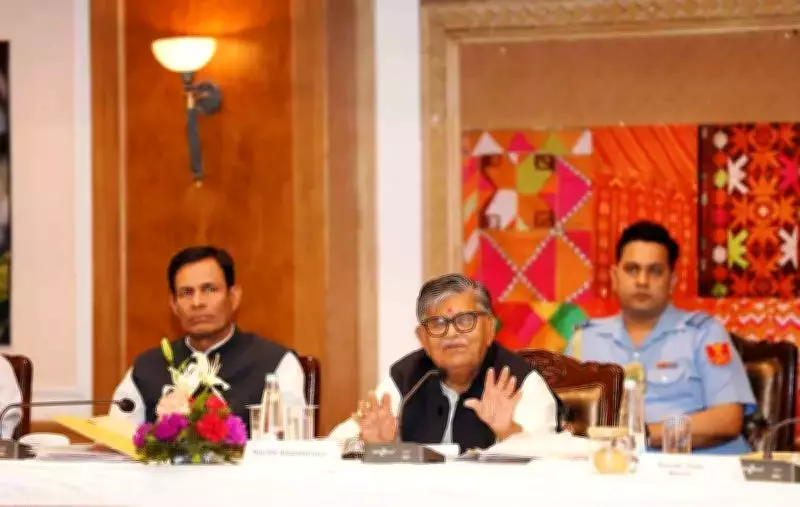
In a significant address on Friday, Punjab Governor and Chandigarh Administrator Gulab Chand Kataria issued a strong call to officers of the Chandigarh administration and municipal corporation, urging them to abandon the traditional "babugiri" style of functioning. He emphasized the critical need to adopt a more citizen-centric and responsive approach while delivering public services.
Call for Self-Reflection and Behavioral Change
Speaking at the inaugural session of the Urban Innovating Summit, organized by the Municipal Corporation in collaboration with Technomedia, Kataria challenged officers to introspect, innovate, and transform behavioral patterns that hinder effective service delivery. "Senior officers should reflect on how they would like to be treated when they visit government offices after retirement," he stated, highlighting the importance of empathy in public service.
The governor specifically criticized practices such as:

- High-handed behavior and superiority complex among officials
- Poor inter-departmental coordination
- Keeping citizens waiting unnecessarily outside offices
- Discriminatory attitudes based on status ("chhota aur bada")
"With urban innovation, self-innovation is direly required. While discharging public-centric services, it is very much required to feel the pain of poor people," Kataria emphasized, urging officers to show genuine commitment to resolving issues promptly.
Focus on Public Transport as Essential Service
Kataria pressed for renewed attention to citizen-centric services, with particular emphasis on improving Chandigarh's public transport system. He asserted that public transportation should not be treated primarily as a revenue-generating activity but rather as an essential service that must remain affordable for even the poorest residents.
"To ensure effectiveness, the system's frequency must be prompt so that commuters do not have to wait," he added, stressing the need for reliable and timely service.
Addressing Infrastructure and Environmental Concerns
The administrator also criticized departments for repeatedly digging up multiple locations without proper planning, drawings, or coordination to trace pipelines or execute repairs. He advocated for a clear, planned approach that identifies exact work locations rather than unnecessarily opening large areas.
Kataria raised additional concerns about:
- Streetlights remaining switched on during daytime in many city areas
- Inadequate park maintenance
- Excessive use of artificial lighting in government offices
He suggested that officers maximize natural sunlight during working hours to conserve electricity and reduce energy waste.
Promoting Cycling to Combat Pollution and Class Distinctions
Expressing concern about rising pollution levels in Chandigarh, Kataria advocated for mandatory cycling for all residents, including officers, at least once a week. He noted that cycling in the city had become associated with status and fitness, but should instead be adopted universally to break class distinctions and promote environmental sustainability.
The governor's comprehensive address highlighted his vision for a transformed administrative culture in Chandigarh—one characterized by efficiency, empathy, and genuine commitment to public welfare over bureaucratic formalities.






