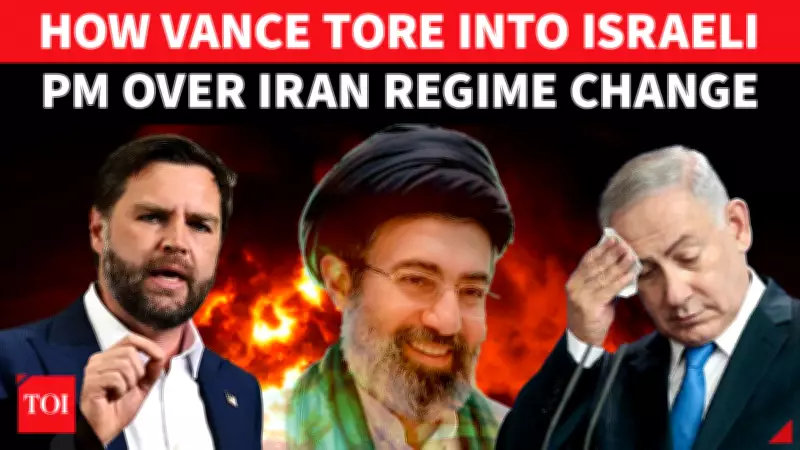
Vance Emerges As Key Figure In US Iran Diplomacy Amid Tensions With Israel
US Vice President JD Vance is solidifying his position as a pivotal architect of Washington's diplomatic strategy concerning the ongoing Iran conflict. Reports confirm he is taking a leading role in shaping potential negotiation frameworks, with his responsibilities extending across multiple critical channels.
Multi-Front Diplomatic Engagement
Vance's involvement is notably comprehensive. He is engaged in direct coordination with Israeli leadership, maintains active dialogue with Gulf state partners, and participates in indirect backchannel communications with Iranian interlocutors. This multi-pronged approach positions him at the heart of US diplomatic efforts in a highly volatile region.
However, his ascent within the negotiation track is not without friction. Emerging tensions with segments of the Israeli political and security establishment have become apparent, highlighting the complex dynamics of the US-Israel alliance on this issue.

The Tense Netanyahu Phone Call
A significant flashpoint occurred during a recent telephone conversation between Vice President Vance and Israeli Prime Minister Benjamin Netanyahu. According to detailed reports, Vance directly challenged several long-held pre-war assumptions, particularly those concerning expectations of internal instability and regime change within Iran.
Vance reportedly questioned the viability and evidence behind narratives predicting the Iranian regime's imminent collapse due to external pressure or internal revolt. This critical line of questioning, focusing on what he viewed as an overselling of regime-change prospects, introduced considerable strain into an already sensitive and crucial bilateral relationship.
Washington's Perspective and Internal Dynamics
Within the corridors of power in Washington, officials largely view Vance as a credible and effective interlocutor for potential talks with Tehran. A significant factor in this perception is his documented earlier skepticism toward prolonged and open-ended military engagement in the region, which aligns with a more negotiation-focused posture.
Simultaneously, there are clear indications that counter-narratives are circulating in the political sphere. Some factions appear to be portraying Vance's stance as overly conciliatory or soft, potentially as a tactical maneuver. This raises important questions about internal US political dynamics, strategic messaging, and the balance between diplomatic outreach and maintaining a position of strength.
The situation underscores a critical moment in US foreign policy, where the approach to Iran is being recalibrated under Vance's significant influence, even as it tests the limits of cooperation with a key ally like Israel.