

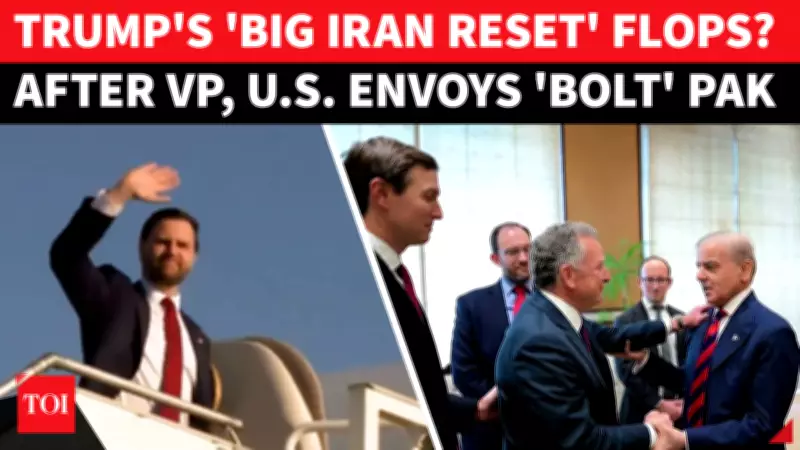
US-Iran Diplomatic Negotiations Collapse in Islamabad
High-stakes diplomatic talks between the United States and Iran have officially collapsed following a dramatic breakdown in negotiations held in Islamabad. The entire American negotiating team, including top decision-makers and technical experts, has departed from the Pakistani capital, leaving no US delegation on the ground.
Complete Withdrawal of American Delegation
According to verified reports, the US negotiating team's departure follows the earlier exit of US Vice President JD Vance. Key figures involved in the talks, including Steve Witkoff and Jared Kushner, were part of the contingent that has now left Islamabad. This mass exodus signals a definitive end to the current round of negotiations, with no immediate plans for continuation.
The collapse comes after Iran rejected what American officials described as their "final offer" to Tehran. The rejection has triggered a significant escalation in rhetoric from Washington, with President Trump vowing to take severe military action against Iran in response to the diplomatic impasse.

Trump's Military Threat and Regional Implications
In a stark warning following the failed negotiations, President Trump declared his administration's readiness to "blow Iran to hell" if Tehran continues to reject American demands. This threat represents one of the most direct military warnings issued by the US administration toward Iran in recent diplomatic history.
The negotiations, which were positioned as part of what the Trump administration called the "world's most powerful reset" in US-Iran relations, have instead unraveled completely. Observers note that the collapse raises serious questions about the future of American diplomatic engagement with Iran and could potentially lead to renewed military tensions in the strategically vital Strait of Hormuz region.
Background and Context of Failed Talks
The Islamabad negotiations represented a significant diplomatic effort to address longstanding tensions between Washington and Tehran. Multiple issues were reportedly on the table, including nuclear program concerns, regional security arrangements, and economic sanctions relief.
However, fundamental disagreements over key demands from both sides prevented any meaningful progress. The complete withdrawal of the American delegation indicates that diplomatic channels have been effectively severed, at least temporarily, between the two nations.
Regional analysts are now closely monitoring military movements and diplomatic statements from both Washington and Tehran, as the collapse of talks increases the likelihood of renewed confrontation in the Middle East. The situation remains fluid, with international observers expressing concern about potential escalation following the diplomatic breakdown.






