

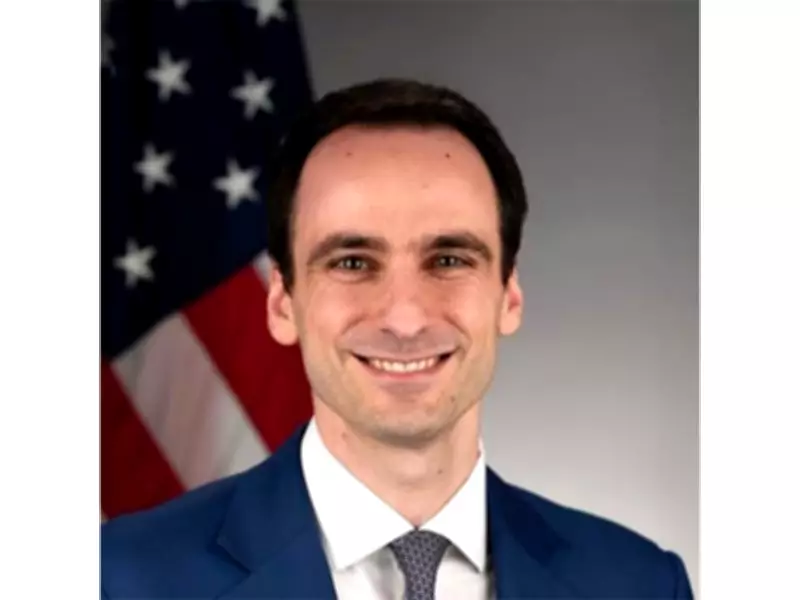
White House AI Adviser to Head US Delegation at India's AI Impact Summit
In a significant development for international technology cooperation, White House adviser Michael Kratsios has been confirmed to lead the United States delegation to India's upcoming AI Impact Summit. This announcement underscores the deepening strategic partnership between the two nations in the critical field of artificial intelligence, which is increasingly shaping global economic and security landscapes.
Strengthening Bilateral Ties Through Technology
The participation of a high-level US official like Michael Kratsios, who serves as the White House's chief technology officer and deputy assistant to the president, signals Washington's strong commitment to engaging with India on AI governance and innovation. His leadership of the delegation is expected to facilitate substantive discussions on policy frameworks, research collaboration, and ethical standards for artificial intelligence development.
This move comes at a time when both countries are prioritizing AI as a national strategic imperative, with India launching several ambitious initiatives under its Digital India program and the US investing heavily in AI research and development through federal agencies and private sector partnerships.

Focus Areas for the Summit Dialogue
The AI Impact Summit, scheduled to take place in India, will likely address several key areas of mutual interest:
- Policy Harmonization: Developing compatible regulatory approaches to AI that foster innovation while addressing concerns about privacy, security, and bias.
- Research Collaboration: Exploring opportunities for joint research projects between American and Indian institutions in areas like machine learning, natural language processing, and AI applications for healthcare and agriculture.
- Talent Development: Discussing initiatives to build skilled workforces in both countries through educational exchanges and training programs.
- Ethical Frameworks: Establishing shared principles for the responsible development and deployment of AI technologies.
Kratsios's involvement is particularly noteworthy given his role in shaping US technology policy, including his work on the American AI Initiative and efforts to promote American leadership in emerging technologies. His presence at the summit suggests that the discussions will have practical implications for bilateral cooperation beyond symbolic diplomacy.
Implications for the US-India Strategic Partnership
The decision to send a senior White House adviser reflects the growing importance of technology in the broader US-India relationship, which has expanded significantly in recent years across defense, trade, and diplomatic spheres. Artificial intelligence represents a new frontier in this partnership, with potential applications ranging from smart city development and disaster response to cybersecurity and defense systems.
By collaborating on AI, the US and India can leverage their respective strengths—America's advanced research ecosystem and India's vast talent pool and digital infrastructure—to address common challenges and compete more effectively in the global technology arena. This delegation led by Michael Kratsios is expected to lay the groundwork for more structured cooperation, possibly including formal agreements or joint working groups on artificial intelligence.
The summit also provides an opportunity for India to showcase its own AI advancements and ambitions, positioning itself as a key player in shaping the future of this transformative technology. With both nations facing similar issues related to data governance, innovation promotion, and societal adaptation to AI, the dialogue facilitated by Kratsios's delegation could yield insights beneficial to policymakers and industry leaders in both countries.






