Gurugram conducts first mock drill on rainwater harvesting systems
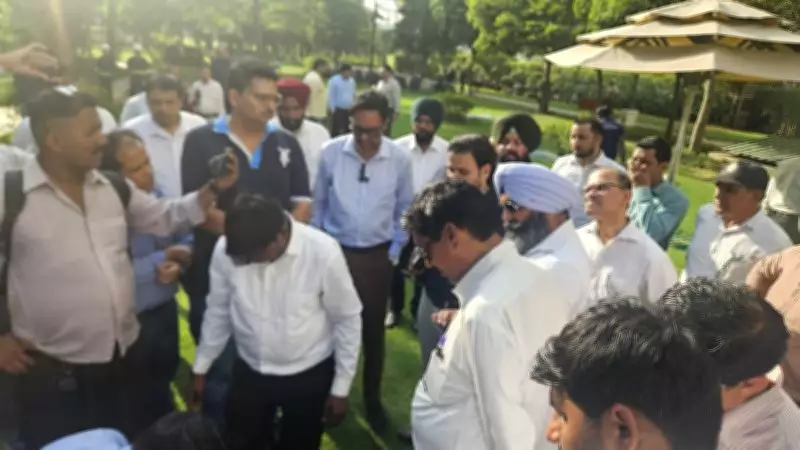
Gurugram is turning to rainwater harvesting as a key defence against flash flooding and waterlogging, with the Gurugram Metropolitan Development Authority (GMDA) conducting the city’s first mock drill on rainwater harvesting systems in group housing societies on Saturday. The exercise, organised at Central Park, forms part of a broader effort to strengthen monsoon preparedness and prevent stormwater from accumulating on roads and causing the severe waterlogging that Gurugram experiences almost every monsoon.
Participation and technical guidance
Representatives from M3M, Tata Primanti, IREO, Essex Towers and several other group housing societies participated in the drill. These societies are among nearly 30 that have confirmed their rainwater harvesting systems are functional and ready for the monsoon, covering a combined area of about 800-900 acres. Hydrologist Dalbir Rana and Irrigation Department XEN Manish provided technical guidance during the exercise.
Background of the initiative
The drill is the result of sustained GMDA engagement with Resident Welfare Associations (RWAs), which began in November 2025 under the guidance of Principal Adviser (Urban Development) D S Dhesi. Since then, GMDA has organised a series of meetings, workshops and technical sessions to promote awareness of rainwater harvesting. The focus has been on using large rooftop catchment areas in group housing societies to recharge groundwater on-site instead of allowing runoff to flow onto city roads.

A multidisciplinary GMDA team, comprising officials from the Town and Country Planning Department, the Infrastructure-I Wing, along with hydrologists and irrigation experts, inspected nearly 20 group housing societies. The team identified three recurring issues — non-functional structures, poor maintenance, and shortcomings in technical design and implementation. Following site-specific recommendations and corrective measures, around 30 societies confirmed that their systems were monsoon-ready.
Details of the mock drill
During Saturday’s drill, experts guided RWA representatives through essential maintenance measures, including inspection of recharge pits, desilting and debris removal, cleaning and replacement of filter media, flushing of collection pipes and inlet points, checking the structural condition of catchment and pipeline networks, and assessing recharge capacity.
Comparison with other cities
The initiative sets Gurugram apart from earlier rainwater harvesting models adopted elsewhere in the country. Chennai, which made rainwater harvesting mandatory across the city in 2003, and Bengaluru, where the Bangalore Water Supply and Sewerage Board has periodically audited rainwater harvesting installations, have largely relied on compliance checks to verify the existence of structures. Experience has shown that such checks can overlook systems that later fall into disrepair. GMDA’s exercise takes a different approach by demonstrating operational maintenance practices to RWA representatives instead of merely verifying the presence of infrastructure.
Official statement
“A lack of properly functioning rainwater harvesting systems often pushes stormwater directly onto our highways, and that is what leads to flash flooding,” said GMDA Chief Executive Officer P C Meena. “GMDA is reviving and strengthening the rainwater harvesting network across the city because a well-maintained and functional system acts as a natural defence against waterlogging.”
Future directions
GMDA has directed all group housing societies to conduct similar drills on their premises before the monsoon arrives. It has also asked RWAs to involve residents so they understand how the systems operate and can contribute to their upkeep and long-term maintenance.