

Urdu Press Analysis: Geopolitical Shifts and Democratic Safeguards Dominate Discourse
This week's coverage in prominent Urdu dailies has been overwhelmingly dominated by critical developments in geopolitics and international trade, alongside pressing domestic democratic concerns. The newspapers have provided incisive commentary on two major themes: the global ramifications of US President Donald Trump's proposed Board of Peace and the imperative for the Election Commission to ensure a transparent and foolproof Special Intensive Revision of electoral rolls.
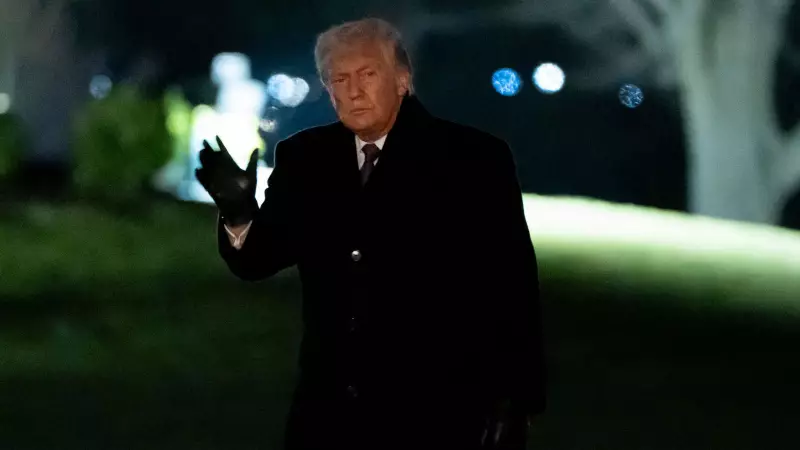
Scrutinizing Trump's Board of Peace: A Challenge to Multilateralism
The Hyderabad-based daily Munsif, in its editorial dated January 23, delves deep into President Trump's initiative to launch a Board of Peace as part of his Gaza peace plan, following the recent ceasefire in the Israel-Hamas conflict. The editorial critically examines the structure of this proposed board, noting that while many world leaders have been invited to join, a contribution of US $1 billion would secure permanent membership. This stands in contrast to a three-year appointment available without any financial requirement, a detail that the newspaper argues underscores Trump's characteristic business-oriented approach to diplomacy.
Munsif observes that the board's apparent scope has expanded beyond its original Gaza-focused proposal. It now seems designed to establish a new international platform not only for addressing the Gaza situation but also for managing other global conflicts. This move is interpreted as an attempt to create a parallel international body on Trump's own terms, potentially challenging long-established multilateral institutions like the United Nations.

The editorial specifically notes that Prime Minister Narendra Modi is among the leaders invited to join this board. It frames India's decision as a critical juncture, stating, "India has been a votary of multilateralism and UN reforms – and a stable, rules-based international system has always benefited developing countries and middle powers. Now, India has to decide whether Trump’s Board is a panel for Gaza peace or an instrument for reinforcing the American control of the global order." The newspaper reminds readers that New Delhi has consistently maintained a policy of enlightened self-interest and strategic autonomy.
Highlighting a potential conflict of mandates, the edit points out that the UN Security Council, in a November 2025 resolution, had already cleared the creation of a board to oversee a transitional administration for Gaza's stabilization and rebuilding until 2027. The editorial strongly advises India to refrain from joining Trump's board, warning that it could undermine the nation's consistent policy and strategic interests. It cautions that the board might intervene in conflicts beyond Gaza, citing Trump's previous attempts to mediate in the India-Pakistan conflict following the Pahalgam terror attack. The newspaper suggests that India might consider joining only if the board strictly adheres to the UN's limited mandate for Gaza, aimed at a two-state solution for the Israel-Palestine dispute.
Carney's Davos Address: A Clarion Call for Middle Powers
Shifting focus to the World Economic Forum in Davos, the New Delhi edition of Inquilab, in its January 25 editorial, spotlights the remarkable address delivered by Canadian Prime Minister Mark Carney. The editorial provides context, noting Carney's distinguished background as a central banker and technocrat before his transition to politics. It sets the stage by describing the global upheaval unleashed by President Trump since his second inauguration in January 2025, through policies characterized by threats and tariffs.

Inquilab states that in this climate of uncertainty, where many nations have remained non-committal for fear of repercussions, Carney delivered a speech of exceptional honesty and incisiveness. Without directly naming Trump, Carney articulated what the editorial believes needed to be said to the world's economic and political elite. He described the current international situation as a "rupture, not a transition," lamenting the decline of the rules-based order which has led to a scenario where "the strong do what they can and the weak suffer what they must."
The Canadian Prime Minister issued a powerful rallying cry to middle powers, urging them to act collectively because "if we’re not at the table, we’re on the menu." This address, which received a standing ovation, is hailed by the daily as a historically significant speech that blended sharp analysis with moral courage. Carney encouraged middle powers to unite, build a new international order based on shared values and interests, and resist surrendering to global hegemons.
Election Commission Under Scrutiny: The Imperative for Transparent Voter Rolls
On the domestic front, the Hyderabad-based daily Siasat, in its January 22 leader, turns a critical eye towards the Election Commission's ongoing Special Intensive Revision (SIR) of electoral rolls in nine states and three Union Territories. The newspaper notes that this exercise has been controversial since its inception in Bihar in June of the previous year, facing criticism from various quarters, including citizens and political parties, for being hasty, high-handed, and lacking transparency.
The editorial references the Supreme Court's recent observations while hearing petitions challenging the SIR's constitutional validity. The apex court has stated that the EC's power to conduct an SIR is "not unlimited" and must be exercised "in conformity with principles of natural justice" and with complete transparency. Siasat recalls the issues that surfaced during the Bihar SIR, where names of living individuals were erroneously deleted from draft rolls, a point even highlighted by opposition leader Rahul Gandhi.
While acknowledging the necessity of cleansing voter lists of errors and ineligible entries, the newspaper emphasizes that it is far more crucial to ensure no eligible voter is wrongfully excluded. The right to vote is framed as a fundamental democratic right, and any disenfranchisement is unacceptable. The edit criticizes the EC for displaying apparent laxity and recklessness in its haste to complete the exercise quickly, placing intense pressure on Booth Level Officers who are struggling with the process. It notes a staggering figure: in Uttar Pradesh alone, approximately 3 crore voters' names have been deleted from draft rolls on various grounds.
Siasat concludes with a firm demand: The Election Commission must urgently review its functioning and apply necessary correctives to make the SIR exercise transparent and foolproof. It frames this not merely as an administrative issue but as a fundamental question concerning the health and protection of Indian democracy, a responsibility that falls upon everyone.
This comprehensive analysis from the Urdu press underscores a week where international diplomatic maneuvers and the sanctity of domestic electoral processes were placed under intense scrutiny, reflecting on India's strategic choices and democratic commitments.





