Usman Tariq's Bowling Action Ignites Fresh Chucking Controversy in T20I Clash
The cricketing world finds itself embroiled in yet another heated debate over bowling actions, this time centering on Pakistan spinner Usman Tariq. The controversy erupted during the second T20 International between Pakistan and Australia at Lahore's historic Gaddafi Stadium, casting a shadow over what was otherwise an exciting match.
The Viral Moment That Sparked the Fire
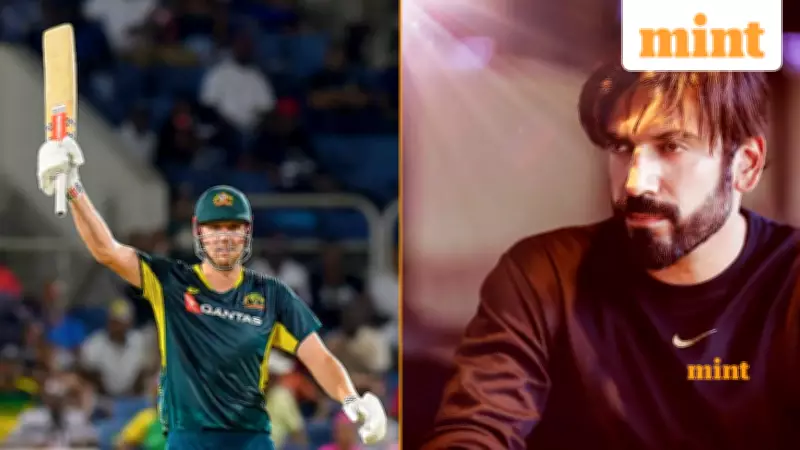
The flashpoint occurred when Australian all-rounder Cameron Green, after scoring a brisk 35 runs off just 20 balls, was dismissed by Tariq. Green's mistimed shot looped towards point, where Shadab Khan completed what many described as a straightforward catch. However, it was what happened next that captured global attention.
As Green made his way back to the pavilion, television cameras clearly captured him making a distinctive hand gesture. This simple motion was immediately interpreted by countless viewers on social media as an accusation of "chucking" – the illegal bowling action where a bowler throws rather than bowls the ball. The clip spread like wildfire across digital platforms, triggering passionate reactions from cricket enthusiasts everywhere.

Divided Opinions and Social Media Storm
The cricketing community quickly split into opposing camps regarding the incident. Many Pakistani supporters rallied behind their bowler, suggesting Green's reaction stemmed purely from frustration at losing his wicket during a challenging chase. They pointed to Tariq's previously cleared action tests as evidence of his legitimacy.
Prominent cricket broadcaster Paul Dennett weighed in with a measured perspective, posting: "Usman Tariq deserves better. His action has twice been tested - and cleared. Today should be a day to celebrate contributing to a win, not getting blasted on social media. Cricket needs to handle this issue better. And people need to stop being cruel."
Meanwhile, other social media users expressed strong criticism. One comment read: "TYPICAL AUSSIE MINDSET...!!!! Cameron Green crying on the bowling action of Usman Tariq." Another user questioned: "How can someone with that kind of bowling action be allowed to bowl in international cricket??"
Tariq himself entered the fray through his Instagram Stories, posting a meme of a crying boy with the caption: "After getting out," seemingly addressing the allegations with humor rather than confrontation.
Tariq's History with Bowling Action Scrutiny
This is not the first time Usman Tariq has faced questions about his unconventional, baseball-style bowling action. The spinner has a documented history of being reported for suspected illegal actions, though he has consistently emerged cleared from formal reviews.
The timeline of scrutiny includes:
- March 2024: Reported during Pakistan Super League (PSL), underwent assessment at Lahore's National Cricket Academy, and was cleared within five days
- April 2025: Reported again during PSL 10, subjected to detailed biomechanical testing, and once more cleared to continue playing
- January 2026: Australia's Tom Banton raised concerns during ILT20, but match officials permitted Tariq to play the final
Understanding Illegal Bowling Actions
According to International Cricket Council (ICC) regulations, an illegal bowling action – commonly called "chucking" – occurs when a bowler's elbow extends by more than 15 degrees between the arm reaching horizontal and ball release. The enforcement process involves:
- Match officials making initial judgment based on visual observation
- Filing a formal report if suspicions arise
- Comprehensive assessment at ICC-accredited testing centers using advanced technology
- Suspension if action is ruled illegal, requiring correction and retesting before returning to competitive bowling
Pakistan's Historical Context with Bowling Actions
Pakistan has experienced multiple high-profile cases involving bowling action controversies, particularly concerning off-spinners:

- Shabbir Ahmed: First player banned for one year under new ICC rules (December 2005)
- Saeed Ajmal: Reported twice, banned in September 2014 after tests showed exceeding legal limits
- Mohammad Hafeez: Multiple reports led to 12-month ban in July 2015 as repeat offender
- Shoaib Akhtar: Accused of chucking but suspension overturned on medical grounds
- Bilal Asif: Reported in 2015 ODI against Zimbabwe, later cleared after testing
Global Perspective on Bowling Action Controversies
While Pakistan has faced significant scrutiny, bowling action debates are truly global phenomena affecting numerous cricketing nations:
- Muttiah Muralitharan (Sri Lanka): Repeatedly no-balled in Australia during 1990s, consistently cleared through biomechanical tests linking concerns to congenital condition
- Sunil Narine (West Indies): Multiple reports between 2014-2020, served suspensions, remodeled action, later shifted focus to batting
- Johan Botha (South Africa): Banned from bowling certain deliveries in 2009, later allowed limited variations
- Marlon Samuels (West Indies): 12-month ban in 2015 as repeat offender, cleared again in 2017
- Brett Lee (Australia): Investigated by ICC in 2000, cleared after biomechanical analysis
- Harbhajan Singh (India): Reported early in career for his doosra, cleared after corrective work
This latest controversy surrounding Usman Tariq highlights the ongoing tension in cricket between preserving bowling artistry and maintaining technical legality. As technology improves detection capabilities and social media amplifies every gesture, the sport continues grappling with how to fairly address these complex issues while protecting players' careers and the game's integrity.