Budget 2026: Finance Minister Nirmala Sitharaman Outlines Vision for Viksit Bharat
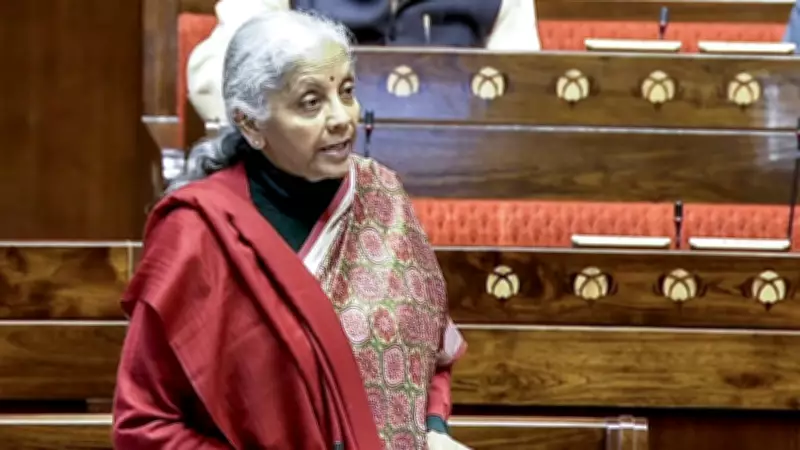
Union Finance Minister Nirmala Sitharaman presented India's 80th Union Budget for the fiscal year 2026-27 in Parliament on Sunday. Delivering an 83-minute speech in the Rajya Sabha, Sitharaman emphasized the government's commitment to ensuring that the dividends of growth reach every segment of society, including farmers, scheduled castes, scheduled tribes, and youth.
The Budget, presented on the sacred occasion of Magha Purnima and the birth anniversary of Guru Ravidas, outlined a comprehensive roadmap for Viksit Bharat (Developed India). Sitharaman highlighted that India's economic trajectory over the past 12 years has been marked by stability, fiscal discipline, sustained growth, and moderate inflation.
Three Key Kartavyas Driving Budget Proposals
Sitharaman articulated three core kartavyas (duties) guiding the Budget:

- Accelerate and sustain economic growth by enhancing productivity, competitiveness, and resilience to global dynamics.
- Fulfill aspirations and build capacity of the people, making them partners in India's prosperity.
- Ensure inclusive development under the vision of Sabka Sath, Sabka Vikas, providing resources and opportunities to all families, communities, and regions.
Major Announcements and Initiatives
The Budget introduced several sector-specific proposals under the first kartavya to boost economic growth:
- Biopharma SHAKTI: A ₹10,000 crore outlay over five years to develop India as a global biopharma manufacturing hub, including new National Institutes of Pharmaceutical Education and Research (NIPER) and accredited clinical trial sites.
- India Semiconductor Mission 2.0: Building on ISM 1.0 to produce equipment, materials, and design full-stack Indian IP, focusing on industry-led research and training.
- Electronics Components Manufacturing Scheme: Outlay increased to ₹40,000 crore from ₹22,919 crore to capitalize on investment momentum.
- Rare Earth Corridors: Support for mineral-rich states like Odisha, Kerala, Andhra Pradesh, and Tamil Nadu to establish dedicated corridors for mining, processing, and manufacturing.
- Infrastructure Boost: Public capital expenditure proposed at ₹12.2 lakh crore for FY2026-27, with new initiatives like an Infrastructure Risk Guarantee Fund and accelerated asset monetization through REITs.
Focus on MSMEs and Financial Sector
Recognizing MSMEs as a vital growth engine, the Budget proposed a three-pronged approach:
- Equity Support: A dedicated ₹10,000 crore SME Growth Fund and a ₹2,000 crore top-up to the Self-Reliant India Fund for micro-enterprises.
- Liquidity Support: Measures to leverage TReDS platform, including mandating it for CPSE purchases and linking it with GeM for easier financing.
- Professional Support: Facilitation of short-term courses to develop Corporate Mitras in Tier-II and Tier-III towns for MSME compliance.
For the financial sector, Sitharaman announced a High Level Committee on Banking for Viksit Bharat to review and align the sector with India's growth phase. A comprehensive review of foreign investment rules and incentives for municipal bond issuances were also proposed.
Empowering Youth and Services Sector
Under the second kartavya, the Budget focused on capacity building and employment:

- High-Powered Committee: An Education to Employment and Enterprise Standing Committee to optimize the services sector, targeting a 10% global share by 2047.
- Health and AYUSH: Upgradation of Allied Health Professionals institutions, training of 1.5 lakh caregivers, and establishment of new All India Institutes of Ayurveda.
- Orange Economy: Support for AVGC Content Creator Labs in 15,000 schools and 500 colleges to meet projected demand for 2 million professionals by 2030.
- Tourism and Sports: Development of trekking trails, archeological sites, and a Khelo India Mission to transform the sports sector over the next decade.
Inclusive Development and Fiscal Measures
Aligning with the third kartavya, the Budget proposed targeted efforts for farmers, Divyangjan, and vulnerable groups:
- Farmer Incomes: Initiatives for fisheries, animal husbandry, and high-value agriculture, including a Coconut Promotion Scheme and programmes for cashew and cocoa.
- Bharat-VISTAAR: A multilingual AI tool to integrate agricultural portals and provide customized advisory support to farmers.
- Empowering Divyangjan: Divyangjan Kaushal Yojana for industry-relevant training and Divyang Sahara Yojana to scale up production of assistive devices.
- Mental Health: Establishment of NIMHANS-2 and upgradation of national mental health institutes in Ranchi and Tezpur.
Tax Reforms and Fiscal Consolidation
In Part B, Sitharaman outlined direct and indirect tax proposals:
- New Income Tax Act: The Income Tax Act, 2025, will come into effect from April 1, 2026, with simplified rules and forms.
- Ease of Living: Reductions in TCS rates for overseas tour packages, education, and medical purposes under LRS, and a scheme for small taxpayers for lower deduction certificates.
- Support for IT Sector: Clubbing of IT services under a single category with a safe harbour margin of 15.5%, and fast-tracking of Advance Pricing Agreements.
- Fiscal Deficit: Estimated at 4.3% of GDP for BE 2026-27, with the debt-to-GDP ratio projected at 55.6%, aligning with the target of 50±1% by 2030-31.
Sitharaman concluded by reaffirming the government's commitment to reform-led growth and inclusive development, aiming to transform India into one of the world's largest economies.