

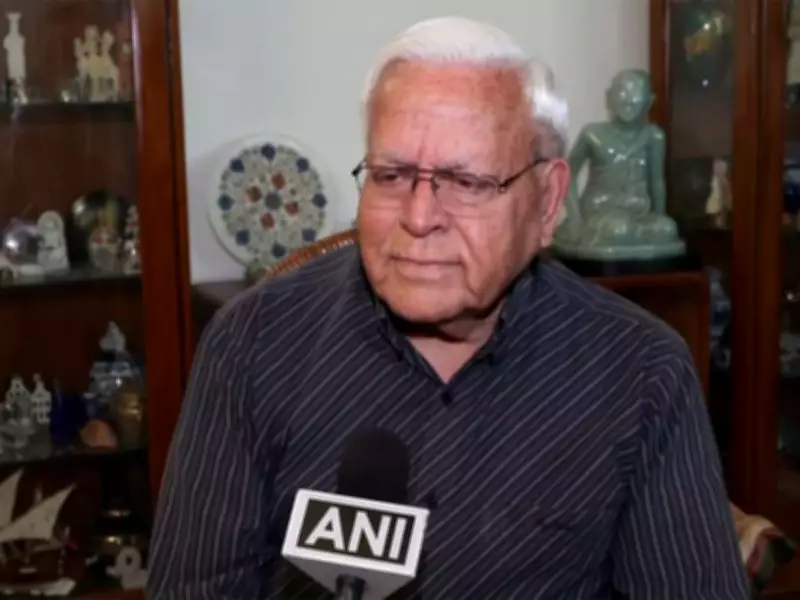
Trump's Statement on Iran Viewed as De-escalation Move by Former Diplomat
Former diplomat Ashok Sajjanhar has suggested that US President Donald Trump's recent statements likely indicate a de-escalation in tensions with Iran. He pointed out that the initial goals of the campaign against Iran, which began on February 28, appear to have fallen short of expectations.
Internal and Global Pressures Influence US Stance
Speaking on the shift in rhetoric, Sajjanhar emphasized that Trump may have realized the challenges in achieving the campaign's objectives. "It is likely a sign of de-escalation because the expectations that Trump and Israel had when they started their campaign against Iran on February 28 do not seem to have been fulfilled," he stated. He further highlighted growing domestic issues in the US, including economic concerns, opposition to the attack on Iran, and the upcoming midterm elections in November.
Sajjanhar also noted the broader global pressures affecting the US administration. "There is increasing opposition to the conflict, rising inflation, and higher crude oil prices globally, which are directly impacting gas prices in the US," he added, underscoring how these factors are shaping foreign policy decisions.

Trump Announces Postponement of Military Strikes
The former diplomat's assessment follows a significant announcement by President Trump on Monday. Trump revealed that he has instructed the Department of War to delay military strikes against Iranian power plants and energy infrastructure for five days. This decision is contingent on the success of ongoing discussions between the US and Iran.
In a post on Truth Social, Trump expressed optimism about the diplomatic progress. "I am pleased to report that the US of America and the country of Iran have had, over the last two days, very good and productive conversations regarding a complete and total resolution of our hostilities in the Middle East," he wrote. He added that based on the constructive nature of these talks, the strikes have been postponed to allow for further negotiations.
Escalating Conflict and Energy Supply Concerns
The diplomatic opening comes amid heightened global anxiety over disruptions to energy supply chains due to the ongoing war, which entered its fourth week. The conflict began on February 28 with joint US-Israel military strikes that resulted in the death of Iran's former Supreme Leader, Ayatollah Ali Khamenei. In retaliation, Iran targeted Israeli and US assets in Gulf countries, leading to significant disruptions in waterways, including the near-closure of the strategically vital Strait of Hormuz.
Prior to the recent de-escalation signals, Trump had issued a stern warning to Iran. In an earlier Truth Social post, he demanded that Iran fully reopen the Strait of Hormuz within 48 hours, threatening to obliterate Iranian power plants if it failed to comply. Iran responded with a stringent warning of its own, threatening to target critical energy infrastructure across the region in an "irreversible manner," as stated by the speaker of Iran's Parliament, Mohammad Bagher Ghalibaf.
Pakistan's Role Dismissed as Neutral Mediator
Addressing speculation about Islamabad potentially hosting the US-Iran talks, Sajjanhar dismissed the idea of Pakistan acting as a neutral intermediary. "I would not say that Islamabad is a mediator. Islamabad does not have the confidence of either side. They don't even have diplomatic relations with the US or Israel," he explained. He also pointed out significant issues between Pakistan and Iran, noting that Pakistan has historically been used by the US for its own interests, such as supporting military operations in Afghanistan.
Sajjanhar concluded by reflecting on the absence of traditional regional mediators like Oman and Qatar, who have not been proactive in this conflict due to being at the receiving end of its impacts. This analysis underscores the complex diplomatic landscape surrounding the US-Iran tensions and the potential for further de-escalation efforts in the coming days.






