

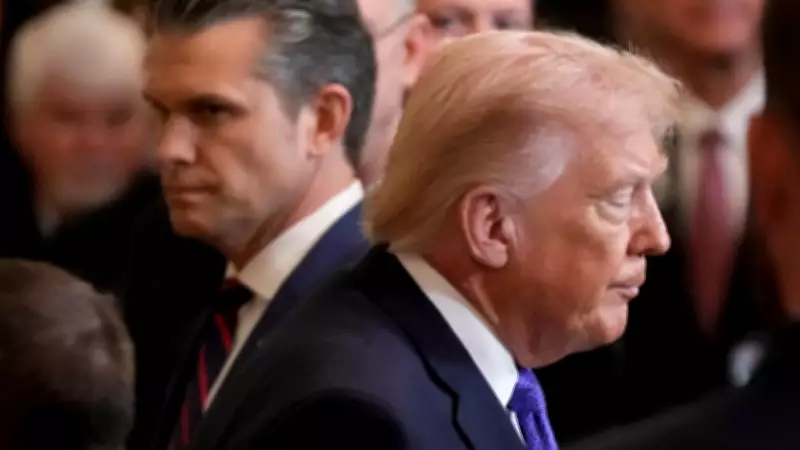
In a revealing roundtable discussion with military and law enforcement leaders on Monday, US President Donald Trump disclosed that Defense Secretary Pete Hegseth was the first senior administration official to push for military action against Iran. This statement sheds new light on the internal deliberations that preceded the United States' decision to join strikes alongside Israel in the ongoing regional conflict.
Framing Iran as a Persistent Threat
President Trump framed Iran as a significant and enduring danger, stating emphatically, "We have a country known as Iran that for 47 years has been just a purveyor of terror... and they're very close to having a nuclear weapon." He presented the situation as a critical crossroads, adding, "We can keep going... or we can take a stop and make a little journey into the Middle East and eliminate a big problem."
Hegseth's Decisive Intervention
According to Trump, it was at this pivotal moment that Defense Secretary Pete Hegseth intervened decisively. The president recalled, "Pete, I think you were the first one to speak up... you said, 'Let's do it, because you can't let them have a nuclear weapon.'" This remark appears to shift responsibility for the early momentum toward military engagement onto the Pentagon chief, even as the administration has offered varying justifications for the intervention.

Contradictory Statements and Diplomatic Overtures
Trump's comments came just hours after he claimed that Iran's retaliatory strikes across the Gulf had caught Washington completely off guard. "Nobody was even thinking about it," he asserted, despite multiple intelligence reports warning of possible reprisals from Tehran. Simultaneously, the president struck a more conciliatory tone on diplomacy, revealing that talks with Iranian intermediaries were allegedly underway.
"We'd like to make a deal," Trump stated, while also issuing a stark warning: "if negotiations failed, we'll just keep bombing our little hearts out." Iranian officials have firmly denied that any such discussions are taking place, creating a clear disconnect between the two nations' narratives.
Shifting Tactics and Extended Deadlines
In a sign of evolving strategy, President Trump extended the deadline for further US strikes on Iranian infrastructure by five days. He reiterated that Washington's central demand remains the complete dismantling of Tehran's nuclear ambitions. "We want to see no nuclear bomb... not even close to it," he emphasized, underscoring the administration's unwavering stance on preventing Iran from acquiring nuclear capabilities.
Broader Context and Implications
The administration has previously offered conflicting explanations for US involvement in the strikes, alternately arguing that Iran posed an imminent nuclear threat and that American participation was inevitable given Israel's military trajectory. Trump's latest remarks add another layer to this complex narrative, highlighting internal advocacy within his cabinet while maintaining a dual approach of military pressure and diplomatic outreach.
This development occurs against the backdrop of escalating tensions in the Middle East, with Israel reporting additional missile launches from Iran and Kuwait claiming drone attacks by Tehran. The situation remains fluid, with the extended deadline suggesting a temporary pause as both sides assess their next moves in this high-stakes geopolitical standoff.






