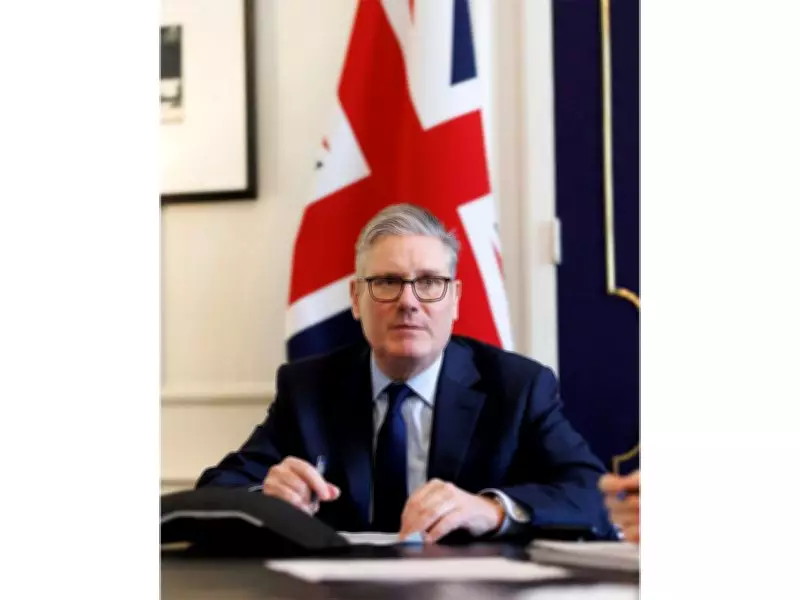
UK Prime Minister Keir Starmer Firmly Rejects Donald Trump's Criticism on War Stance
In a robust response to former US President Donald Trump's recent criticisms, UK Prime Minister Keir Starmer has declared that Britain will not participate in any military conflict without a clear and lawful basis. This statement underscores Starmer's commitment to upholding international law and ensuring parliamentary oversight in matters of war and peace.
Starmer's Emphasis on Legal and Parliamentary Mandates
Starmer articulated that any decision to engage in warfare must be grounded in solid legal justifications and receive proper parliamentary approval. He highlighted that this approach is fundamental to maintaining the integrity of the UK's democratic processes and its adherence to global legal standards. The Prime Minister stressed that acting without such a lawful basis would undermine both national sovereignty and international stability.
Context of Trump's Criticism and Broader Implications
Donald Trump had previously criticized Starmer's government, suggesting that the UK's reluctance to join potential conflicts without legal backing could weaken Western alliances. Starmer's rebuttal not only addresses these concerns but also reaffirms the UK's role as a responsible global actor that prioritizes rule-based international order. This exchange highlights ongoing tensions in transatlantic relations regarding military intervention policies.

Key Points from Starmer's Response:
- Insistence on lawful basis: Starmer made it clear that the UK will not engage in war without proper legal authorization.
- Parliamentary oversight: He emphasized the necessity of parliamentary debate and approval for any military action.
- Defense of international law: The Prime Minister defended the importance of adhering to international legal frameworks in conflict situations.
This stance by Starmer is seen as a reaffirmation of the UK's post-Brexit foreign policy, which seeks to balance alliance commitments with independent, principled decision-making. It also reflects broader global debates on the legality and ethics of military interventions in an increasingly complex geopolitical landscape.