

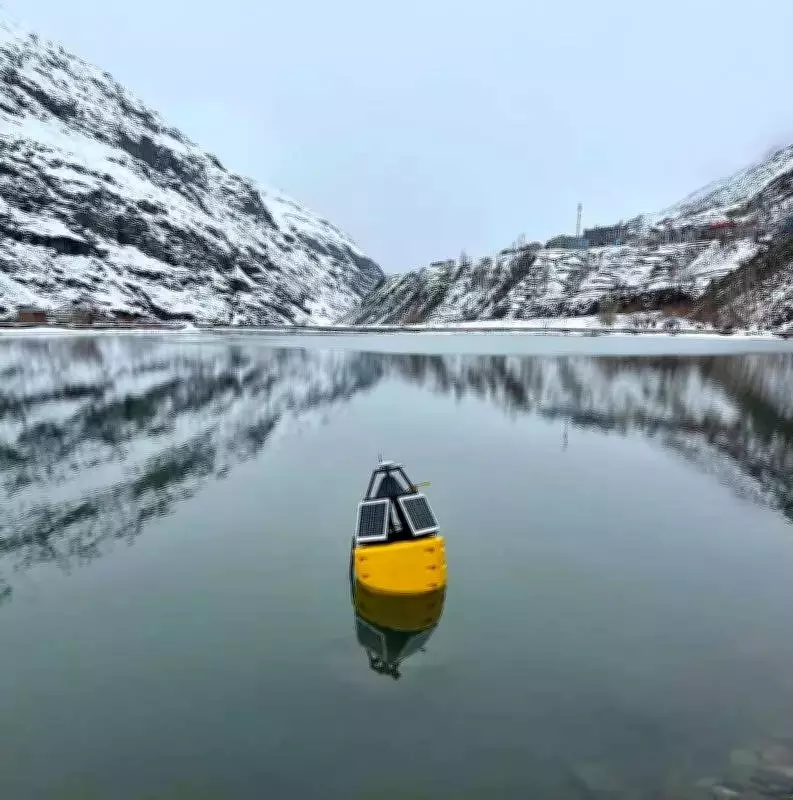
India Successfully Tests Indigenous Satellite System for Glacial Flood Warnings
The National Disaster Management Authority (NDMA) has achieved a significant milestone by successfully testing an indigenously developed satellite-based early warning system specifically designed for glacial lake outburst floods, commonly known as GLOFs. This advanced system is poised for deployment across all Himalayan states following a comprehensive pilot run conducted in Himachal Pradesh.
Pilot Project in Sissu, Himachal Pradesh
The pilot project was meticulously carried out at a high-altitude glacial lake located in Sissu, Himachal Pradesh. This innovative system integrates a sophisticated array of real-time monitoring tools, including sensor-equipped buoys, automatic weather stations, INSAT-based satellite communication, and AI-driven geospatial technologies. These components work in unison to continuously track changes in glacial lakes and issue timely alerts to mitigate potential disasters.
In a post on LinkedIn, NDMA Secretary Manish Bhardwaj highlighted the successful proof of concept, describing it as a crucial step forward in reducing disaster risk. He emphasized that this achievement will pave the way for the system's deployment in all major glacial lakes across the Himalayan states, marking a transformative advancement in regional safety protocols.

System Development and Testing Timeline
Officials have confirmed that the system will undergo further testing at the Sissu site for an additional six to nine months before being scaled up for broader implementation. An expert closely associated with the development process revealed that it took over a year to build the system, with some of its components having already been rigorously tested in Sikkim. Notably, the early warning system is equipped with solar- and wind-powered batteries, ensuring uninterrupted operation throughout the year, even under conditions of limited sunlight.
Addressing High-Risk Glacial Lakes
The NDMA has proactively identified 189 high-risk glacial lakes spread across various Himalayan states, including Uttarakhand, for targeted mitigation measures. This initiative comes amid growing concerns over the escalating risks of GLOFs in the Himalayas, where rising temperatures are accelerating glacier melt and expanding glacial lakes. These changes significantly increase the threat of sudden downstream floods, which can endanger human lives, critical infrastructure, and vital hydropower projects.
Historical Context and Regional Threats
India has witnessed several devastating glacial flood disasters in recent years, underscoring the urgent need for such warning systems:
- The 2013 Kedarnath floods, triggered by a combination of glacial events and extreme rainfall, resulted in large-scale destruction and loss of life.
- The South Lhonak Lake outburst in Sikkim highlighted the growing threat posed by glacial lakes, leading to severe downstream damage and infrastructure collapse.
- Incidents in Chamoli and Dharali further underlined the risks associated with rapidly changing cryospheric conditions in the region.
Similar glacial lake outburst events in neighboring countries like Nepal and Bhutan have pointed to the wider regional nature of this threat, emphasizing the necessity for coordinated disaster management strategies across borders.
Importance of Early Warning Systems
A senior official stressed that early warning systems are absolutely critical in such fragile and unpredictable terrain, where response time is often severely limited. The integration of satellite data, ground sensors, and automated alerts is expected to significantly improve preparedness and evacuation planning, potentially saving countless lives and reducing economic losses.
With climate change accelerating glacial melt and increasing the frequency of extreme weather events, authorities assert that this new indigenous system represents a vital step toward building resilience in vulnerable mountain regions. It exemplifies India's commitment to leveraging technology for enhanced disaster risk reduction and climate adaptation in the face of evolving environmental challenges.






