

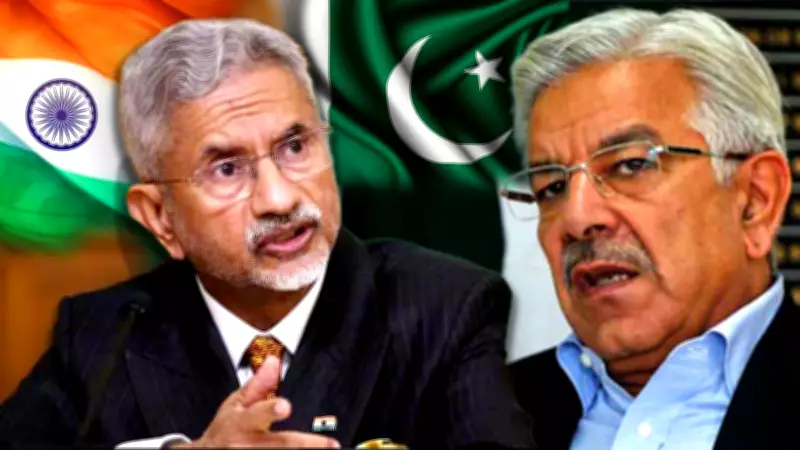
India's Diplomatic Counter to Pakistan's Mediator Ambitions
In a sharp and strategic diplomatic maneuver, India has effectively utilized Pakistan's own statements to undermine its claims of being a neutral mediator in global conflicts. The response, delivered with precision, highlights internal contradictions within Pakistan's political discourse while invoking historical records that challenge its international credibility.
Questioning Neutrality Through Pakistan's Own Words
India's diplomatic response centered on remarks made by Pakistani leader Khwaja Asif, who previously described his country's role as performing "dirty work for the West." New Delhi has pointedly asked how a nation that acknowledges such compromised positions can realistically present itself as an impartial mediator in international disputes. This argument extends beyond mere rhetoric to question the fundamental consistency required for credible mediation roles.
The diplomatic communication emphasized that multiple Pakistani leaders have made similar acknowledgments about their country's controversial involvement in past conflicts. These internal admissions, according to India's position, reveal a pattern that contradicts Pakistan's current aspirations for neutral diplomatic standing on the world stage.

The Historical Weight of 1971 Atrocities
More significantly, India has reintroduced the historical narrative of the 1971 Bangladesh Liberation War into contemporary diplomatic discourse. Specific reference was made to Operation Searchlight and the extensive atrocities committed during that period. By connecting these historical events to current diplomatic posturing, India has created a powerful argument about the importance of historical accountability in international relations.
The strategic linkage between past actions and present claims represents a sophisticated diplomatic approach. Rather than engaging solely with Pakistan's current positioning, India has shifted the debate toward questions of long-term credibility and historical consistency. This approach forces a consideration of whether nations can separate their historical records from their contemporary diplomatic aspirations.
Broader Diplomatic Implications
This exchange occurs against the backdrop of Pakistan's attempts to project itself as a mediator in the ongoing West Asia crisis. India's response serves multiple diplomatic purposes simultaneously. First, it challenges Pakistan's mediator credentials directly. Second, it reinforces India's own image as a stable and consistent global actor with a principled approach to international diplomacy.
The underlying message from New Delhi is unequivocal: in the realm of international diplomacy, historical context matters profoundly, and trust between nations accumulates over decades rather than being declared through immediate political posturing. This perspective emphasizes that credibility in mediation requires both contemporary neutrality and historical consistency.
India's diplomatic strategy demonstrates how historical narratives can be employed effectively in contemporary international relations. By referencing specific events like Operation Searchlight and connecting them to current diplomatic claims, India has created a multi-layered argument that extends beyond immediate political exchanges to encompass broader questions about national credibility in global affairs.






