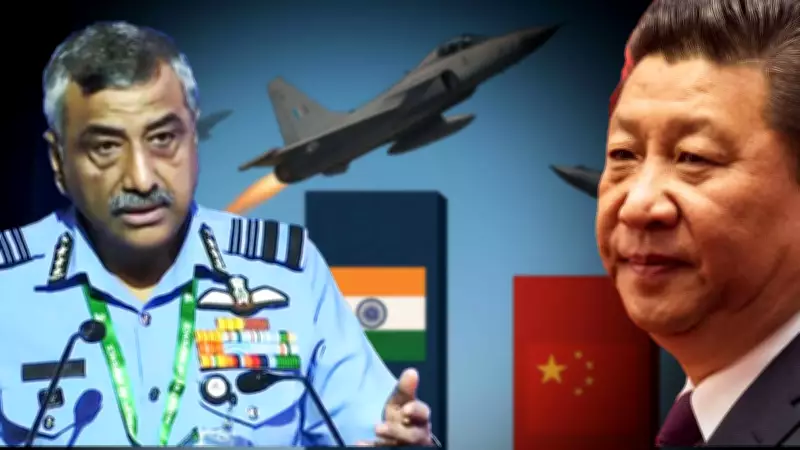
Indian Air Force Raises Alarm Over China's Strategic Expansion in South Asia and Indian Ocean
China's rapidly growing presence across South Asia and the Indian Ocean region is generating significant strategic concerns for India, according to a senior military official. Addressing a seminar in Delhi, Air Marshal Ashutosh Dixit emphasized that Beijing increasingly perceives India as a potential threat rather than a cooperative partner in the region.
China's Network of Strategic Assets
Air Marshal Dixit pointed to Chinese-backed infrastructure projects under the Belt and Road Initiative as creating a comprehensive network of strategic assets encircling India's maritime domain. Key developments include:
- The development of Gwadar Port in Pakistan, which provides China with crucial access to the Arabian Sea
- Strategic control over Hambantota Port in Sri Lanka through long-term lease agreements
- Expanding Chinese influence in Bangladesh through infrastructure investments and diplomatic engagement
- Growing Chinese presence in the Maldives, affecting traditional Indian partnerships in the island nation
These developments are fundamentally reshaping regional dynamics and creating new security challenges for India, according to the Air Force official.

Complex Security Environment
Dixit warned that India faces an exceptionally complex security environment, positioned between two nuclear-armed neighbors—China and Pakistan. This dual challenge requires sophisticated strategic planning and robust defense capabilities to ensure national security.
Call for Enhanced Defense Capabilities
The Air Marshal outlined several critical measures needed to address these emerging threats:
- Strengthening defense capabilities through modernization of military assets and enhanced readiness
- Greater technological self-reliance in defense manufacturing to reduce dependence on foreign suppliers
- Sustained strategic partnerships through mechanisms like the Quadrilateral Security Dialogue (Quad)
Dixit emphasized that these measures are essential for maintaining stability in the broader Indo-Pacific region and countering China's expanding influence.
Strategic Implications for India
The Air Force assessment highlights how China's economic initiatives are translating into strategic advantages across South Asia. The Belt and Road Initiative, while presented as development projects, is creating military and logistical footholds that could potentially restrict India's strategic options in its own neighborhood.
This warning comes at a time when India is seeking to balance its economic engagement with China while protecting its strategic interests in the region. The Air Marshal's comments underscore the growing military dimension of what has traditionally been viewed through economic and diplomatic lenses.