Goa's Draft Coastal Plan Permits Fisherfolk Housing Near Shoreline
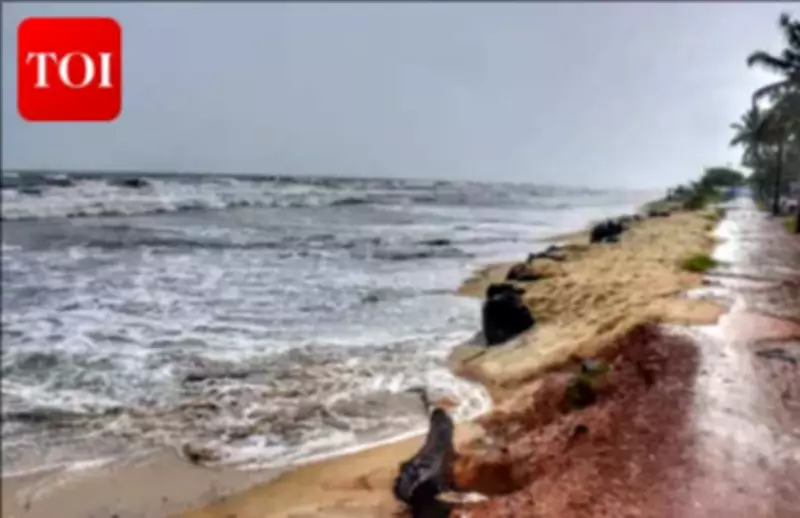
In a significant development for traditional coastal communities, the draft comprehensive plan for fishermen and other local residents in Goa includes a provision to allow construction and reconstruction of dwelling units between 100 meters and 200 meters from the high tide line (HTL) along the seafront. This initiative specifically targets fisherfolk and other indigenous coastal populations, addressing their housing needs while considering environmental safeguards.
Mandatory Public Consultation and Expert Involvement
Following directives from the National Green Tribunal, the shoreline change management plan must undergo mandatory public consultation. The responsibility for this work has been entrusted to the National Centre for Sustainable Coastal Management (NCSCM) based in Chennai, as confirmed by a government officer. The NCSCM has already submitted the draft shoreline change management plan after extensive consultations with various national institutes specializing in coastal subjects.
The draft shoreline change management plan is scheduled to be presented for public feedback alongside the draft Coastal Zone Management Plan (CZMP) 2019. Additionally, the draft comprehensive plan, integrated with CZMP 2011, includes detailed maps highlighting fisherman houses and other infrastructure essential for fishing activities. These documents are now prepared and ready for review.

Comprehensive Planning with Disaster Management Provisions
A government officer elaborated that the comprehensive plan has been formulated by the state government in close consultation with traditional coastal communities, particularly fisherfolk. The plan incorporates necessary disaster management provisions to ensure safety while permitting construction and reconstruction of dwelling units within the 100m to 200m zone from the HTL. This approach balances community needs with environmental resilience.
During the development of CZMP 2011, management plans for critical ecological aspects such as turtle nesting, mangrove conservation, and khazan (traditional saline floodplains) preservation were prepared and subsequently approved by the Goa Coastal Zone Management Authority (GCZMA). These elements form a foundational part of the ongoing coastal management efforts.
Integration with Eco-Sensitive Area Management
The comprehensive plan is set to be forwarded to the National Institute of Oceanography (NIO) for inclusion in the Eco-Sensitive Areas (ESA) management plan. This step aims to harmonize housing provisions with broader environmental protection goals, ensuring that coastal development does not compromise ecological integrity.
However, the finalization of CZMP 2019 has faced delays due to pending submissions. The NIO has yet to provide the environment management plan for ecological sensitive areas and the integrated island management plan. Additionally, the tourism and forest departments have not submitted the eco-tourism plan. These components are crucial for a holistic coastal management strategy.
Path Forward and Public Engagement
Once these pending plans are finalized, the state government will conduct public consultations to gather input and finalize both the comprehensive plan and CZMP 2019. The task of preparing CZMP 2019 has been awarded to the National Centre for Earth Sciences (NCESS) in Thiruvananthapuram, which has already forwarded the draft to the government for further action.
The Department of Environment and Climate Change has circulated the draft CZMP 2019 to various government departments, corporations, and autonomous bodies, soliciting their comments and suggestions. The deadline for submissions was set for March, but a senior officer noted that only three departments have submitted their objections and suggestions so far. This limited response highlights the need for broader engagement to ensure the plan's effectiveness and acceptance.
In summary, Goa's draft coastal plan represents a proactive effort to address the housing needs of fisherfolk while adhering to environmental regulations. Through mandatory public consultation and integration with expert-led management plans, the state aims to create a balanced approach that supports traditional communities and protects coastal ecosystems for future generations.