

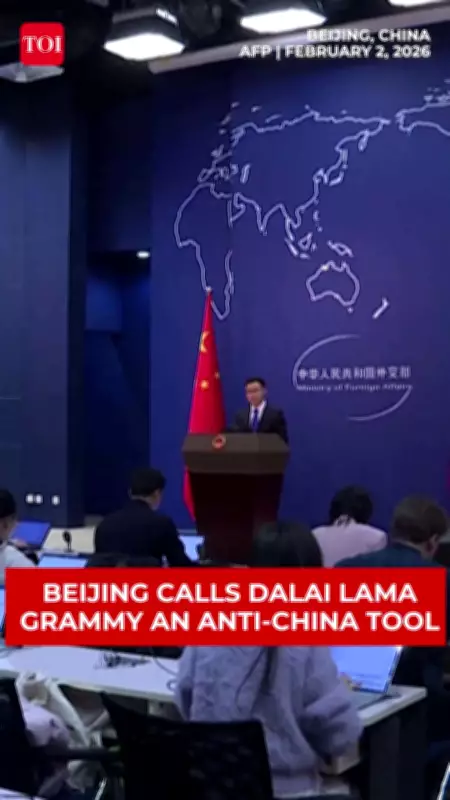
China Condemns Dalai Lama's Grammy Award as Political Provocation
In a strongly worded statement, the Chinese government has denounced the recent Grammy Award recognition given to the Dalai Lama, labeling it as deliberate political manipulation aimed at undermining China's sovereignty. The controversy has emerged amid escalating cultural tensions between China and Western institutions.
Beijing's Official Response
The Chinese Foreign Ministry issued a formal condemnation, stating that the Grammy Awards ceremony has been exploited by anti-China forces to promote separatist agendas. Beijing maintains that such recognition constitutes interference in China's internal affairs and violates fundamental principles of international relations.
Chinese officials emphasized that cultural platforms should not be used as vehicles for political propaganda, particularly regarding what China considers sensitive territorial matters. The statement warned that such actions could damage cultural exchanges and harm international relations.

Background of Rising Cultural Tensions
This incident occurs against a backdrop of increasing cultural friction between China and Western award institutions. In recent years, several international cultural events have become arenas for political statements regarding China's policies, particularly concerning Tibet.
The Chinese government has consistently opposed any international recognition of the Dalai Lama, whom it views as advocating for Tibetan separation. This Grammy controversy represents the latest chapter in this ongoing diplomatic and cultural struggle.
International Reactions and Implications
While China's response has been unequivocal, international observers note that cultural awards increasingly intersect with political messaging. The Grammy Awards, traditionally focused on musical achievement, have occasionally become platforms for artists to express political views on various global issues.
This development raises important questions about the relationship between cultural recognition and political expression, particularly when involving figures with significant political dimensions like the Dalai Lama.
Broader Context of Cultural Diplomacy
The incident highlights the growing complexity of cultural diplomacy in an increasingly polarized global environment. As cultural institutions navigate political sensitivities, they face difficult choices about recognition and representation.
China's strong reaction underscores its determination to control narratives about Tibet and resist what it perceives as Western attempts to influence its domestic affairs through cultural channels.
The controversy is likely to have lasting implications for cultural exchanges between China and international award bodies, potentially affecting future collaborations and recognitions in the global cultural sphere.






