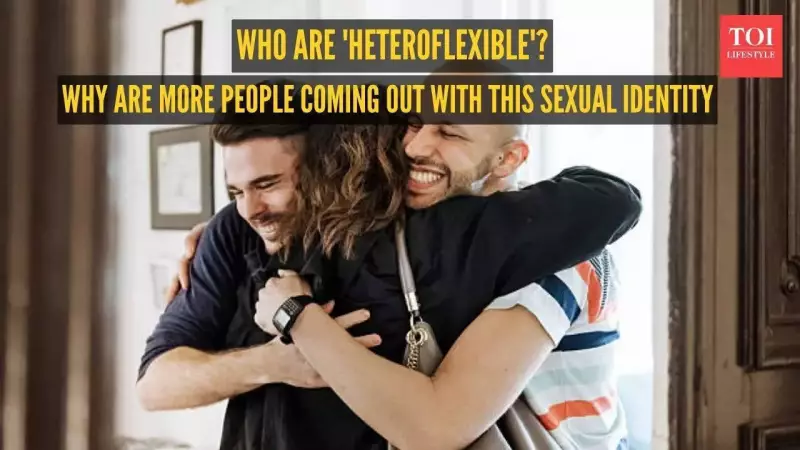
What began as a niche term on dating profiles has rapidly evolved into a mainstream conversation. Over the past year, the identity label 'heteroflexible' has moved from the confines of app bios into everyday dialogue, marking a significant shift in how people perceive and express their sexuality.
What Does Heteroflexible Mean?
So, who exactly are heteroflexible individuals? In simple terms, this label typically describes people who identify as mostly straight but remain open to romantic or sexual experiences with someone of the same gender. The core attraction is heterosexual, but with an acknowledged flexibility or curiosity for exceptions, as explained by mental health resource Verywell Mind.
The scale of this trend is staggering, according to hard data. Dating app Feeld's recent annual Raw report reveals that heteroflexibility is officially the fastest-growing sexuality globally. The number of people identifying with it has skyrocketed by a massive 193% in just the last year.

In concrete numbers, this translates to a shocking 15% of the American population, or approximately 50 to 55 million Americans, who now see themselves as heteroflexible. A demographic breakdown shows this group is dominated by millennials, who make up two-thirds of the total. Generation Z accounts for 18%, while Generation X represents 15.5%.
Why Is This Identity Gaining Momentum?
Experts point to the term's inherent subjectivity and flexibility as a key driver for its popularity. The 'heteroflexible' category acts as a broad umbrella, comfortably encompassing a diverse range of experiences.
This includes straight individuals who have enjoyed a same-sex encounter, heterosexuals who have occasionally felt same-sex attraction, those who are bicurious, and even people in straight relationships open to experiences involving more than one gender.
Dr. Luke Brunning, a lecturer in applied ethics at the University of Leeds, offered a philosophical perspective. He suggested that it would be surprising if people never experienced sexual curiosity about their own gender, noting that attraction rarely follows neat and predictable patterns.
The Feeld study also highlighted interesting geographic trends. Berlin emerged as the world's most heteroflexible city. Meanwhile, New York City recorded the fastest-growing bisexual population, with an increase of 161%.
Reactions and Self-Identification
Despite its growing acceptance, the rise of heteroflexibility has not been without controversy. Some critics within the bisexual and pansexual communities argue that the term encroaches on their territory. They express concern that it could contribute to the erasure of their identities, especially during a time when they have fought hard for visibility and recognition.
For those wondering if the label might fit them, certain common criteria can serve as a guide. According to Verywell Mind, you might be heteroflexible if:
- You identify as straight but have enjoyed being with someone of the same sex.
- You prefer the opposite sex but have felt attraction to the same sex on a few occasions.
- Terms like "queer" or "bisexual" don't feel like an exact fit for your orientation.
- You'd consider being with someone of the same sex, but only in specific situations.
- You are content with your primary orientation but maintain a sense of curiosity.
- Being with someone of the same sex is on your bucket list, yet you are happy with opposite-sex partners.
As societal norms around individual expression continue to evolve, aligning with a sexual identity like heteroflexibility is increasingly seen as a personal and free choice. In today's world, defining one's self is becoming as natural as expressing a thought, reflecting a broader movement towards authenticity and personal truth.