Indore Fire Tragedy: Seven Family Members Killed, Three Critically Injured in Early Morning Blaze
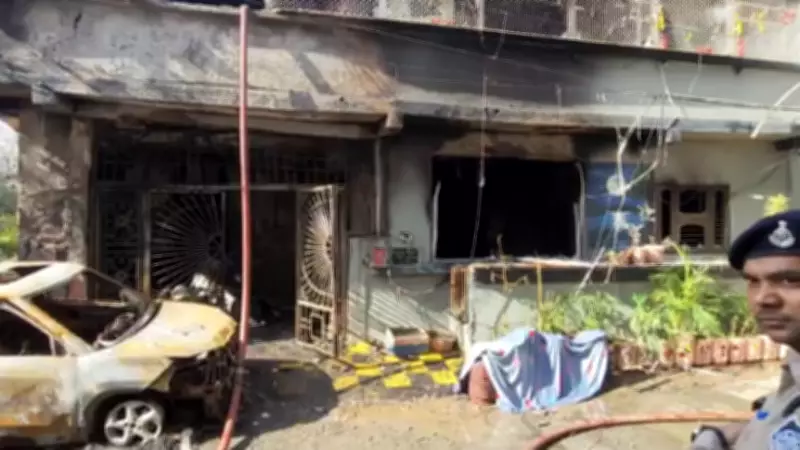
A devastating fire erupted at a three-storey residential building in the Brijeshwari Annex area near Bengali Square in Indore early on Wednesday, resulting in the tragic deaths of at least seven members of a single family, including a 12-year-old girl. Three other individuals sustained critical injuries and are currently undergoing treatment at a local hospital.
Explosion at EV Charging Point Suspected as Initial Trigger
Commissioner of Police Santosh Singh stated that the blaze may have originated from an explosion at an electric vehicle charging point located outside the premises around 4 a.m. According to initial reports from response teams, the fire spread rapidly following this suspected explosion.
"Around 10 LPG cylinders were also stored in the house, some of which exploded. We witnessed two to three explosions ourselves, which made the situation extremely critical," Singh elaborated, highlighting the compounding danger posed by the stored cylinders.
Rescue Operations Hampered by Electronic Locking Systems
The building, which had three occupied floors, presented significant challenges to rescue efforts due to electronic locking systems. Authorities believe a power failure during the incident may have caused these locks to remain engaged, effectively trapping residents inside.
"It appears the occupants were unable to exit as the electronic locks did not open," Singh explained, underscoring a critical safety issue in modern residential structures.
Timeline of the Emergency Response
Fire tenders and emergency teams rushed to the scene within minutes of the alarm. However, the situation escalated dramatically between 4:00 a.m. and 4:30 a.m. as multiple explosions were reported.
- Rescue teams accessed the burning structure through an adjoining building, braving intense flames and thick smoke.
- Three people were initially brought out safely from the inferno.
- Several others remained trapped, particularly in bedroom areas where the fire had spread rapidly.
- Six individuals were later recovered in an unconscious state and transported to hospital, where they were declared dead.
- Officials confirmed that the deaths resulted from smoke inhalation rather than direct burns.
Extensive Damage and Investigation Findings
Firefighters eventually managed to contain the blaze and prevent it from spreading to adjacent houses. The middle floor of the building suffered extensive damage, with parts of the structure rendered unsafe for occupancy.
The house belonged to Manoj Pugalia, a polymer trader. Police investigations suggest that inflammable materials beyond the LPG cylinders might have been present inside the residence, potentially exacerbating the fire's intensity.
Victims and Survivors Identified
The deceased have been identified as:
- Vijay Sethia (65)
- Chhotu Sethia (22)
- Suman (60)
- Manoj Pugalia (65)
- Simran (30)
- Rashi Sethia (12)
- Tinu (35)
The three injured survivors currently receiving medical care are Saurabh Pugalia (30), Ashish (30), and Harshit Pugalia (25).
Political Response and Safety Concerns Over EV Charging
The tragic incident has ignited a crucial debate regarding the safety of electric vehicle charging points in residential areas. State Minister Kailash Vijayvargiya visited the site and described the event as an 'alarming wake-up call for the EV era.'
"As society moves towards electric vehicles, we must ensure safety protocols are foolproof. I have directed the Police Commissioner to form an expert committee to create a Standard Operating Procedure for EV charging to prevent such recurrences," Vijayvargiya stated, signaling potential regulatory changes ahead.
This tragedy underscores multiple safety vulnerabilities—from EV infrastructure to residential storage of hazardous materials and the reliability of modern security systems during emergencies—that demand immediate attention from authorities and urban planners alike.