From Corporate Boardrooms to London's Dining Tables: An IITian's Culinary Journey
Ankita Khante's career trajectory reads like a classic success story—until it took an unexpected, flavorful turn. A graduate of the prestigious Indian Institute of Technology Guwahati, she had secured a coveted position as a product designer with a multinational corporation in Bengaluru. Her professional path seemed firmly established, marked by achievement and recognition in the corporate world.
The London Transition and Culinary Awakening
Life presented a new chapter when her husband, Aman Krishna, received an opportunity to work as a data scientist for a leading bank in London. The couple decided to relocate, bringing Ankita to a city where the pace of life initially felt unsettlingly calm. Accustomed to fast-paced workdays and driven professional environments, she found herself with an unfamiliar commodity: time.
"I suddenly had time," Ankita reflects. "And I didn't want to let it pass without doing something meaningful." This period of transition became the fertile ground where a long-dormant passion for cooking finally found its voice. For Ankita, culinary arts had always been deeply personal—rooted in memory, regional flavors, and creative experimentation.

The Birth of The Bouzi Club
What began as intimate dinners for close friends and relatives gradually evolved into something more substantial. The Bouzi Club emerged as London's distinctive supper club, initially conceived as small gatherings around shared meals and conversations. However, the food itself had other plans.
Word of mouth spread quietly but persistently. Guests returned, bringing friends and colleagues. Requests began pouring in—not for typical restaurant fare, but for dishes that felt rare, thoughtful, and authentically Indian. Two regional specialties became unexpected favorites: Dholi Kadhi and Nagpur-style Sambhar Vadi—dishes rarely seen on restaurant menus, especially outside India.
"I wanted to serve food that was regional but luxurious," Ankita explains. "Fusion, but original. Things people wouldn't easily find in restaurants." This philosophy extended to the club's name—Bouzi, derived from tarbooz (watermelon), which inspired one of her signature creations: a watermelon and feta cheese salad that balances freshness with nostalgic flavors.
The Golgappa Icebreaker Phenomenon
As The Bouzi Club grew, Ankita observed an interesting social dynamic during her dinners. "In the beginning, people were quiet," she recalls. "Drinks would be served, but conversations took time to warm up. We needed an icebreaker."
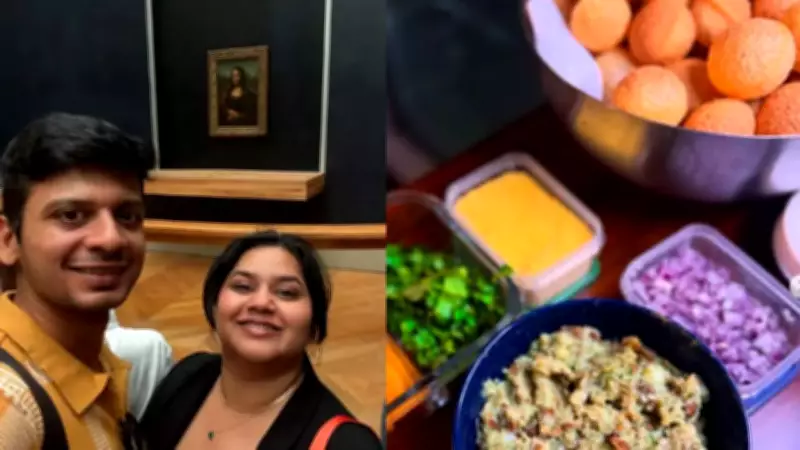
That icebreaker arrived in the form of golgappa—India's beloved street food, known regionally as pani puri. The moment these crisp puris filled with flavored water were introduced, the atmosphere transformed completely. Stories surfaced, laughter followed, and connections deepened.
"This is one food loved across the length and breadth of India," Ankita notes. "Everyone has a golgappa story. Sharing those stories increased not just conversation, but connection." From memories of street corners and school days to family outings and late-night cravings, each guest brought personal narratives that turned meals into shared experiences.
Building a Culinary Community
Today, The Bouzi Club has surpassed Ankita's initial expectations. It has become a space where regional Indian cuisine is reintroduced with care and authenticity, where meals unfold gradually, and where strangers often leave as friends. Her husband Aman, who shares her passion for food and hospitality, has provided consistent support throughout this journey.
The club's success has enabled expansion beyond London. Ankita recently announced her next supper club event in Nagpur on February 12th at Three Beans, Byramji Town—an intimate gathering limited to just fifteen participants.

Beyond Career Change: A Philosophy of Timing
Ankita's story transcends the conventional narrative of abandoning one career for another. It represents something more nuanced: listening to quieter instincts when life creates space for them. In a city far from her homeland, she has built something deeply personal, drawing from memory, regional heritage, and emotional resonance.
The Bouzi Club stands as testament to the idea that passion doesn't always announce itself dramatically. Sometimes, it waits patiently—until the timing, and the table, are perfectly aligned for its expression.