Union Budget 2026 Proposes Turtle Trails to Showcase Olive Ridley Nesting Sites
In a significant move to promote ecological tourism, the Union Budget presented on Sunday has placed the Olive Ridley turtle nesting sites firmly on India's tourism map. Finance Minister Nirmala Sitharaman announced the establishment of "turtle trails" along key coastal areas of Odisha, Karnataka, and Kerala as part of broader efforts to boost sustainable tourism practices.
Odisha's Olive Ridley Nesting Sites to Get Official Recognition
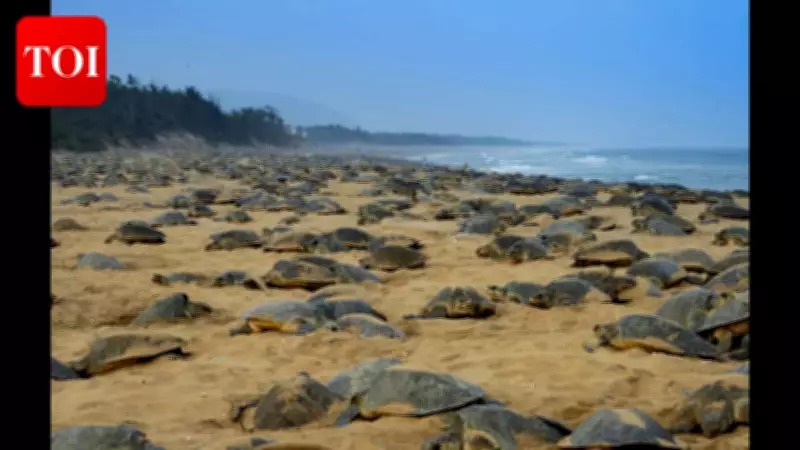
The announcement holds particular significance for Odisha, where mass nesting (known as arribada) of the endangered Olive Ridley turtles occurs at three primary locations: Rushikulya beach in Ganjam district, Gahirmatha Marine Sanctuary in Kendrapada, and the Devi river mouth in Puri district. These sites witness one of nature's most spectacular phenomena, with the Rushikulya rookery setting a remarkable record in February last year when over 700,000 turtles arrived to lay eggs during a nesting period that lasted more than a week.
Tourism stakeholders in the region have welcomed the Budget proposal, noting that some local tour operators and hotels near Rushikulya and Gahirmatha already organize short trips for visitors to witness this incredible natural spectacle. Rabindra Sahu, secretary of the Olive Ridley Protection Club at Podampeta, expressed optimism while emphasizing caution: "If turtle trails are officially launched, many tourists will show interest in witnessing the nesting. However, utmost care must be taken to ensure that the nesting environment is not disturbed."

Broader Tourism Development Across Purvodaya States
Beyond the turtle-specific initiative, Finance Minister Sitharaman also announced the creation of five tourism destinations across five Purvodaya states: Odisha, Bihar, Jharkhand, West Bengal, and Andhra Pradesh. This regional development plan aims to enhance tourism infrastructure and create employment opportunities in eastern India.
Local tourism experts have suggested that the government should consider including tourist guides from Odisha in the pilot scheme announced for upskilling 10,000 guides at 20 iconic tourist sites. This standardized, high-quality 12-week hybrid training programme, developed in collaboration with an IIM, could significantly enhance the quality of tourism services.
Debasish Patnaik, a travel entrepreneur, highlighted the specific needs of Odisha's tourism sector: "Sun Temple at Konark draws the third highest number of tourists, both domestic and international, in the country. It needs more skilled guides to cater to the rising number of visitors every year. The Budget proposal should include Konark guides as well."
Regional Concerns and Omissions in Budget Proposals
While the Budget announcements have been largely welcomed, some omissions have drawn criticism from local representatives. The exclusion of Koraput's Deomali from the proposed mountain trekking trails, while including Andhra Pradesh's Araku Valley, has generated particular resentment.
Saptagiri Ulaka, Koraput MP, expressed disappointment: "Although the Budget announces the development of mountain trekking trails in Araku Valley under national eco-tourism initiatives, it completely ignores Deomali — the highest peak of Odisha. Deomali is not merely a geographic landmark; it is central to Odisha's tribal identity, eco-tourism potential and local livelihoods."
Ulaka emphasized that Deomali possesses equal, if not greater, potential for sustainable trekking, community-led tourism, and youth employment if supported with basic infrastructure, safety systems, and trained local guides. He characterized the omission as reflecting "poor regional planning and a lack of sensitivity towards Odisha's tribal heartland."
Historical Context and Future Prospects
This is not the first time eco-tourism initiatives have been proposed for turtle nesting areas. A few years ago, the state government had announced an eco-tourism project near the turtle rookeries, but it failed to materialize. The current Union Budget proposal represents a renewed commitment at the national level to develop these unique natural attractions while balancing conservation concerns.

The turtle trails initiative, combined with the broader Purvodaya tourism development plan, signals the government's recognition of eastern India's untapped tourism potential. As these proposals move toward implementation, stakeholders emphasize the need for careful planning that prioritizes environmental protection while creating sustainable tourism opportunities that benefit local communities.