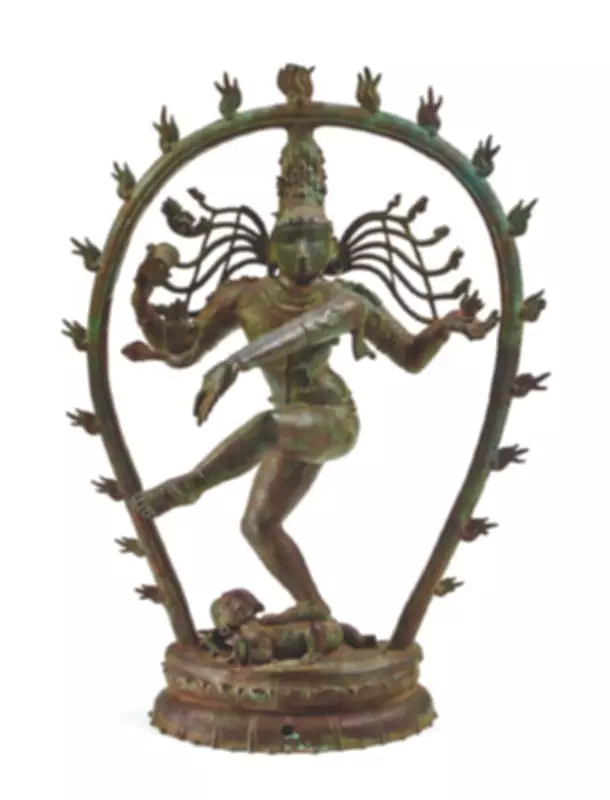
Smithsonian's Partial Idol Return Sparks Legal and Ethical Debate
The recent announcement by the Smithsonian National Museum of Asian Art to repatriate two significant temple bronzes to India has been met with cautious appreciation. The return of the Alattur Somaskanda and the Veeracholapuram Sundarar–Paravai bronzes represents a belated acknowledgment of documented temple thefts that have plagued India's cultural heritage for decades.
Evidence of Theft Has Been Public for Years
What makes this development particularly noteworthy is that evidence establishing the origins of these artifacts has been publicly available since 2017. The fact that it has taken nearly eight years for this evidence to translate into concrete action raises serious questions about institutional responsiveness and commitment to ethical museum practices.
More troubling than the delayed response is the Smithsonian's proposal to retain the associated Nataraja idol, the third artifact identified from the same set of restituted objects, on what they term a "long-term loan." This arrangement attempts to create a middle ground between complete restitution and outright retention, but it fails to withstand legal and ethical scrutiny.

Temple Bronzes Are Not Generic Artworks
Temple bronzes occupy a unique legal and religious status under Indian law. According to principles codified in the Madras Hindu Religious and Charitable Endowments Act of 1959, these artifacts are considered inalienable religious property belonging to living temples, which are recognized as juridical persons. This means temple idols cannot be sold, gifted, exported, or loaned by individuals or even the government.
The state functions only as a trustee and regulator of these religious properties; it does not acquire ownership title. A loan arrangement fundamentally presupposes the existence of a lawful owner with the authority to lend. In cases involving illicitly removed temple bronzes, no such legitimate owner exists outside the temple itself.
Provenance Records Reveal Troubling History
The provenance record of the Nataraja idol illustrates why the loan proposal collapses under careful examination:
- The Smithsonian's own files show no documented provenance before March 10, 1973
- The only record from that date is a London dealer's invoice with no explanation of how or when the bronze left India
- There is no export permit authorizing its removal from the country
- Customs records from 1972–1973 mis-declared the country of origin as Thailand
- In 1995, the dealer attempted to backdate the acquisition to 1972 without proper documentation
These were clear red flags even at the time of acquisition, not mere technicalities discovered in hindsight. The absence of a formal theft report does not negate temple ownership, particularly in a historical context where documentation of thefts during the 1950s–1970s was often sparse or non-existent.
Pre-Theft Evidence Exists for All Three Idols
What makes the Smithsonian's position particularly untenable is the existence of decisive pre-theft evidence for all three artifacts. The IFP archive documents:
- The Nataraja at the Sri Bhava Aushadeshvara Siva Temple in Tirutturaippundi in 1957
- The Veeracholapuram Sundarar–Paravai in 1956
- The Alattur Somaskanda in 1959
The Smithsonian has accepted this evidence as sufficient justification for returning the Somaskanda and Sundarar–Paravai bronzes. The Nataraja stands on identical evidentiary footing. To treat the same proof differently represents not a legal distinction but a policy choice driven by institutional convenience.
Legal Precedent Rejects Such Arrangements
The argument for a long-term loan collapses completely when examined against established legal precedent. In the landmark Pathur Nataraja case decided by British courts in London during the early 1980s, the court explicitly rejected defenses based on market purchase, good faith acquisition, and absence of theft reports.
The court recognized that temple bronzes constitute religious property held in trust and that unlawful removal fundamentally vitiates any subsequent claims to title. These legal principles were clearly established decades ago and continue to hold relevance today.

Dangerous Precedent of Selective Restitution
Accepting long-term loans for illicitly acquired temple artifacts would establish a dangerous precedent with far-reaching consequences:
- It would allow museums to retain the most iconic objects while returning less significant ones
- It would transform restitution from a matter of legal right to one of institutional discretion
- It would encourage the laundering of contested objects through negotiated arrangements rather than acknowledgment of wrongful possession
- It would undermine the ethical foundations of cultural heritage protection
Even if the Indian government wished to acquiesce to such loan arrangements, it lacks the legal capacity to do so. Temple bronzes vest in the deity, not in the state. No government can lend what it does not own, and a loan without a lawful lender is void from the beginning.
True justice in cases involving temple bronzes requires complete restitution, not negotiated compromises. Long-term loans represent not progress but regression in the ongoing struggle to protect India's cultural and religious heritage from historical wrongs that continue to demand redress.