The Royal Wedding Dresses That Made Fashion History
When a royal wedding unfolds, the world's attention often fixates on one pivotal element: the bride's dress. Beyond the vows and celebrity guests, the gown serves as the ultimate fashion statement, embodying tradition, elegance, and personal style. Fashion historians note that royal wedding dresses typically adhere to a strict formula—modest cuts with higher necklines, luxurious fabrics like heavy taffeta or Mikado silk, and dramatic trains designed for grand cathedrals. Over the decades, several royal brides have not only followed these rules but elevated them, creating unforgettable moments in fashion history. Let's delve into the most iconic royal wedding dresses of all time.
Grace Kelly: The Epitome of Elegance
It is impossible to discuss royal brides without paying homage to Grace Kelly. In 1956, the Hollywood star turned Princess of Monaco wore a gown gifted by her studio, MGM. Designed by Oscar-winner Helen Rose, the dress featured an exquisite antique Brussels lace bodice and a sweeping silk faille skirt. This ensemble set the gold standard for royal elegance, blending Hollywood glamour with regal sophistication in a way that continues to inspire bridal fashion today.
Princess Diana: The Fairy-Tale Moment
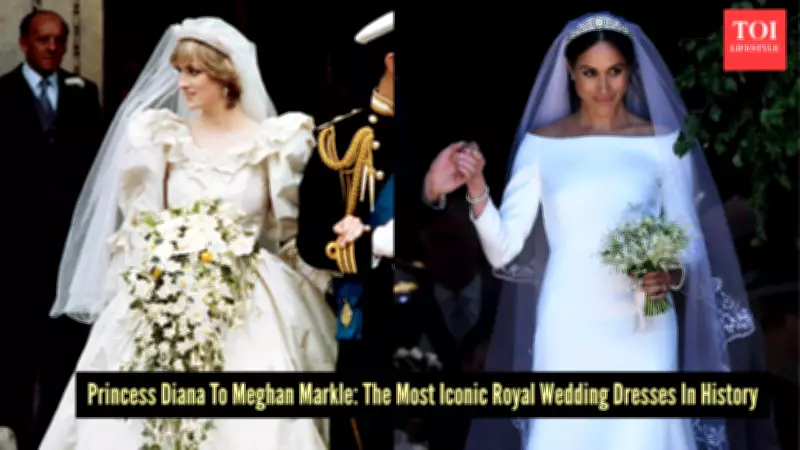
Princess Diana's 1981 wedding to Prince Charles delivered the quintessential fairy-tale moment. Designed by David and Elizabeth Emanuel, her ivory silk taffeta gown was a masterpiece of 1980s fashion. Embroidered with a staggering 10,000 pearls, it boasted dramatic puffed sleeves and a record-breaking 24-foot train. The dress was a fiercely guarded secret until Diana stepped out of her carriage, instantly becoming an iconic symbol of romance and grandeur.

Meghan Markle: Minimalist Chic
Not every royal bride opts for heavy embellishments. In 2018, Meghan Markle stunned the world with her minimalist approach. Her Clare Waight Keller for Givenchy dress was crafted from unembellished silk cady fabric with a sleek bateau neckline. The drama came from the 16-foot veil, hand-embroidered with the signature flora of all 53 Commonwealth countries. This sleek, simple design proved that understated elegance can be just as unforgettable as more ornate styles.
Queen Elizabeth II: A Symbol of Hope
Sometimes, the most meaningful dresses come with profound backstories. When Queen Elizabeth II married in 1947, Britain was still grappling with post-World War II rationing. She used ration coupons to pay for the materials of her Norman Hartnell gown. Adorned with 10,000 seed pearls arranged in spring flower motifs, the dress symbolized hope and rebirth for a nation in recovery, making it a poignant piece of history.
Princess Beatrice: A Tribute Through Upcycling
Decades later, Princess Beatrice paid a heartfelt tribute to her grandmother, Queen Elizabeth II. In 2020, Beatrice borrowed a vintage Norman Hartnell gown that the Queen had worn to a movie premiere in the 1960s. After adding sheer organza puff sleeves, she transformed it into her wedding dress, offering a beautiful example of royal upcycling and honoring family heritage in a modern context.
Kate Middleton: Reviving Tradition
Kate Middleton's 2011 wedding dress, designed by Sarah Burton for Alexander McQueen, masterfully echoed Grace Kelly's iconic look. Featuring a Victorian-inspired corset, long lace sleeves, and a nearly 9-foot train, this gown single-handedly revived the popularity of long-sleeved lace dresses. It remains one of the most copied bridal styles of the 21st century, showcasing how tradition can be reinvented for contemporary audiences.
Queen Rania of Jordan: Breaking the Mold
Queen Rania of Jordan broke from traditional European styles in 1993 with her Bruce Oldfield gown. Instead of the customary all-white look, her dress featured a bold tailored collar and rich gold embroidery inspired by traditional Syrian formal wear. This stunning design highlighted cultural diversity and personal expression, proving that royal wedding dresses can transcend conventional boundaries.

These iconic royal wedding dresses not only define moments in fashion history but also reflect the evolving roles and personalities of the women who wore them. From Grace Kelly's timeless elegance to Meghan Markle's modern minimalism, each gown tells a unique story of tradition, innovation, and enduring style.