Ralph Lauren's Paris Fashion Week Show Ignites Cultural Appropriation Debate
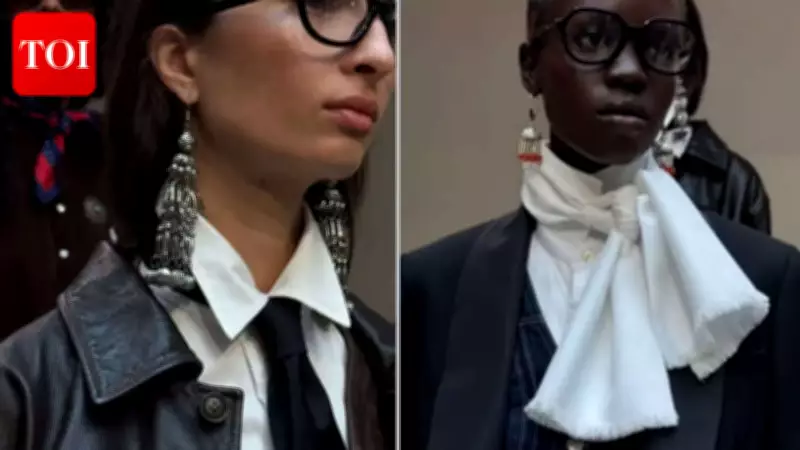
The global fashion industry has been electrified by the unveiling of new collections and dazzling creations as fashion week season unfolds across major capitals. Recently, the iconic American designer label Ralph Lauren presented its highly anticipated Fall 2026 women's collection at the prestigious Paris Fashion Week. While the runway showcased an array of long jackets, contemporary boots, and chic pants, it was the accessories that became the focal point of intense scrutiny and discussion.
Social Media Erupts Over Alleged Cultural Appropriation
Videos and photographs from the fashion show rapidly circulated across social media platforms, going viral within hours. Numerous users and fashion observers immediately pointed out that the models were adorned with long, silver dangling earrings that bore a striking resemblance to traditional Indian jewellery known as 'jhumkas.' This observation sparked a wave of criticism, with many accusing Ralph Lauren of appropriating Indian culture without providing proper attribution or credit to its origins.
Snigdha Sur, the founder and CEO of Juggernaut, took to the social media platform X to publicly call out the fashion house. In her post, she accused the brand of "monetising, rebranding and selling" Indian fashion for "big bucks." Her sentiment was echoed by countless other internet users who expressed frustration over what they perceived as yet another instance of Western designers borrowing from Indian cultural heritage without acknowledgment.

One user sarcastically questioned, "Are they calling it the Scandinavian chandeliers yet?" while another declared, "No this is actually pissing me off all Western designers do is steal." A third commentator added, "Ralph Lauren doing jhumkas while not mentioning its cultural heritage is peak whitewashing. This is why I don't get the 'oh it's not that deep' people. It is that deep when the West steals cultural pieces from the global south and east and tries to rebrand as its own."
Brand's Response and Historical Context of Jhumkas
In response to the growing controversy, Ralph Lauren issued a statement clarifying that the jewellery pieces in question were "crafted by Native American designers Neil Zarama, Jimmy Begay, and TÓPA as part of Ralph Lauren’s Authentic Makers and Artist in Residence programs." However, this explanation did little to quell the debate, as critics argued that the designs were unmistakably inspired by Indian jhumkas regardless of their creators.
The jhumka earring, with its distinctive bell-shaped design, holds profound cultural significance in India, with a history dating back to 300 BCE. Their origins can be traced to statues in the ancient temples of the Chola Dynasty, where they symbolized the grace and elegance of the classical dance form Bharatnatyam. Over centuries, jhumkas have become an integral component of traditional and bridal jewellery across various cultures within the Indian subcontinent, making their unauthorized use in Western fashion particularly sensitive.
A Pattern of Cultural Borrowing in Western Fashion
This incident is not an isolated occurrence in the fashion world. Several other Western brands and designers have faced similar accusations of piggybacking on Indian cultural artifacts without proper credit. For instance, LA-based jeweler Sophie Buhai recently went viral for her $850 'Nadia' earrings, which her website described as inspired by 'traditional Indian artistry' yet failed to acknowledge any Indian artists involved in their creation.
Previously, luxury brand Prada launched T-strap sandals that closely resembled Indian Kolhapuri chappals. It was only after significant public backlash that the company admitted the designs had been 'inspired by Kolhapuri footwear.' In July 2025, Dior also found itself in hot water when it unveiled a $200,000 ivory and gold houndstooth coat featuring traditional Indian mukaish embroidery from Lucknow. The brand neglected to credit the twelve Indian artisans who dedicated thirty-four days to crafting the intricate piece, leading to widespread condemnation.

The recurring theme of cultural borrowing without acknowledgment has reignited important conversations about respect, credit, and the ethical responsibilities of global fashion brands when drawing inspiration from diverse cultural traditions. As the debate continues to unfold, it highlights the delicate balance between artistic inspiration and cultural appropriation in an increasingly interconnected world.