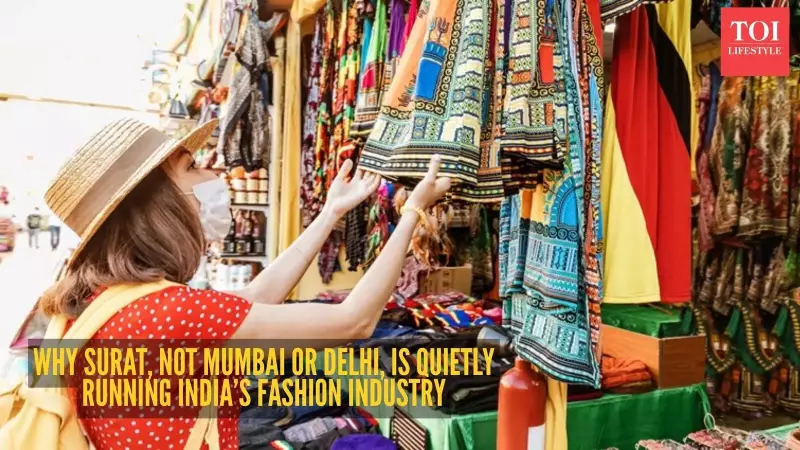
In the glittering world of Indian fashion, Mumbai is celebrated for its stylists and Delhi for its couture. However, the city of Surat holds a far more fundamental power: the scissors and the looms that clothe the nation. A visit to any bridal boutique in Delhi's Chandni Chowk reveals a telling scene. As a shopkeeper smooths out a heavily embroidered lehenga, he might confide that while the design is 'Delhi Designer', the fabric is pure Surat. This casual remark unveils a massive, often overlooked truth. While the metros battle for creative supremacy, Surat is the relentless engine ensuring millions of Indians can actually afford to wear the latest trends.
The Unstoppable Engine Room of Indian Fashion
Surat operates on a rhythm distinct from any other Indian metro. It is not defined by the chaos of Mumbai's locals or the brisk negotiations of Delhi's markets. Instead, its soundtrack is the constant hum of machinery. This city wakes up every single day to produce a staggering 30 million meters of fabric. If Mumbai represents the glamorous showroom window, Surat is the vast, indispensable factory floor that keeps the entire system running. Without this colossal output, designer boutiques across the country would simply run out of material, bringing the industry to a halt.
Speed, Sparkle, and the Democratization of Style
Surat's influence extends far beyond sheer volume; it is about breathtaking speed. When a new trend explodes onto the scene—be it inspired by a pop star's neon outfit or a celebrity's pastel wedding palette—it only becomes a nationwide phenomenon once Surat's printers swing into action. The city has mastered digital textile printing, enabling it to replicate and disseminate fast-fashion trends at a pace that rivals global giants. It acts as the fashion world's most efficient signal amplifier, turning viral moments into wearable reality for millions in record time.

Furthermore, Surat's role in adornment is not limited to fabric. The city is responsible for cutting and polishing approximately 90% of the world's rough diamonds, a figure so immense it seems almost fictional. The newly constructed Surat Diamond Bourse, an office complex so vast it surpasses the Pentagon in size, stands as a monument to this reality. Here, fashion is not merely about purchasing jewelry; it is about controlling the very ecosystem that creates it. While other cities consume luxury, Surat manufactures the market itself.
Reality City: The Capital That Lets Everyone In
Traditional fashion capitals like Paris or Milan are fortresses of exclusivity, defined by heritage and access. Surat presents a radically different, transactional model. It is fueled by pure, unglamorous production competence. This "Silk City" does more than just manufacture cloth and diamonds; it systematically democratizes desire. It takes the aspirational, often inaccessible dreams of high fashion and stitches them into something tangible for the average consumer.
As Surat transitions from a chaotic manufacturing hub to a structured global trade center, its definition of a fashion capital is being rewritten. It is no longer just the anonymous "backend" whispered about in markets. It is emerging as the "Reality City," transforming the industry from the ground up. The shopkeeper in Chandni Chowk, carefully packing a lehenga into a plastic bag, isn't just selling a garment. He is delivering the magic of feeling beautiful on a budget. And in a country of billions, that makes Surat a capital truly worth recognizing.