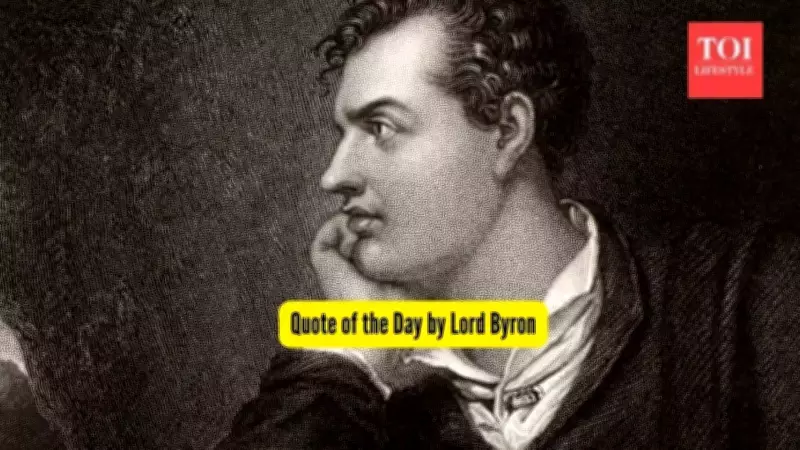
The Enduring Legacy of Lord Byron: Romanticism's Most Iconic Voice
For generations, readers across India and the world have been captivated by the works of Lord Byron. George Gordon Byron stands as one of the most significant and influential poets of the Romantic movement in English literature. His brief yet extraordinarily dramatic life left an indelible mark not only on poetry but also on politics and the collective imagination of society.
The Making of a Literary Legend
Byron's appeal extended far beyond his powerful verses. People were equally fascinated by his rebellious nature, profound emotional depth, and steadfast refusal to conform to societal expectations. He embodied the quintessential Romantic hero—passionate, flawed, restless, and fiercely independent. This combination of literary genius and personal charisma created a cultural phenomenon that continues to resonate today.
A Challenging Beginning
Byron's childhood was marked by hardship and instability. Born with a deformed foot, he experienced physical disability that brought both pain and emotional insecurity throughout his life. After losing his father at a young age, he was raised by his mother, whose own unstable temperament significantly impacted his development. Despite these challenges, Byron proved to be an exceptionally bright child, attending the prestigious Harrow School before advancing to Trinity College, Cambridge. His sharp wit and intellectual confidence made him stand out immediately among his peers.

The Path to Literary Fame
Byron's first notable publication, Hours of Idleness in 1807, brought him initial recognition despite facing criticism. Rather than retreating, Byron responded with characteristic defiance through his satirical poem English Bards and Scotch Reviewers, which cleverly mocked his detractors. His true breakthrough arrived with Childe Harold's Pilgrimage in 1812, a narrative poem inspired by his European travels. The work became an instant sensation, prompting Byron's famous declaration: "One morning I woke up and found myself famous."
The Essence of Byron's Poetry
The emotional intensity of Byron's poetry remains one of its defining characteristics. His verses explore universal themes of love, loss, freedom, exile, and resistance against authority. Byron didn't merely describe nature; he delved into the complexities of the human soul—its passions, contradictions, and suffering. Many of his characters embody loneliness, pride, and haunting guilt or disappointment, reflecting aspects of Byron's own personality. This literary innovation gave rise to the concept of the "Byronic hero"—a deeply flawed yet compellingly charismatic figure.
Byron's poetic style is celebrated for its clarity of language, musical rhythm, and dramatic expression. He avoided overly complicated diction, instead choosing to convey powerful emotions with directness and force. His writing masterfully blends lyrical beauty with sharp satire, moral questioning, and philosophical depth.
A Life of Controversy and Exile
Byron's personal life was as dramatic as his poetry. His numerous romantic relationships created significant scandal in early 19th-century English society. Eventually, facing accusations, a failed marriage, and harsh public judgment, he left England permanently. During his exile and travels across Europe—particularly in Italy and Greece—he continued to write prolifically while openly expressing his political views. Byron died in Greece in 1824 at just 36 years old, succumbing to illness while supporting the Greek independence movement.
Byron's Philosophical Insight: The Power of Love
One of Lord Byron's most memorable reflections captures his philosophical depth: "There are four questions of value in life... What is sacred? What is the spirit made of? What is worth living for and what is worth dying for? The answer to each one is the same. 'Only love.'"

In these profound words, Byron distills life's most essential philosophical inquiries into a singular, potent truth. He presents love not merely as an emotion but as the fundamental essence of human existence and the source of all meaning. According to Byron, our capacity to love defines our sense of sacredness, shapes our inner spirit, and gives purpose to our lives. He further suggests that love represents the ultimate moral value—worth both living for and sacrificing for.
The conclusion appears beautifully simple, yet the questions themselves are deeply complex. This demonstrates Byron's belief that profound truths need not be difficult to comprehend. Through this reflection, Byron reminds us that beyond ambition, power, or success, love remains the only force that gives life its deepest significance.
The Lasting Impact
Lord Byron's influence extends far beyond his lifetime. His creation of the Byronic hero has become a lasting archetype in literature and popular culture. His passionate advocacy for political freedom and individual expression continues to inspire readers and thinkers worldwide. For contemporary audiences in India and across the globe, Byron's work offers timeless insights into human nature, emotion, and the eternal struggle for authenticity in a conformist world.
His legacy serves as a powerful reminder that great art often emerges from personal turmoil, and that rebellious spirits can create enduring beauty that transcends generations.