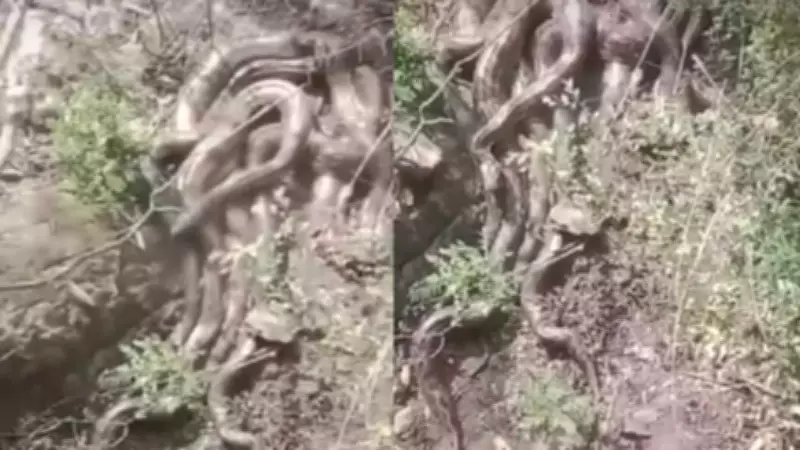
Giant Python Cluster Spotted Near Himachal Temple, Video Goes Viral
A startling wildlife encounter in Himachal Pradesh's Kangra district has captured widespread attention after a cluster of giant pythons was discovered near a local temple. The incident occurred in the Gahliyan area, close to the Kalothare Wali Mata temple, where residents initially mistook the entwined snakes for a pile of tree roots.
Rare Sighting Alarms Locals
According to eyewitness accounts, when a stone was thrown towards the mass, it began to move, revealing itself as a group of five to six large pythons resting together. The reptiles quickly dispersed, slithering into the nearby forest within minutes. Bystanders recorded the entire episode on their mobile phones, and the footage has since gone viral on social media platforms, sparking curiosity and concern.
Experts emphasize that such groupings are highly unusual for pythons. While these snakes may occasionally gather briefly due to environmental factors, seasonal activity, or breeding behavior, it is rare to find several large individuals coiled in one spot. This has raised concerns among residents, particularly those living near forested zones and the temple premises.

Authorities Respond with Safety Advisories
Following the viral video, local authorities, including the forest department, have been notified. They have advised residents to exercise caution in areas where human and wildlife habitats overlap. Recommendations include avoiding disturbance of snakes and promptly reporting any sightings to officials to ensure safety for both communities and wildlife.
Monitoring efforts may be intensified in the region to assess the situation and prevent potential conflicts. The incident underscores the importance of awareness and precautionary measures in forest-adjacent villages.
Understanding Python Behavior and Ecology
Pythons, belonging to the family Pythonidae, are non-venomous constrictors found across Asia, Africa, and Australia. Their diet primarily consists of mammals, birds, and occasionally reptiles, with larger adults capable of preying on medium-sized animals like deer or pigs.
Indian rock pythons (Python molurus) are native to various habitats, including forests, wetlands, grasslands, and rocky areas. They prefer environments with ample cover and prey availability. Attacks on humans are exceedingly rare, as these snakes generally avoid contact and are non-aggressive unless provoked.
Temporary gatherings, such as the one observed in Kangra, do not indicate aggressive behavior but may be linked to specific ecological or seasonal triggers. After the incident, the snakes retreated into nearby undergrowth, highlighting their tendency to avoid human interaction.
This event serves as a reminder of the delicate balance between urban expansion and wildlife conservation, urging communities to foster coexistence through informed practices and respect for natural habitats.