Henry Noltie's 'Flora Indica' Revives Lost Indian Botanical Artists
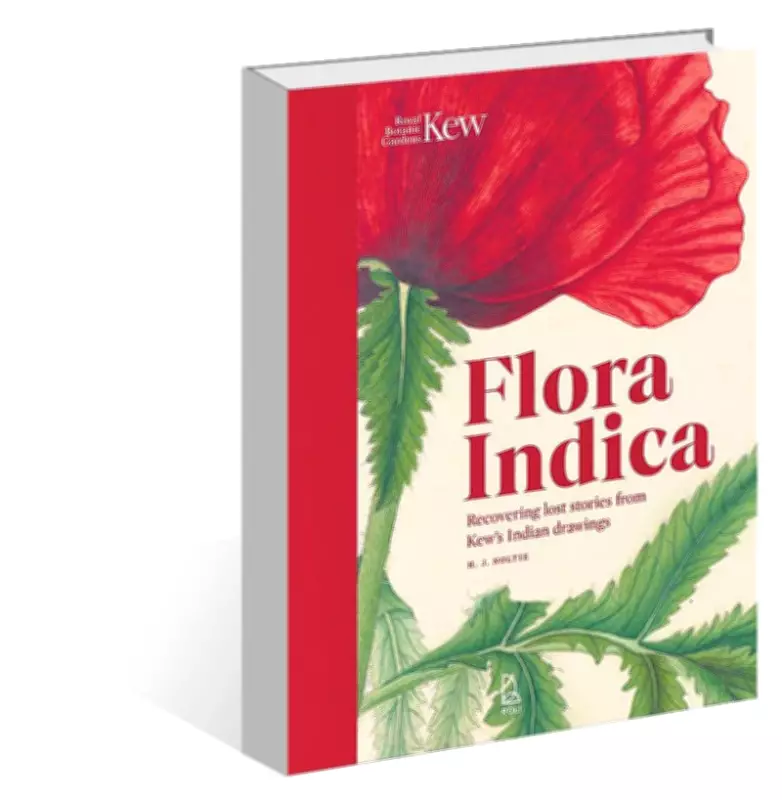
In the realm of historical scholarship, some books organize knowledge, while others restore memory. 'Flora Indica: Recovering Lost Stories from Kew's Indian Drawings' by Henry Noltie accomplishes both with the meticulous care of a field naturalist and the ethical clarity of a historian. This volume transcends a mere study of beautiful plant paintings; it serves as a profound act of restitution, recovering the histories of Indian botanical art produced under the patronage of the British East India Company.
Unearthing Hidden Treasures in Kew's Vaults
The journey begins in the archives of the Royal Botanic Gardens, Kew, where over 7,000 Indian botanical drawings, created between 1790 and 1850, lie scattered across herbarium cabinets and rare book rooms. Taxonomist, art historian, and botanist Henry Noltie initiated his research with an initial selection of 52 works, which expanded into a broader inquiry. He sought to understand how these images traveled and what became of their creators. Building on decades of prior work at the Royal Botanic Garden, Edinburgh, Noltie applied a method that was both taxonomic and humane, reuniting drawings with their commissioners, contexts, and, wherever possible, their artists.
The Global Network of Botanical Gardens
Edinburgh's botanic garden, founded in 1670 as a medical garden, trained surgeon-botanists who dispersed across the British Empire, collecting specimens and sending them back home. Kew, established in 1759, evolved into the central hub of a worldwide botanical network. Between these two institutions flowed a continuous exchange of seeds, specimens, correspondence, and images, facilitating the spread of botanical knowledge.

Indian Artists and Their Workshops
At the Calcutta Botanic Garden, established in 1787, artists from diverse castes, professions, and skill sets began producing images of remarkable precision. Other botanical gardens, such as those in Saharanpur and Dapuri near Pune, maintained their own workshops where artists created thousands of paintings, often replicated multiple times. However, most records only noted the species, location, and patron who commissioned the work, rarely including the name of the artist. As dried specimens gained priority, illustrations became secondary, sorted by family and genus, mounted on sheets, and sometimes cut apart to fit into ledgers, subordinating art to bureaucratic systems.
Noltie's Archival Heroics
Noltie's archival efforts form the quiet backbone of this book. He examined nearly 200,000 drawings, reassembled 15 original collections, and catalogued over 5,000 works, often assigning 'orphaned' pieces their rightful homes. Species names were updated to modern nomenclature, and illustrations were reconnected with herbarium sheets. This meticulous work reflects the steady hand of a natural historian adept at piecing together patterns from fragments.
Redefining Authorship and Aesthetic
The most significant contribution of 'Flora Indica' lies not in taxonomy but in redefining authorship. For generations, these works were broadly categorized under the "Company School," implying a uniform aesthetic across regions from Bengal to the Deccan or Punjab to Madras. Noltie challenges this notion by highlighting how different artists combined taxonomic accuracy with compositional sensibilities rooted in local drawing and painting traditions. Together, they developed a visual language that was neither purely European nor simplistically "Kampani kalam" in style, but a unique syncretic blend.
Restoring Artistic Identity
By tracing signatures in Bengali pencil notes, correlating handwriting, and following paper trails of correspondence and publication, Noltie strives to restore the rightful place of these Indian masters. Scholars like William Dalrymple and Sita Reddy have also worked on recovering provenance and authorship. More than a catalogue, 'Flora Indica' serves as a reminder that systems of knowledge can also be systems of forgetting. Through careful examination of folios and matching specimens to sketches and names to hands, Noltie performs an act that is both scholarly and ethical.

A Minor Critique Amid Major Achievement
If there is any criticism, it is a physical one: the reproductions, though attractive, could benefit from larger pages to better showcase the subtleties of brushwork and venation. This is a minor point against a major accomplishment that brings Indian botanical artists out of anonymity and into recognition as artists in their own right.
'Flora Indica' is published by Roli Books, spans 224 pages, and is priced at Rs 2,495. The reviewer, Pranay Lal, is a natural history writer.