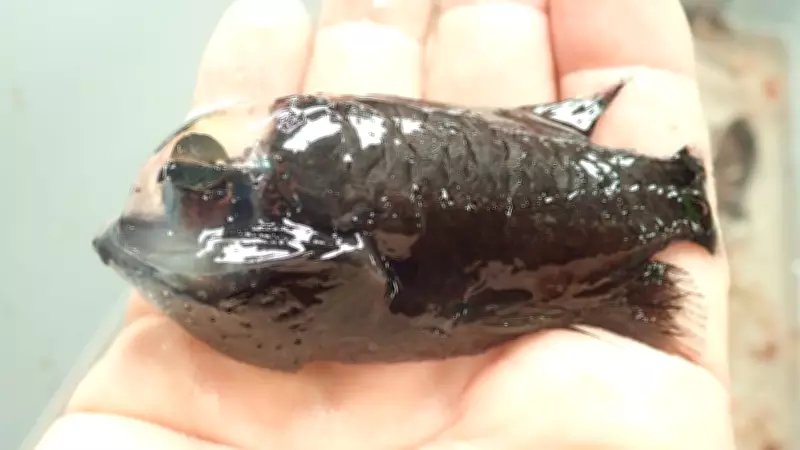
The deep sea, defined as ocean depths beyond 200 metres, remains one of the least explored frontiers on our planet. Remarkably, more humans have walked on the Moon than have ventured into the deepest parts of our oceans. In this realm of perpetual darkness, freezing temperatures, and immense pressure, evolution has sculpted some of the most extraordinary and bizarre life forms imaginable. These creatures, often described as aliens of the abyss, showcase nature's incredible adaptability and creativity in the harshest environments.
The Barreleye Fish: A Transparent Marvel
At first glance, the barreleye fish seems like a whimsical mistake of nature. Its most striking feature is its completely transparent head, through which its tubular, green eyes are clearly visible. These unique eyes can rotate within the skull, allowing the fish to look both upward and forward in search of prey. Living at depths of up to 800 metres, the barreleye's see-through dome serves a dual purpose: it protects its sensitive eyes while helping it detect faint traces of bioluminescent light. This adaptation is an essential survival tool in the pitch-black environment of the deep sea, where every glimmer can mean the difference between finding food and starvation.
The Goblin Shark: A Prehistoric Nightmare
Often referred to as a "living fossil," the goblin shark appears to have swum straight out of a prehistoric nightmare. Its elongated snout is packed with electroreceptors that help it sense prey in the murky, dark waters of the deep. When it strikes, its jaw shoots forward dramatically in a terrifying display, snapping up unsuspecting fish and crustaceans. Rarely encountered by humans, the goblin shark inhabits depths of over 1,000 metres and serves as a stark reminder of how little some species have changed over millions of years of evolution.

The Dumbo Octopus: Graceful Deep-Sea Flyer
Named after Disney's famous elephant due to its ear-like fins, the dumbo octopus uses these appendages to gracefully "fly" through the water with an almost ethereal elegance. Found at depths as great as 4,000 metres, it is one of the deepest-living octopus species known to science. Unlike its shallow-water cousins, it lacks ink sacs and relies on gentle, fluid movements to evade predators. Its soft, gelatinous body is perfectly adapted to withstand the crushing pressure of the abyss, making it a master of survival in extreme conditions.
The Vampire Squid: Misunderstood Denizen of the Deep
Despite its fearsome name, the vampire squid is neither a true squid nor a ruthless predator. It survives by feeding on "marine snow"—a slow, continuous rain of organic debris drifting down from the upper ocean layers. When threatened, it performs a remarkable defensive display by turning itself inside out, exposing spiky, cloak-like arms. Its dark red colour and glowing blue eyes give it an otherworldly appearance, perfectly suited to the twilight zone of the ocean where it resides, blending mystery with beauty.
The Anglerfish: Icon of the Abyss
Few deep-sea creatures are as iconic—or as unsettling—as the anglerfish. The female carries a glowing lure on her head, produced by bioluminescent bacteria, to attract prey in the complete darkness of the deep. Even stranger is its mating ritual: the much smaller male permanently fuses with the female's body, becoming a lifelong source of sperm. In the lonely, vast depths of the ocean, this extreme reproductive strategy ensures survival and highlights the lengths to which life will go to persist in such an inhospitable environment.
These five examples merely scratch the surface of the deep sea's wonders. As exploration continues, scientists are likely to discover even more bizarre residents, each adapted in unique ways to thrive in Earth's final frontier. The study of these creatures not only fascinates but also provides insights into evolution, biodiversity, and the resilience of life under pressure.