Ancient Flush Toilet Discovery in China Reshapes Historical Understanding
Archaeologists working in northwest China have made a groundbreaking discovery that is fundamentally altering our understanding of early sanitation systems. At the Yueyang archaeological site in Xi'an, researchers have uncovered what is now believed to be China's only known ancient flush toilet, a remarkable find dating back approximately 2,400 years.
Elite Palace Complex Reveals Advanced Sanitary System
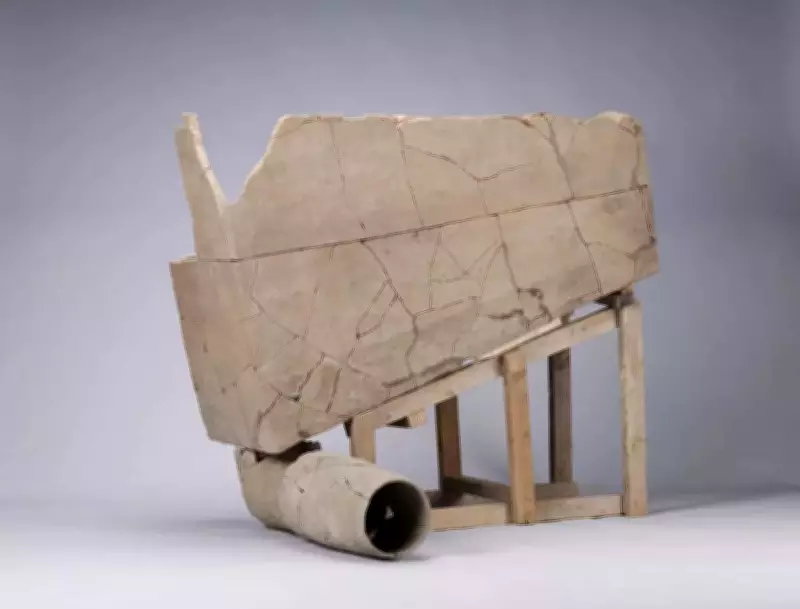
The discovery comes from the ruins of what was once a major political center during the turbulent Warring States Period and the subsequent early Han Dynasty. Excavation teams carefully recovered broken ceramic components, including a distinctive curved pipe, from palace remains and painstakingly reconstructed the ancient toilet.
This sophisticated sanitation fixture was likely reserved exclusively for elite use, possibly serving prominent historical figures such as Qin Xiaogong, his father Qin Xiangong, or even Liu Bang, the revered founder of the Han Dynasty. The toilet's location within an administrative palace complex makes its presence particularly noteworthy, suggesting that advanced domestic systems existed in ancient China much earlier than previously documented.

Manual Flushing System Relied on Servant Assistance
What remains of the ancient toilet reveals a surprisingly simple yet effective design. The ceramic bowl was positioned inside the building structure, with a pipe extending outward to direct waste to a pit located beyond the palace walls. According to Liu Rui, a researcher from the Chinese Academy of Social Sciences who participated in the excavation, water was probably manually added by servants after each use, as no mechanical flushing mechanism has been preserved.
The incomplete nature of the discovery leaves some intriguing questions unanswered. The upper portion of the structure is missing, making it impossible to determine whether users sat or squatted. While historical carvings from the Western Han period suggest squatting was common, the toilet itself provides no definitive evidence to settle this particular aspect of ancient bathroom habits.
Challenging Western-Centered Historical Narratives
For centuries, conventional historical accounts have credited early modern England with the invention of the flush toilet, typically pointing to John Harington's 1596 design for Queen Elizabeth I as the pioneering example. The Yueyang discovery doesn't completely overturn this established timeline, but it significantly complicates the narrative by demonstrating that similar concepts were being developed and implemented in ancient China nearly two millennia earlier.
This remarkable find illustrates how advanced sanitation ideas emerged independently in different cultural contexts, challenging the Western-centered perspective that has long dominated discussions about technological innovation in domestic systems.
Soil Analysis May Unlock Secrets of Ancient Diets
The ancient toilet has become an unexpected but valuable focus for ongoing scientific investigation. Researchers are currently analyzing soil samples taken from inside the ceramic components, searching for microscopic traces of human waste that could reveal important information about ancient diets and digestive health.
While initial results have primarily shown evidence of fertilizers associated with later Han Dynasty agricultural practices, the research continues with the hope that more detailed analysis might eventually provide insights into what elite members of ancient Chinese society consumed and how their bodies processed different foods. The toilet, though silent for centuries, continues to offer potential revelations about daily life in antiquity.
The discovery, originally reported by China Daily, has attracted significant attention from the archaeological community and beyond, highlighting how much remains to be learned about the sophistication of ancient civilizations and their approaches to fundamental aspects of daily living.