

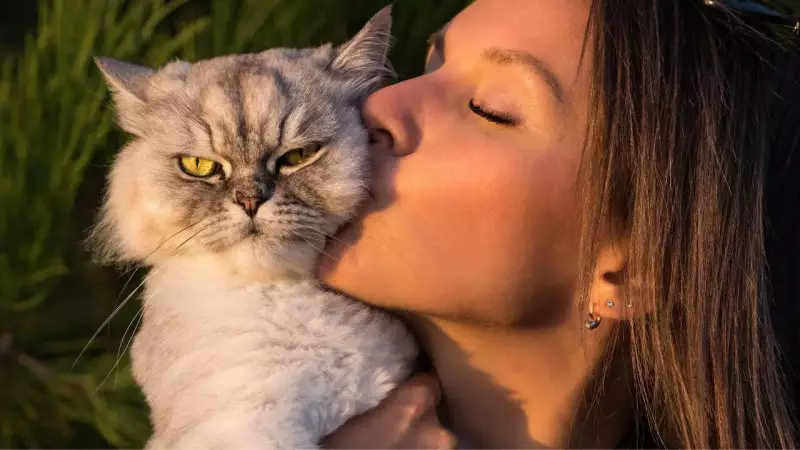
It's a common joke among pet owners that the moment you step out, your cat forgets you exist. This fits perfectly with the stereotype of the indifferent, aloof feline who couldn't care less. However, anyone who has shared their home with a cat knows this is far from reality. Cats are highly perceptive creatures who notice even subtle changes in their environment.
The Science Behind Feline Memory
So, how long does a cat's memory last? The question isn't just about a scientific timeline; it's about understanding if the bond you shared truly mattered to your pet. Research provides a reassuring answer. A peer-reviewed study published in the journal Animal Cognition found that domestic cats possess long-term associative memories. These memories are tied to rewards, daily routines, and emotionally significant events. In simpler terms, if an experience was important to the cat, it is likely stored in its memory for a long time.
Feline memory operates differently from human recollection. Cats don't replay past events like scenes from a movie. Their memory is more practical and pattern-based, built around elements that contributed to their sense of security and well-being. This includes predictable feeding times, a calm companion, or gentle handling. When these positive patterns are consistent, they become ingrained. When they vanish, the cat notices the absence. This quiet observation is memory in action.

How Long Can a Cat Remember a Person?
There is no single, definitive answer. Evidence shows that some cats recognise a person after a separation of a few months, while others demonstrate clear recall even after several years. In instances where the emotional bond was particularly strong, a cat's memory of a person can potentially last a lifetime. The duration is less about time and more about the significance of the person's role.
A cat is far more likely to remember the individual who was its primary caregiver, providing daily meals and comfort, than someone who was merely an occasional visitor. The principle is straightforward: importance shapes memory. Emotional consistency is key for cats. They remember how an interaction made them feel—whether safe and calm or frightened and stressed—not just the fact that it occurred.
Recognising an Old Friend: The Subtle Signs
Can a cat recognise you after years apart? Absolutely, though the signs may be understated. Don't expect a dramatic, dog-like welcome. Instead, watch for subtle cues: an intense, prolonged stare; choosing to sit in your vicinity without immediate physical contact; or a period of apparent indifference followed by a slow, cautious approach over hours or days. This hesitation is not forgetfulness; it is characteristic feline caution. Cats reassess situations before deciding to trust again.
Scent is the primary and most powerful trigger for a cat's memory. Their sense of smell is vastly more influential than sight. A familiar scent can instantly unlock a flood of associations. Voice is a close second; cats recognise the unique tone, pitch, and rhythm of a voice, even if the words themselves are meaningless. They also remember patterns of movement and routine—your favourite chair, how you walked into a room, or the time you typically came home.
What can weaken these memories? Time alone is not the main eraser. Replacement is. When a new, full routine completely takes over a cat's life, older memories may fade into the background. Factors like advanced age, illness, or chronic stress can also impair recall. However, fading is not always permanent. Long-buried memories can often resurface when triggered by the right scent, sound, or environment.
Ultimately, cats do not remember everyone. When a cat remembers you, it is a testament. It means you were woven into a chapter of its life that felt stable, predictable, and safe. Their memory isn't loud or performative. It simply endures, a quiet echo of a shared past.






