

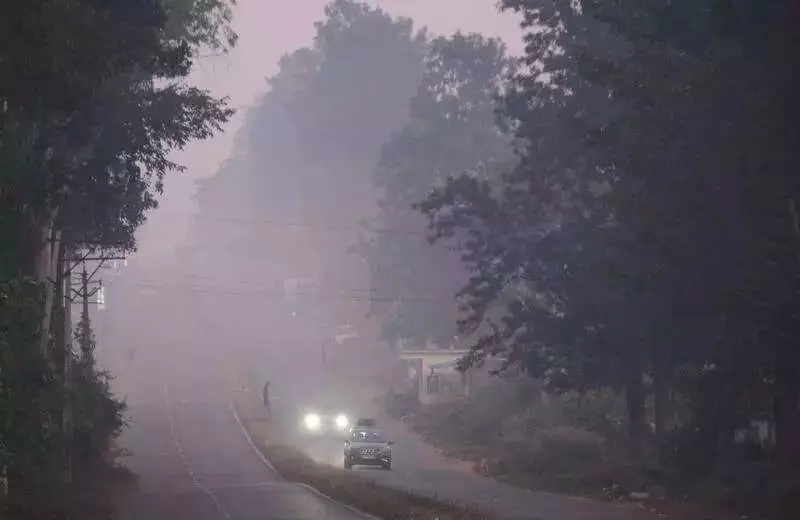
The coastal city of Visakhapatnam, often celebrated for its scenic beauty, is currently grappling with a severe decline in air quality. With the arrival of winter and foggy conditions, the city's Air Quality Index (AQI) has consistently fallen into the 'poor' category, raising significant health and environmental concerns.
Alarming AQI Data and Persistent Poor Air
Over the past fortnight, Vizag's air quality has shown a disturbing trend. The city's overall AQI has been hovering in the range of 220 to 280, firmly within the 'poor' classification as per Central Pollution Control Board (CPCB) standards. The situation reached a more critical point on December 5th, when the average AQI touched 285. It worsened further by December 18th, spiking to 305 at 3 PM, pushing the air into the 'very poor' bracket. Officials have indicated that this troubling pattern may continue for several more days.
Data reveals that for 12 days in the past two weeks, the city's air has remained in the 'poor' category. According to readings from the CPCB's Sameer app, the dominant pollutant choking the city is PM2.5 – fine particulate matter that poses serious health risks.

The Culprits: Weather Inversion and Human Activity
Environmental experts point to a dangerous combination of meteorological and man-made factors for the current crisis. The drop in temperature coupled with high humidity has triggered a phenomenon known as thermal inversion. This acts like a lid, trapping pollutants close to the ground and preventing their dispersal.
This natural weather trap is being filled by a cocktail of emissions from various sources:
- Industrial discharges
- Vehicular exhaust fumes
- Dust from construction activities
Together, they create a dense, harmful layer of particulate matter over the city.
Health Impacts and Public Response
The tangible effects of this pollution are being felt by Vizag's residents. Morning levels of PM2.5 were recorded around 90 micrograms per cubic metre (µg/m³). This is a staggering six times higher than the World Health Organisation's (WHO) safe annual limit of 15 µg/m³.
Common complaints among citizens include:
- Clogged noses and sore throats
- Burning and irritated eyes
- A noticeable rise in asthma and bronchitis cases
Medical authorities have issued warnings, noting that even moderate pollution levels can aggravate chronic conditions like Chronic Obstructive Pulmonary Disease (COPD). They are urging vulnerable groups, including children, the elderly, and those with pre-existing lung issues, to avoid outdoor activities during peak pollution hours.
In response to the ongoing crisis, civic groups like the Human Rights Forum (HRF) and the Greater Visakhapatnam Citizens' Forum (GVCF) are demanding action. They have called for urgent, transparent, and time-bound measures to address the breach of air quality standards. Their demands include a rapid shift towards clean energy and sustainable mobility solutions. Furthermore, they are pressing the CPCB to align India's ambient air quality standards with the updated, stricter WHO guidelines to better safeguard public health.






