Deforestation in Brazil's Atlantic Forest Drives Mosquitoes to Bite Humans More, Raising Disease Risks
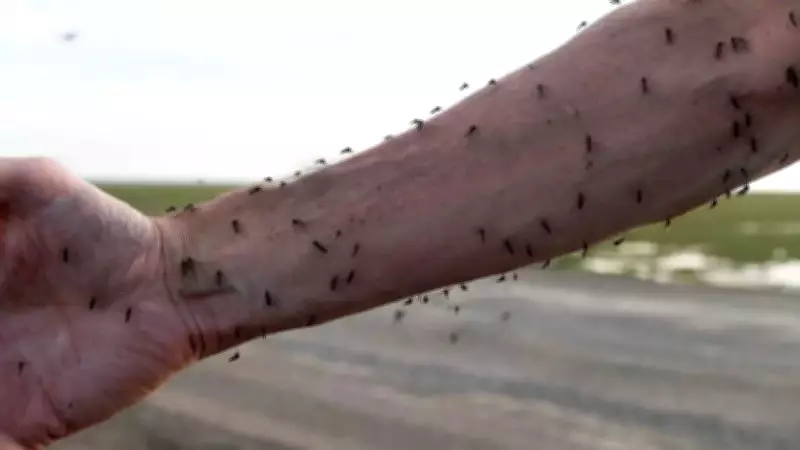
As forests disappear across the globe, mosquitoes are not vanishing alongside them. Instead, these resilient insects are adapting in ways that bring them into closer contact with human populations. A groundbreaking new study published in Frontiers in Ecology and Evolution reveals that in Brazil's rapidly shrinking Atlantic Forest, numerous mosquito species are increasingly feeding on humans rather than on wild animals.
Scientists warn that this subtle yet significant behavioral shift could dramatically elevate the risk of diseases such as dengue, Zika, and yellow fever, particularly for communities residing near forest edges. The findings underscore an often overlooked consequence of deforestation: it can reshape disease dynamics long before outbreaks become visible to public health authorities.
Mosquitoes Are Adapting to Life in a Shrinking Forest
Stretching along Brazil's picturesque coastline, the Atlantic Forest was once celebrated as one of the most biodiverse regions on Earth. Today, only about one-third of this magnificent ecosystem remains intact. Decades of relentless urban expansion, agricultural development, and infrastructure projects have fragmented the landscape, forcing wildlife into smaller and more isolated patches.

While many animal species decline or disappear under these harsh conditions, mosquitoes often persist and adapt, skillfully exploiting new environments created by human activity. This adaptability makes them a formidable vector for disease transmission in changing landscapes.
Scientific Fieldwork Reveals Alarming Feeding Patterns
To understand how mosquitoes are responding to these environmental changes, researchers conducted extensive fieldwork in two forest remnants in the state of Rio de Janeiro: the Guapiaçu Ecological Reserve and Sítio Recanto Preservar. These areas represent typical landscapes where protected forest patches exist alongside human settlements, a common pattern across much of the Atlantic Forest today.
The scientific team captured mosquitoes using specialized light traps and focused specifically on female mosquitoes that had recently taken a blood meal. These meals provide crucial insights into which hosts the insects are feeding on in their altered habitats.
In total, the researchers collected more than 1,700 mosquitoes from over 50 different species. Among the mosquitoes that had fed recently, DNA analysis revealed a striking and concerning pattern: most identifiable blood meals came from humans, not from wildlife. Only a small number of meals were traced to birds, amphibians, rodents, or other animals.
"This finding is crucial," emphasized Jeronimo Alencar of the Oswaldo Cruz Institute, the study's senior author. "In a forest environment that still contains a variety of potential animal hosts, a strong preference for humans greatly increases the chances that mosquitoes will transmit pathogens to people."
Why Deforestation Pushes Mosquitoes Toward Human Populations
Mosquitoes are highly sensitive to host availability in their environment. As forests are cleared and wildlife populations decline, traditional blood sources become increasingly scarce. Humans, meanwhile, become more abundant and accessible, especially in newly settled or fragmented landscapes where forest edges meet human habitation.
"With fewer natural hosts available, mosquitoes are forced to seek alternative blood sources," explained Sergio Machado from the Federal University of Rio de Janeiro, a co-author of the study. "They end up feeding more on humans simply because we are the most prevalent hosts in these areas."
Rising Disease Risks at the Forest Edge
The Atlantic Forest region is home to numerous mosquito species capable of transmitting a range of dangerous viruses, including dengue, Zika, yellow fever, chikungunya, and Mayaro. When mosquitoes feed on both wildlife and humans, they can act as biological bridges, moving pathogens between ecosystems and human populations.

A stronger tendency to bite humans increases the likelihood of outbreaks, particularly in communities living near forest remnants where contact between people and mosquitoes is frequent and unavoidable. While larger studies will be needed to refine risk estimates, the pattern observed aligns consistently with ecological theory and findings from other regions experiencing rapid habitat loss.
"Knowing that mosquitoes in an area have developed a strong preference for humans serves as an early warning system," Machado noted. "This knowledge allows public health officials to focus surveillance and prevention efforts where risks are likely to be highest."
Deforestation as a Public Health Concern
The study contributes to growing evidence that deforestation is not merely an environmental issue but also a significant public health concern. By altering mosquito feeding behaviors, forest loss can quietly increase disease risk without any immediate or obvious signs, creating silent epidemics waiting to emerge.
Researchers argue that protecting and restoring forests may therefore play a vital role in reducing future disease outbreaks. The message is clear and compelling: when ecosystems are destabilized through deforestation, the consequences often reach far beyond the forest itself, landing directly on human health and wellbeing.
This research highlights the intricate connections between environmental conservation and public health, demonstrating how preserving natural habitats can serve as a protective barrier against emerging infectious diseases.