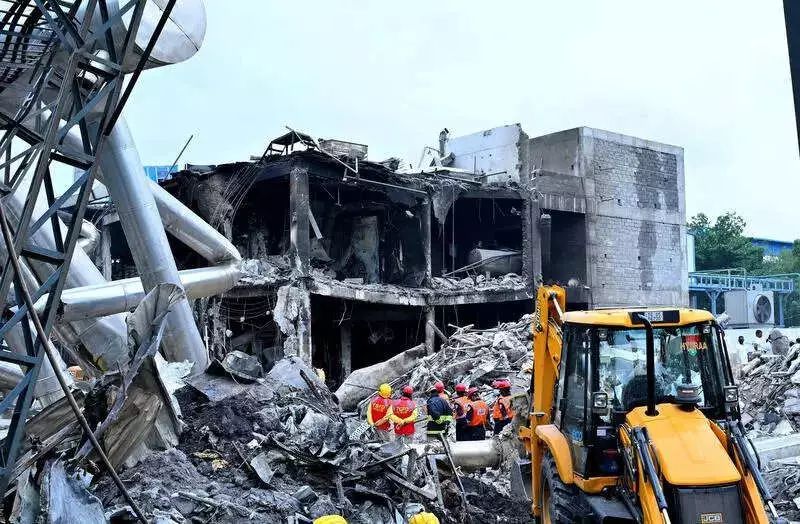
Telangana has witnessed its deadliest year for fire-related incidents in over a decade, with a staggering 163 fatalities recorded between January and November 2025. This grim figure marks the highest death toll in the state's 11-year history, surpassing the previous record of 159 deaths set in 2015.
Record-Breaking Damage and Fatalities
The state's fire department reported a total of 8,159 fire incidents during this period, leading to unprecedented property losses estimated at ₹865.7 crore. This monetary loss is the highest ever recorded for Telangana, dwarfing the previous peak of ₹260.1 crore from 9,120 incidents in 2018. Despite the high number of tragedies, fire services managed to save property worth ₹2,491.3 crore and rescued 144 lives.
GV Narayana Rao, Director of the Telangana State Disaster Response and Fire Services Department, attributed the spike in fatalities to several major disasters. These include the catastrophic Sigachi Industries blast, which claimed 46 lives, and the Gulzar Houz fire that resulted in 17 deaths. "Accidents in industrial clusters such as Pashamailaram, Bollarum, and parts of the Old City have also contributed significantly to the death toll and property damage," Rao stated.

Ageing Infrastructure and Power Fluctuations: A Lethal Mix
Experts have pinpointed ageing electrical infrastructure and severe power fluctuations as primary catalysts for the surge in fires. Director Rao emphasized that with rising power consumption and economic activity, safety must become ingrained in the culture. "Industries cannot continue to use old machinery or outdated power lines. Just as vehicles deteriorate over time, so do electrical systems," he warned.
Echoing this concern, disaster management expert and former JNTUH professor, KM Lakshmana Rao, highlighted that frequent and severe power fluctuations, especially in Hyderabad's Old City, have become a major fire hazard. He called for holding the electricity department accountable and urged closer collaboration with fire services. "High-voltage surges inside homes are unacceptable and pose a serious, avoidable risk," he added.
Call for Mandatory Audits and Systemic Overhaul
Infrastructure consultant SP Anchuri argued that while many older industries follow safety rules, many others operate without compliance. He stressed that mandatory electrical audits are merely the foundation. "True safety requires integrated design, risk awareness, underground or terrace water tanks, automatic sprinklers, and fire detectors," Anchuri explained. He advocated for bi-monthly multi-department inspections and a risk-based grading system to identify and prioritize the most hazardous units.
In response to the crisis, the fire department has begun enforcing stricter measures. These include insisting on regular electrical audits for homes and industries, particularly in high-risk zones, and rigorously applying fire safety rules in buildings, warehouses, and factories. Public awareness campaigns on the safe use of fire, gas, and electrical appliances are also being intensified.
"People must install fire-detection systems in both commercial and residential buildings," urged Director Rao. He added that the department plans to request the identification of areas prone to voltage fluctuations to conduct targeted inspections soon.
The data reveals that the majority of fires occurred in outdoor storages, warehouses, and sheds (1,963 incidents), followed by farmlands (1,076) and households (845). The leading causes were identified as careless smoking (3,294 incidents) and electrical origins including short circuits (2,048 incidents).