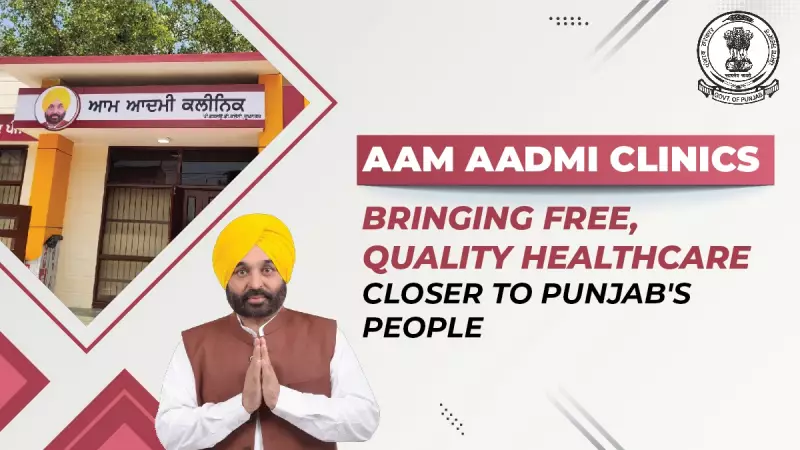
In a landmark achievement for public health, the state of Punjab has successfully operationalized a network of 664 Aam Aadmi Clinics, fundamentally altering the accessibility of quality medical care for its residents. This ambitious initiative, a flagship program of the Bhagwant Mann-led government, has already provided free consultations, diagnostics, and medicines to a staggering 1.5 crore (15 million) patients since its inception.
A Healthcare Revolution Reaches Every Corner
The vision behind the Aam Aadmi Clinics is to dismantle the barriers of cost and distance that often prevent people from seeking timely medical help. Strategically established in both urban neighborhoods and remote rural areas, these clinics ensure that no citizen has to travel far for essential healthcare. The model directly addresses the critical gap in primary healthcare infrastructure, bringing doctors, free medicines, and diagnostic tests to the community's doorstep.
Each clinic is designed to offer a comprehensive suite of services entirely free of charge. Patients can walk in and receive consultations for a wide range of ailments, get prescribed medicines from the in-house pharmacy, and undergo basic diagnostic tests. This holistic approach not only treats illness but also promotes preventive care, reducing the burden on overcrowded tertiary hospitals and district facilities.

Mohali's 100th Clinic: A Symbol of Commitment
The recent inauguration of the 100th Aam Aadmi Clinic in Mohali's Phase 11 stands as a powerful testament to the program's rapid expansion and enduring commitment. Chief Minister Bhagwant Mann personally inaugurated the facility, highlighting the government's dedication to scaling this transformative model. The event was not just a celebration of a numerical milestone but a reaffirmation of the core promise: to make "quality healthcare a fundamental right, not a privilege" for every Punjabi.
During the inauguration, CM Mann emphasized the clinics' role as the first line of defense in the public health system. By ensuring effective treatment at the primary level, the initiative aims to prevent minor health issues from escalating into major, costly complications. This proactive approach is projected to save countless families from medical impoverishment and improve the overall health indices of the state.
Bridging the Urban-Rural Healthcare Divide
Perhaps the most significant impact of the Aam Aadmi Clinics is their success in bridging the deep-seated urban-rural healthcare divide. For decades, villagers had to undertake long, expensive journeys to city hospitals for even basic check-ups. Now, with a clinic in their vicinity, they have consistent access to a qualified doctor and necessary medications.
The widespread public reception speaks volumes. The trust in these clinics is evident from the massive footfall, which crosses lakhs daily across the state. For many, especially women, the elderly, and daily wage workers, these clinics have become a reliable and dignified source of healthcare. The model has effectively democratized medicine, ensuring that economic status or geographic location no longer dictates the quality of care one receives.
The future roadmap for the Aam Aadmi Clinics includes further expansion and integration with advanced telemedicine services, potentially connecting patients in the most remote areas with specialist doctors in urban centers. The Punjab government's initiative is now being closely studied as a replicable model for delivering affordable, accessible, and equitable primary healthcare, setting a new benchmark for public health governance in India.