Shreya Ghoshal Takes Uncompromising Stand Against Lip-Syncing in Live Performances
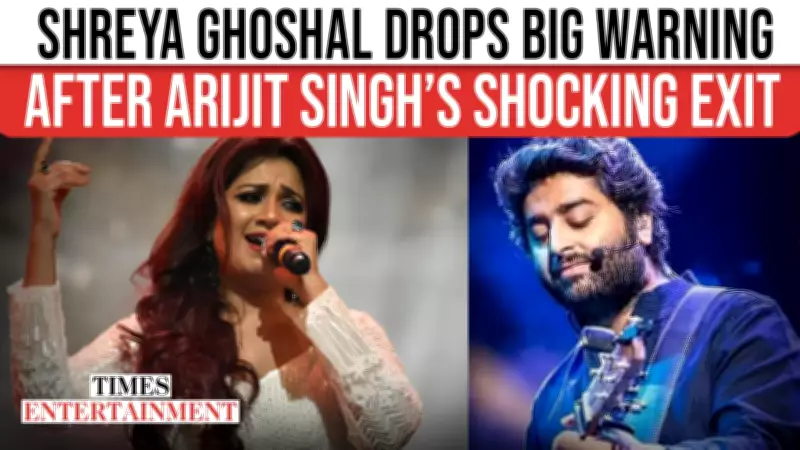
In a bold declaration that has resonated across the music industry, acclaimed playback singer Shreya Ghoshal has stated unequivocally that she would rather quit singing altogether than resort to lip-syncing during live concerts. This powerful stance emerged during a candid conversation on Raj Shamani's popular podcast, where Ghoshal emphasized the critical importance of honesty and realness in musical performances.
The Core Principle: Authenticity Over Convenience
Shreya Ghoshal articulated her position with remarkable clarity, asserting that live concerts must always remain genuine experiences for both artists and audiences. "I believe in delivering authentic performances where what you hear is truly what is being sung in that moment," she explained during the podcast discussion. This principle, she stressed, is non-negotiable, even if adhering to it meant walking away from her singing career entirely.
The singer elaborated that lip-syncing fundamentally contradicts the essence of live music, which should celebrate the raw, unfiltered connection between performer and listener. Her comments reflect a deep-seated commitment to artistic integrity that has characterized her two-decade-long career in the Indian music industry.

Industry Context: A Growing Conversation About Performance Authenticity
Ghoshal's statement arrives at a particularly significant moment within the music industry, where debates about performance authenticity have been intensifying. Recent developments have brought this issue to the forefront:
- Arijit Singh's Career Shift: The celebrated playback singer recently made headlines with his decision to step back from certain professional commitments, sparking discussions about artistic priorities and performance standards.
- AP Dhillon's Criticism: The popular Punjabi singer has faced scrutiny regarding his live performances, adding fuel to ongoing conversations about what audiences should reasonably expect from concert experiences.
Within this context, Shreya Ghoshal's unequivocal position adds substantial weight to the dialogue, coming from an artist renowned for her technical precision and emotional delivery across countless film songs and independent projects.
The Broader Implications for Music Performance Standards
Ghoshal's stance raises important questions about contemporary performance practices and audience expectations. While technological advancements have made flawless audio reproduction increasingly accessible, her comments challenge whether perfection should come at the cost of authenticity.
"There's something magical about a live voice, with all its imperfections and spontaneous moments," Ghoshal noted during the podcast. This perspective advocates for valuing the human element in music—the slight variations, emotional nuances, and real-time connection that distinguish live performances from studio recordings.
Her position also implicitly addresses the pressures artists face in an era of highly produced concerts and entertainment spectacles, suggesting that technical excellence need not compromise genuine performance.
Artist Philosophy: Consistency Across a Distinguished Career
What makes Shreya Ghoshal's declaration particularly noteworthy is how it aligns with her established reputation. Throughout her career, she has been celebrated for:
- Vocal Consistency: Maintaining remarkable vocal quality across diverse genres and languages
- Technical Mastery: Demonstrating precise control over complex musical passages
- Emotional Authenticity: Delivering performances that genuinely connect with listeners
Her anti-lip-syncing stance thus represents not a new position but rather a public articulation of principles that have guided her artistic journey from the beginning. This consistency between private philosophy and public practice lends additional credibility to her current statements.

As the music industry continues to evolve with new technologies and performance formats, Shreya Ghoshal's uncompromising commitment to live authenticity serves as both a personal manifesto and a potential benchmark for artistic integrity in contemporary Indian music.