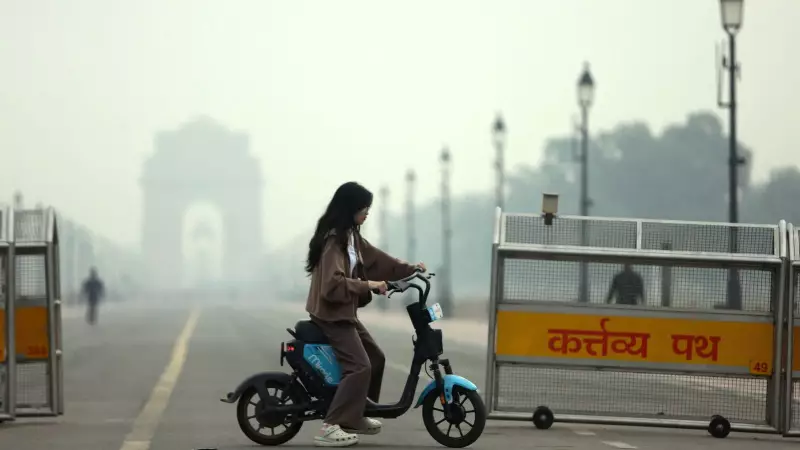
While public discourse on Delhi's toxic air is dominated by particulate matter (PM2.5), a more immediate and often overlooked pollutant is steadily choking the capital: nitrogen dioxide (NO₂). Emerging primarily from the exhaust pipes of the city's dense traffic, this harmful gas is not only damaging residents' lungs but also actively worsening the overall Air Quality Index (AQI).
The Invisible Threat from Tailpipes
A recent report released by the Centre for Science and Environment (CSE) has cast a spotlight on this persistent danger. The analysis highlights a clear, recurring pattern where PM2.5 levels rise and fall in sync with nitrogen dioxide concentrations during morning and evening rush hours. This correlation underscores the central role of vehicular emissions in the city's daily pollution spikes.
Unlike PM2.5, which builds up gradually and gets trapped in winter's shallow atmospheric layers, NO₂ surges sharply and directly from tailpipe emissions. The problem is most acute around major roads, busy intersections, and the airport area, where concentrations regularly reach two to three times the safe limits recommended by the World Health Organization (WHO).
Double Health Hazard: Direct Harm and Secondary Pollution
According to Dr. Arunesh Kumar, Director and HOD of Pulmonology at Paras Hospital in Gurugram, nitrogen dioxide poses a dual threat. "NO₂ is harmful to the lungs on its own," he explains, "but it also leads to the formation of more PM2.5 in the air." This means vehicular pollution creates a cascading effect, amplifying the health risks for Delhi's citizens.
The direct health impacts of inhaling NO₂ are severe. It is a highly irritating gas that causes oxidative stress and inflammation deep within the lungs. Short-term exposure can trigger coughing, wheezing, chest tightness, and breathlessness. Over the long term, it weakens the lungs' defence mechanisms, increasing vulnerability to chronic bronchitis, pneumonia, and frequent respiratory infections. For children, consistent exposure can impair lung development and elevate the risk of asthma.
Congestion, Carbon Monoxide, and Compounded Risks
The issue is exacerbated by traffic congestion. Idling and slow-moving engines operate inefficiently, emitting far higher levels of toxic pollutants. Beyond NO₂, this includes carbon monoxide, benzene, and ultrafine particles that linger at breathing height. These fumes can immediately irritate airways and worsen conditions like asthma or bronchitis.
The CSE report also notes a marked increase in carbon monoxide levels across Delhi, another hazardous pollutant primarily sourced from vehicles. The combined exposure to this toxic cocktail—common in metropolitan areas like Delhi—significantly amplifies health risks, including a higher probability of developing COPD, heart disease, stroke, and lung cancer over time.
During winter, when meteorological conditions trap pollution close to the ground, the health impact of these pollutants becomes even more severe. Elevated NO₂ readings worsen the overall AQI, making precautions such as wearing N95 masks or limiting time outdoors advisable, even when PM2.5 levels show fluctuation.
Are Air Purifiers a Solution?
Experts caution that typical home air purifiers offer limited protection against nitrogen dioxide. Most devices are designed to capture particulate matter like PM2.5, not gases. To reduce NO₂ indoors, a purifier would require a high-quality activated carbon or advanced sorbent filter, and even then, its effectiveness is only partial.
During periods of high NO₂, more practical steps include keeping windows closed during peak traffic hours, avoiding indoor combustion sources like incense or cigarettes, and ensuring clean ventilation. However, personal protective measures have clear limitations. The long-term solution, as underscored by the report, lies in systemic changes: reducing vehicular emissions at the source and improving the quality of the outdoor air that everyone must breathe.