

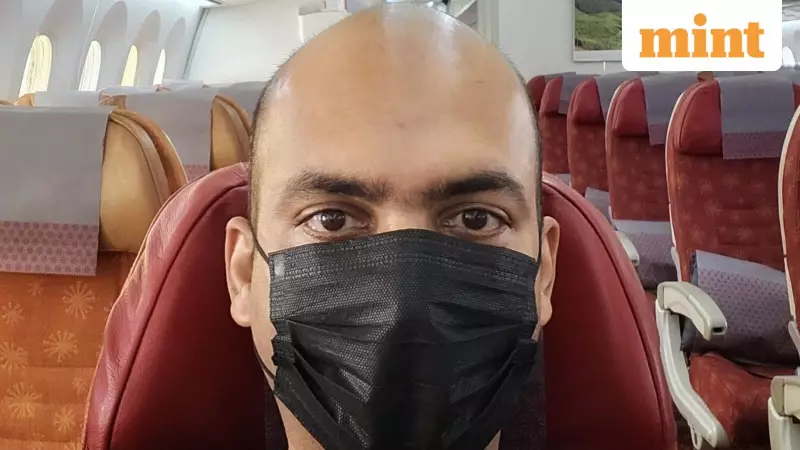
Manu Kumar Jain, the former head of Xiaomi India and current India CEO of Abu Dhabi's G42 tech group, has issued a stark health warning after a brief trip to the national capital. His personal account on social media platform X paints a worrying picture of Delhi's deteriorating air quality and its immediate, severe impact on health.
Immediate Health Impact in Polluted Capital
In a detailed post, Jain shared that a single day in Delhi for important meetings was enough to expose his body to the city's hazardous pollution levels. "Was in Delhi for a day for some important meetings, and realised how out of practice I am with the air pollution here," he wrote. The consequences were swift and physically overwhelming.
Jain described a rapid onset of distressing symptoms. "Within a few hours my eyes were watering, throat was burning, I kept coughing and even had a mild headache," he recounted. The situation was exacerbated because he had forgotten his N95 mask at home, leaving him without any protection against the toxic smog.

A Personal and Emotional Blow
For Jain, who grew up in Meerut and is an alumnus of IIT Delhi, the experience felt particularly poignant. He expressed a deep affection for the city, making the environmental crisis feel "personal" to him. "I love this place—its energy, people, food, and so much more," he stated, highlighting the conflict between his fondness for Delhi and the reality of its polluted environment. The ordeal prompted him to cut his visit short and take an earlier flight out of the city.
Delhi's 'Very Poor' Air Quality Reality
Jain's testimony coincided with a particularly bad air day for Delhi. On the morning he posted his experience, the city woke up to a thick blanket of smog. Official data from the Central Pollution Control Board (CPCB) confirmed the severity, with the overall Air Quality Index (AQI) registered at 373, firmly in the 'very poor' category.
The situation was even more critical in specific localities. Data from the CPCB's Sameer app revealed that 13 out of 39 monitoring stations reported AQI levels in the 'severe' category. The Wazirpur area was the worst affected, recording a hazardous AQI of 442.
A Call for Collective Responsibility
Despite his distressing experience, Jain clarified that he was "not blaming anyone" individually. Instead, he framed the issue as a shared failure requiring a unified solution. "All of us are to be blamed for this," he urged, pushing for a sense of collective responsibility.
He ended his post on a hopeful note, expressing a sincere desire for change. His ultimate concern was for the younger generation, stating, "I sincerely hope we can turn this around and make a real change for our kids—so they can grow up breathing cleaner air." His experience serves as a powerful reminder of the long road ahead in India's fight for clean air.






