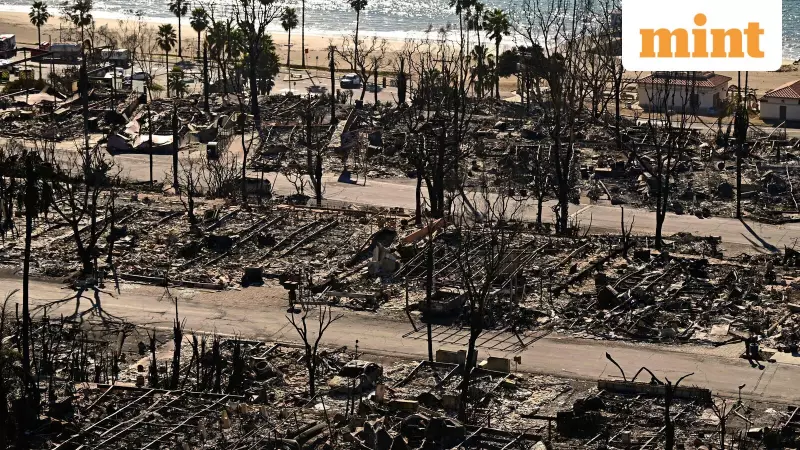
A major new medical study has revealed the severe and unexpected health consequences for residents following the devastating wildfires that struck Los Angeles nearly a year ago. Researchers documented significant increases in heart attacks, lung conditions, and a puzzling rise in mysterious, undiagnosed illnesses among people living in affected areas.
Emergency Visits Doubled for Unexplained Symptoms
The research, conducted by a team from Cedars-Sinai, the largest hospital in Los Angeles County, analyzed emergency department data. The team focused on the period from January 7, when the massive Palisades Fire began, through April 7. They compared this data to visits during the same timeframe over the previous seven years.
The findings, published in the Journal of the American College of Cardiology, were stark. For residents in neighborhoods directly hit by or adjacent to the wildfires, emergency visits for mysterious symptoms like chest pain, abdominal pain, and dizziness more than doubled to 398. Doctors could not always link these symptoms to a clear diagnosis like a heart attack.

Dr. Susan Cheng, vice chair for research at Cedars-Sinai’s Smidt Heart Institute and the study's senior author, explained that lab tests on these patients showed abnormalities. These included electrolyte disorders and subtle changes in markers for kidney or liver function. "Those results suggest a biochemical and metabolic stress on the body," she stated, indicating the body's systems were thrown off balance.
Sharp Rise in Cardiac and Pulmonary Crises
Beyond the unexplained illnesses, the study recorded alarming jumps in specific, serious conditions. Compared to historical data, visits to the emergency department rose by 46% for heart attacks and 24% for pneumonia and other pulmonary illnesses.
Dr. Cheng noted that these increases were comparable to or even surpassed levels seen during the worst peaks of the Covid-19 pandemic. This highlights the profound acute health burden imposed by such environmental disasters.
A Toxic Cocktail from Urban Fires
The researchers attribute this broad spectrum of health effects to the unique and dangerous mix of toxins released when wildfires spread from wildlands into cities. As fires engulf homes, vehicles, and other man-made structures, they release heavy metals and a complex array of chemicals into the air.
"You have a much greater magnitude and a much greater complexity of toxins being produced by the disaster affecting a very large population of people," Dr. Cheng emphasized. Fine particulate matter from wildfires is known to injure the heart and lungs, but burning synthetic materials creates additional, less-understood hazards.
Dr. Mary Johnson, a principal research scientist in environmental health at Harvard T.H. Chan School of Public Health (who was not involved in the study), said the finding of unexplained illness is significant. "What it tells me is that we’ve probably been missing a lot of illness that has not appropriately been attributed to smoke exposure," she commented.
The study is part of a decade-long collaboration among several universities to track the long-term health impacts of the wildfires. Dr. Cheng reports that some patients are still suffering, telling doctors, "I still don’t feel quite right." This research serves as a crucial warning about the escalating human health cost of wildfires, which are growing in both frequency and scope globally.