Kolkata witnessed a significant and worrying decline in its air quality on Monday, marking a severe start to the winter pollution season. The season's first notable drop in temperatures coincided with a dangerous surge in pollution levels across the city, pushing the Air Quality Index (AQI) into alarming zones.
Early Morning Spike and the 'Lid' Effect
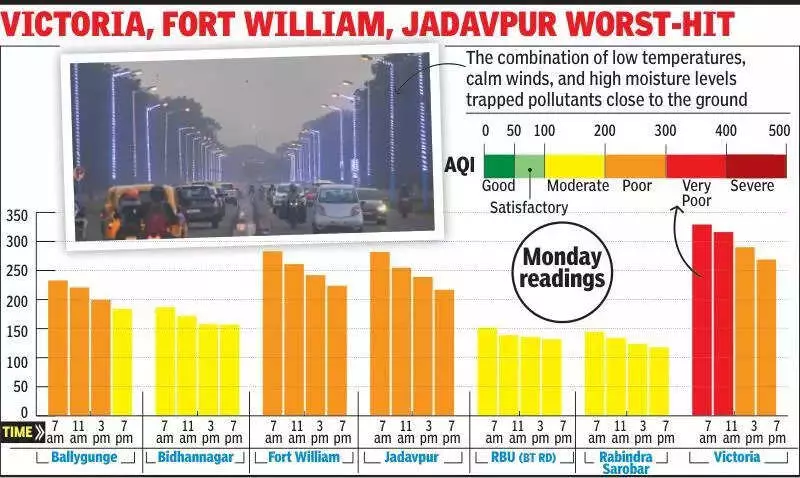
The most severe pollution spike was recorded during the early morning hours. A combination of low temperatures, calm winds, and high moisture levels created a perfect trap for pollutants, preventing their dispersion. Scientists from the Pollution Control Board identified this as an early sign of the winter inversion phenomenon.
Atmospheric scientist Abhijit Chatterjee from Bose Institute explained the dangerous mechanism. "This inversion acts like a lid over the city," he said. He emphasized that under this condition, emissions from all sources—vehicles, roadside dust, construction, and industry—remain suspended near the ground at breathing level.

City-Wide AQI Readings Paint a Grim Picture
Real-time data from monitoring stations at 7 am revealed the extensive scale of the problem. The situation was most critical at the Victoria Memorial area, which recorded an AQI of 329, placing it firmly in the 'very poor' category.
Other major localities also reported hazardous levels:
- Fort William: AQI of 283
- Jadavpur: AQI of 282
- Ballygunge: AQI of 233
All these readings fell into the 'poor' category. Even areas typically known for better air, like Rabindra Sarobar and RBU on BT Road, recorded AQI levels above 140, which is considered 'moderate' but still unsafe for prolonged outdoor exposure.
Although there was a slight improvement by late afternoon, pollution levels remained above permissible limits across the city throughout the day.
Health Experts Issue Urgent Advisory for Residents
In response to the deteriorating air, health professionals have issued strong guidelines, especially for the morning hours. Pulmonologist Dr. Arup Halder advised residents to avoid strenuous outdoor activities.
"People should avoid brisk walking, jogging, or open-air workouts in the early hours," Dr. Halder stated. He highlighted that children, senior citizens, and individuals with pre-existing respiratory or cardiac conditions are particularly vulnerable and should opt for indoor exercise.
The general recommendations from doctors include:
- Wearing N95 masks when going outside.
- Keeping windows shut during peak pollution hours.
- Using air purifiers indoors.
The elderly and asthma patients have been specifically urged to monitor their health closely over the coming days.
Urban planners warn that this seasonal decline in Kolkata's air quality is likely to persist through December and January unless stringent measures are taken to control emission sources. The early onset of the winter inversion serves as a stark reminder of the persistent environmental challenge facing the city.