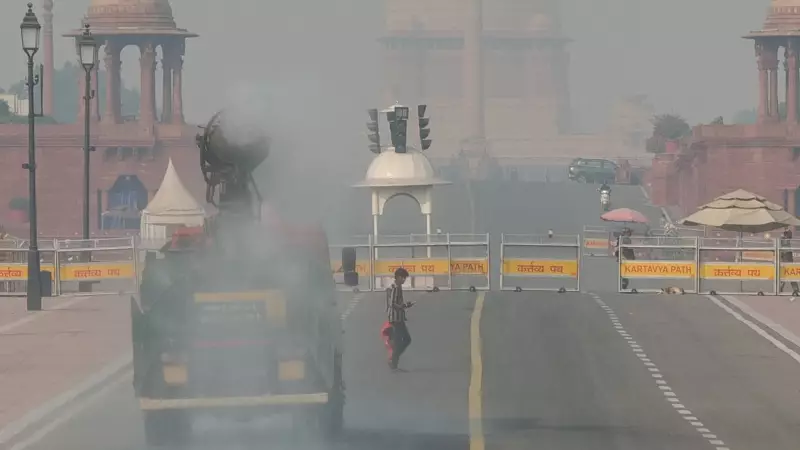
As toxic haze once again envelops Northern India, a troubling paradox emerges: why does a visible seasonal crisis fail to generate the same urgency as the COVID-19 pandemic? The answer lies in fundamental differences in how we perceive, measure, and respond to these two health threats.
The Invisible Killer: Pollution's Stealth Attack on Health
Air pollution presents a dual visibility challenge that makes it difficult for the public and policymakers to comprehend its full impact. Unlike COVID-19, which manifested through clear case counts and dramatic individual illnesses, pollution operates as a silent, cumulative threat.
Pollution affects multiple organs and systems throughout the body, making it impossible to precisely quantify how much polluted air contributes to any specific illness or death in an individual. This ambiguity often becomes an excuse for inaction, despite overwhelming population-level evidence.

According to the State of Global Air 2025 report, over two million deaths in India during 2023 could be attributed to pollution. Recent studies in The Lancet Planetary Health reveal that for every 10 µg/m³ increase in PM2.5 levels, annual mortality rises by 8.6% and daily mortality increases by 1.4%.
Why Our Brains Underestimate Pollution Threats
Human psychology plays a crucial role in our response to different health emergencies. We are wired to act on threats we can clearly count and responses that yield quick, measurable impacts, exactly as we did during the COVID-19 pandemic.
Pollution lacks the dramatic, identifiable disease pattern that characterized COVID-19. Short-term exposure symptoms often mimic seasonal coughs, colds, and infections, while long-term effects include exacerbation of asthma, COPD, heart disease, and links to new-onset hypertension, diabetes, and neurological changes.
Northern India faces particularly severe consequences, with residents potentially losing up to eight years of life expectancy due to sustained exposure to dangerous pollution levels, according to the Air Quality Life Index 2025.
Systemic Gaps and Data Challenges
India faces significant obstacles in tracking and responding to pollution-related health impacts. The country's health data infrastructure remains underdeveloped, with uneven adoption of Electronic Health Records limiting real-time analysis capabilities.
The National Outdoor Air and Disease Surveillance system, while a step in the right direction, remains in its early stages. It currently captures only acute respiratory illnesses and lacks advanced analytical capabilities to generate credible evidence for health-impact-based warnings.
Nearly every Indian breathes PM2.5 levels far above the WHO's 5 µg/m³ guideline year-round, creating a situation where exposure is largely unavoidable. Unlike COVID-19, which could be managed through distancing, air pollution permeates every aspect of daily life.
The Way Forward: Bridging Perception and Reality
The solution requires addressing both technical and psychological barriers. While satellite data and sophisticated modeling now provide reliable exposure estimates at high resolution, contention over data ownership continues to delay acceptance and action.
Strong central leadership and political will could accelerate progress, but competing priorities, limited capacities, and weak accountability slow reforms. The perceived lack of "authentic" Indian evidence becomes a convenient barrier to action planning, despite credible international and domestic research.
Until we bridge the gap between pollution generators, regulators, health impact monitors, and the public, we will continue relying on reactive measures like artificial rain and water cannons while accumulating serious health damage year after year.
The writer, Purvi Patel, formerly served as senior consultant at the National Programme on Climate Change and Human Health, National Centre for Disease Control.