

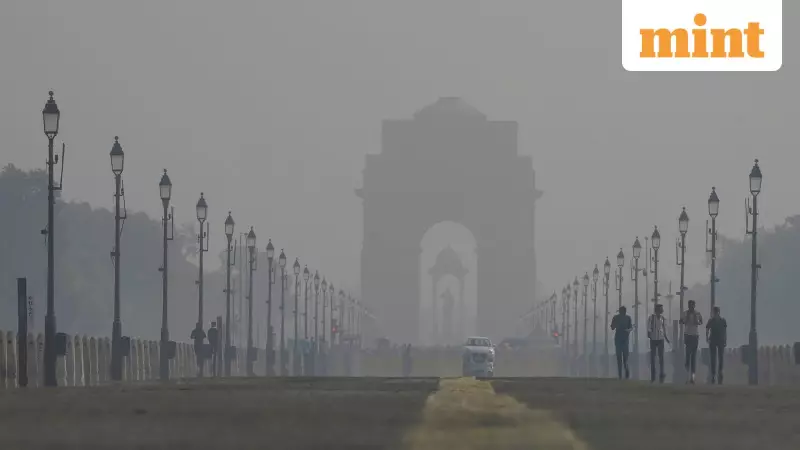
Delhi's Air Pollution Reaches Crisis Levels
India's national capital has witnessed two significant citizen-led protests during November 2025, reflecting growing public anger over government inaction regarding dangerously worsening air quality. Health experts have officially declared the winter air pollution situation in New Delhi a public health emergency, calling for strict and sustainable solutions comparable to those implemented during the COVID-19 pandemic outbreak.
Alarming Health Impacts Across Northern India
Medical institutions across the National Capital Region are reporting substantial increases in patient numbers as air quality continues to deteriorate. This annual phenomenon, driven by multiple factors including stubble burning, firecracker emissions, and vehicle pollution, has been particularly severe this year.
Doctors at Delhi's prestigious All India Institute of Medical Sciences revealed during a November 18 seminar that they've observed a 10-15% increase in respiratory cases across pulmonary medicine, respiratory medicine, and ophthalmology departments since Diwali, which was celebrated on October 20.

Fortis Hospital in Gurugram documented even more concerning statistics. Dr. Manoj Kumar Goel, Principal Director and Unit Head of Pulmonology and Sleep Medicine, reported a 20% increase in air pollution-linked OPD visits and a 10% jump in respiratory disease-related hospitalizations following the Diwali celebrations.
National Scale of the Problem
While Delhi remains the epicenter of media attention, the air pollution crisis extends far beyond the capital's boundaries. Thirteen of the world's twenty most polluted cities are located within India, indicating a nationwide environmental health emergency.
A recent Lancet study revealed staggering mortality figures, showing that India recorded 1.72 million deaths from outdoor air pollution in 2022 alone. This represents a disturbing 38% increase since 2010, highlighting the escalating nature of the crisis.
Medical Community Sounds Alarm
Dr. Anant Mohan, Head of Pulmonary Medicines and Sleep Disorders at AIIMS-Delhi, has been particularly vocal about the severity of the situation. He characterized the pollution levels as a public health emergency and urged state agencies to implement drastic steps to address the crisis.
According to Dr. Mohan, masks and air purifiers provide only limited protection, emphasizing that the city requires real, long-term solutions rather than temporary fixes.
Medical professionals note that while individuals with pre-existing conditions like chronic obstructive pulmonary disease (COPD) or heart disease face higher risks of flare-ups, even healthy people are increasingly falling ill due to polluted air.
Dr. Goel explained that common air pollution-related health issues include increased risk of lung infections, pneumonia, sinusitis, bronchitis, respiratory failure, and asthma, often requiring hospitalization. Children and pregnant women are identified as particularly vulnerable groups experiencing the most severe health impacts.
Government Response and Adaptation Plans
The Ministry of Health and Family Welfare initiated the National Programme on Climate Change and Human Health (NPCCHH) in 2019, designed to strengthen India's healthcare system's capacity to handle climate change-related health cases.
Under this program, a specific health adaptation plan for air pollution-related diseases was released in 2021. This document provides states and Union territories with a framework to tackle pollution-induced illnesses by defining stakeholder roles and outlining strategic approaches to challenges.
Key components of the adaptation plan include:
- Identifying air pollution hotspots and vulnerable areas
- Mapping healthcare infrastructure and establishing priority-based surveillance
- Allocating appropriate resources to public health facilities
- Training healthcare workers and issuing timely health alerts
- Coordinating with key stakeholders across non-health sectors

An updated health ministry advisory in 2024 recommended that state and district health departments establish systems to access daily air quality data and share this critical information with healthcare facilities. The advisory also emphasized the need for increased awareness campaigns, medical staff training, and enhanced surveillance systems.
Recent Government Actions
Responding to the escalating health crisis, the Centre issued an updated advisory last week mandating the establishment of chest clinics in government health facilities and medical colleges. These specialized clinics will focus on screening, treatment, and follow-up care for cardiopulmonary illnesses linked to air pollution.
These clinics are expected to identify risk factors, confirm diagnoses, and provide long-term care for patients suffering from respiratory and heart diseases aggravated by polluted air. During peak pollution months from September to March, the clinics will operate for at least two hours daily.
The Centre has also directed states to systematically record pollution-related cases and ensure that all health centers and district hospitals maintain adequate medical supplies and trained staff. Private hospitals like Fortis have already taken independent action by extending their OPD hours to accommodate the surge in cases.
Call for Comprehensive Solutions
Despite these measures, citizens and health advocates argue that current approaches remain largely reactionary, designed primarily to address the fallout rather than prevent the pollution itself. There are growing demands for long-term interventions to curb air pollution at its source and establish greater governmental accountability.
Wellness influencer Luke Coutinho filed a plea in the Supreme Court on October 24 seeking to declare air pollution a national public health emergency. The petition highlighted that the National Clean Air Programme (NCAP) launched in 2019 has failed to meet its objectives and sought directions to make NCAP targets binding with statutory force, including clear timelines, measurable indicators, and enforceable penalties for non-compliance.
Although the Supreme Court refused to entertain the plea directly on November 18, it permitted the petitioner to file an intervention plea in a pending case filed by environmentalist M.C. Mehta on the same subject, keeping the legal pathway open for future action.





