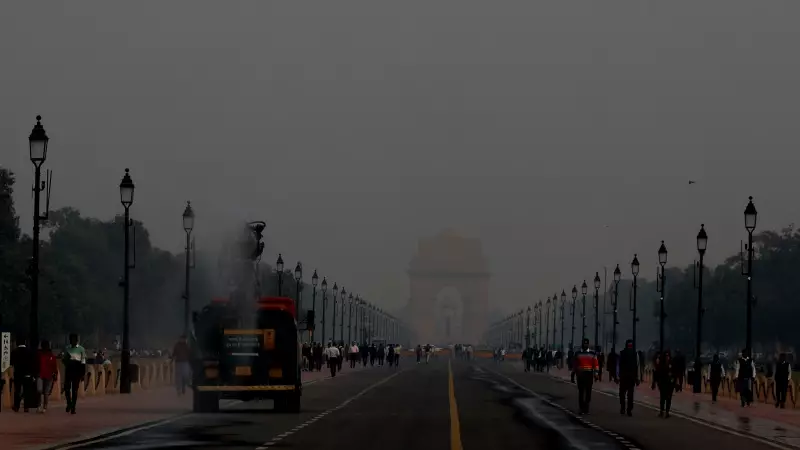
In a significant move to tackle its persistent air quality crisis, the Delhi government has announced a comprehensive new study to identify the precise sources of pollution plaguing the capital. The decision, announced by Environment Minister on Saturday, December 7, 2025, comes amid severe air quality and acknowledges that the current strategy is based on an outdated 2018 report.
Out with the Old: A Long-Awaited Fresh Analysis
The government has decided to sign a Memorandum of Understanding (MoU) with IIT Delhi and the Indian Institute of Tropical Meteorology (IITM) in Pune to conduct this fresh source-apportionment study. The study aims to deeply understand where the pollution is originating from, its extent, and localized pollution characteristics. This move is critical as the existing clean-air action plan, which directs various departments on anti-pollution measures, has not been updated since 2018, relying on data that is now seven years old.
The Minister highlighted that a subsequent study completed in 2023 was not accepted by the government, leaving a major data gap. This announcement follows a directive from the Prime Minister's Office on October 23 to the Commission for Air Quality Management (CAQM) to expedite new emissions inventory and source-apportionment studies for the Delhi-NCR region.

Expanding the Fight: From Hotspots to Holistic Action
The new study is expected to identify both citywide and area-specific pollution patterns, leading to a crucial revision of pollution hotspot mapping. Previously, actions were based on a list of only 13 hotspots. Now, Delhi Police has identified 62 "high-traffic" pollution hubs, indicating a more granular understanding of the problem.
Simultaneously, the government has rolled out a multi-pronged enforcement and mitigation strategy for the ongoing winter season:
- The Delhi Pollution Control Committee (DPCC) will hire 100 surveyors for a year-long, door-to-door audit of roads, potholes, and dust-mitigation status, including third-party verification.
- Deputy Commissioners and MCD officials have been instructed to conduct a seven-day survey of all industrial areas to list polluting units and identify illegal industries.
- Enforcement has been ramped up, with 750 construction site inspections leading to 556 notices, Rs 7 crore in penalties, and 48 site closures. In just two days, 230 inspections across major government departments resulted in Rs 1 crore in penalties, even for government entities.
- Challans for vehicle-emission violations (PUC) have nearly doubled to approximately 8 lakh this year, compared to 4.33 lakh last year.
- A total of 1,823 enforcement teams are deployed, issuing 536 challans for dust mitigation failures and 633 for open burning.
Winter Measures and Infrastructure Boost
To address the specific issue of winter bonfires, a major source of localized pollution, the government has initiated a drive to distribute 10,000 heaters citywide. Thousands of heaters have already been distributed across 1,407 Resident Welfare Associations (RWAs) for use by labourers and security guards.
Under the direction of Chief Minister Rekha Gupta, strict orders have been passed against biomass burning, with Delhi Police, MCD, and NDMC instructed to take stringent action. Furthermore, the Environment Department is funding 1,000 additional litter pickers and 100 new Mechanical Road Sweepers (MRS), including compact machines for narrower roads below 60 feet wide. A senior CAQM official noted this will help democratize cleaning and water sprinkling in unauthorized colonies and narrow lanes.
This comprehensive approach, combining fresh scientific analysis with aggressive on-ground enforcement and preventive welfare measures, marks Delhi's renewed attempt to breathe easier and move beyond strategies based on outdated information.