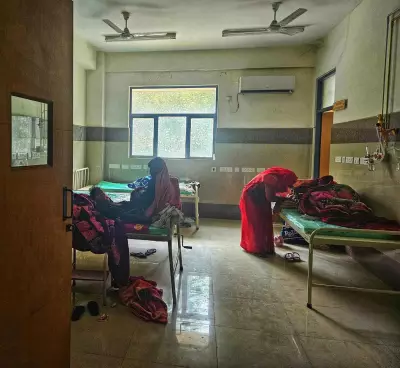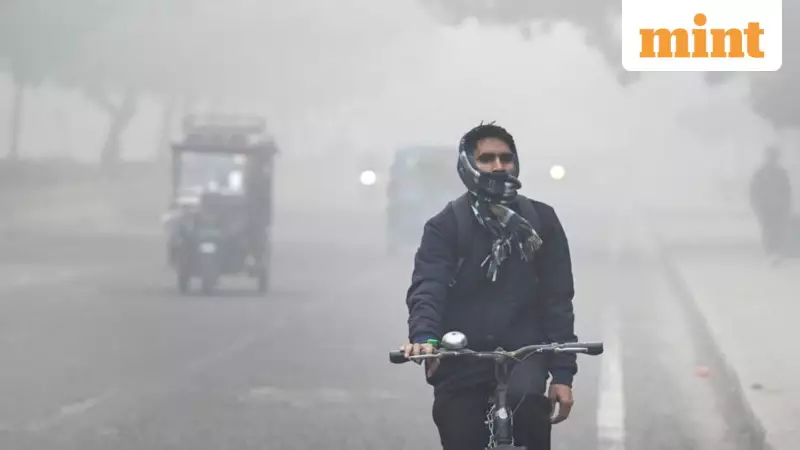
Residents of India's capital, Delhi, experienced a slight reprieve in air quality on Tuesday morning, but the persistent toxic haze has ignited a critical public health debate. With pollution levels still entrenched in the 'very poor' category, many are questioning whether the routine of morning walks and jogs in parks is doing more harm than good. Fresh international research offers a complex answer, indicating that while exercise remains beneficial, dangerously polluted air significantly diminishes its protective effects.
Delhi's Persistent Pollution Crisis
Official data recorded Delhi's Air Quality Index (AQI) at 377 on Tuesday, 16 December, marking an improvement from the severe level of 498 seen a day earlier. Despite this drop, the air quality remained firmly in the 'very poor' category, with dense smog reducing visibility as morning temperatures plunged to 8.3°C. The situation was even more dire in several parts of the city, where pollution levels were still classified as 'severe'.
According to the Central Pollution Control Board (CPCB), 11 out of 40 monitoring stations reported severe air quality by 9 am. Areas like Jahangirpuri, Mundka, and Wazirpur recorded some of the highest AQI readings in the city, hitting 426, as per data from the CPCB's Sameer app. This grim reality forces a pressing question for health-conscious citizens: is outdoor exercise in such conditions helping or harming their well-being?

What Does the New Global Study Say?
A landmark study published in the medical journal BMC Medicine provides crucial insights. Conducted by an international team, including scientists from University College London (UCL), the research analysed health data from more than 1.5 million adults across the UK, Taiwan, China, Denmark, and the United States, tracked over a decade.
The findings confirm that regular physical activity continues to lower the risk of death from all causes, including cancer and heart disease. However, for individuals residing in areas with high air pollution, these life-saving benefits were noticeably reduced. The study specifically focused on the dangers of PM2.5 – fine particulate matter smaller than 2.5 micrometres that can penetrate deep into the lungs and bloodstream.
The protective effects of exercise began to weaken significantly when annual average PM2.5 levels reached 25 micrograms per cubic metre (μg/m³). Alarmingly, nearly 46% of the global population lives in areas exceeding this threshold. At even higher concentrations above 35 μg/m³, the benefits declined further, particularly concerning cancer mortality, a level affecting around 36% of people worldwide.
Practical Advice for Exercisers in Polluted Cities
Experts unanimously stress that people should not abandon physical activity altogether. Lead author Professor Po-Wen Ku of National Chung Hsing University in Taiwan emphasised, "Our findings emphasise that exercise remains beneficial even in polluted environments. However, improving air quality can greatly enhance these health gains."
Professor Andrew Steptoe from UCL noted that pollution undermines but does not erase the advantages of staying active. For cities like Delhi, where PM2.5 levels routinely surpass the study's danger thresholds, researchers recommend practical adjustments:
- Check daily air quality forecasts before heading out.
- Choose cleaner, less trafficked routes for walking or jogging.
- Exercise during times of relatively lower pollution, typically in the afternoon.
- Reduce the intensity of your workout on heavily polluted days.
- Shift to indoor activities, like gym workouts or yoga, when the AQI is severe.
The study's authors acknowledged limitations, such as most data coming from high-income countries and a lack of detail on indoor air quality. Nevertheless, the research accounted for numerous variables like income, education, and smoking habits.
For Delhi's residents, the message is clear: continue exercising, but do so wisely. The city's chronic pollution is eroding the full health potential of physical activity. This research adds urgent weight to calls for stronger policy action, highlighting that clean air is not merely an environmental concern but a fundamental prerequisite for a healthy life.