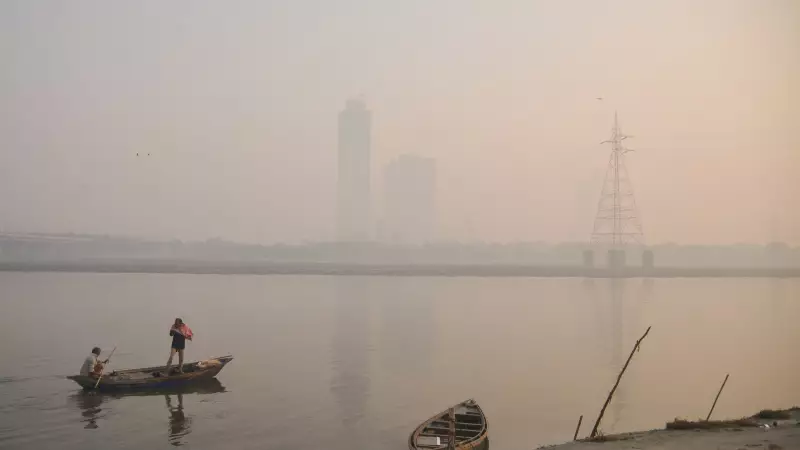
Delhi-NCR Air Quality Reaches Critical Emergency Levels
The air quality situation in Delhi-NCR has escalated into a full-blown public health emergency, with pollution levels reaching unprecedented hazardous levels. According to latest data from air quality monitoring platforms, several regions in Uttar Pradesh have recorded Air Quality Index (AQI) readings crossing the 1,000 mark, indicating severe health risks for residents.
Alarming PM2.5 and PM10 Levels Exceed Safety Limits
The particulate matter pollution has reached catastrophic proportions in the national capital region. PM2.5 levels were recorded at 384 μg/m³ at 7 AM on Wednesday, which is nearly 26 times higher than the World Health Organization's safety guideline of 15 μg/m3 for 24-hour exposure. This microscopic pollution penetrates deep into lungs and bloodstream, causing severe health complications.
Even more concerning is the PM10 pollution situation. The WHO recommends that PM10 exposure should not exceed 45 μg/m3 in 24 hours, but Delhi-NCR recorded 517 μg/m3 at 7 AM on Wednesday - approximately 12 times above the safe limit. These larger particulate matters contribute significantly to the visible smog and respiratory problems.

NCR Cities Dominate India's Most Polluted List
The pollution crisis has engulfed the entire National Capital Region with devastating intensity. Noida recorded an AQI of 576 while Greater Noida registered 548 at 7 AM on Wednesday. Other severely affected areas include Faridabad in Haryana with AQI 531 and Gurugram at 398. The overall AQI for Delhi reached 543 at the same time period.
Medical experts equate breathing Delhi's air to smoking more than 12 cigarettes per day, highlighting the severe health implications for the region's millions of residents. The pollution levels have been consistently rising since the withdrawal of monsoon in north India, with no signs of improvement in the immediate future.
Indian Cities Top Global Pollution Charts
The severity of India's air pollution crisis becomes evident when examining global rankings. The top 59 most polluted cities in the world on Wednesday morning were all Indian cities, with Nagli Bahrampur in Uttar Pradesh leading at a hazardous AQI of 1030. Other severely affected cities include Khalilabad (668), Naultha (635), Ghaziabad (633), and Sonipat (629).
The first non-Indian city on the pollution list was Lahore, Pakistan at rank 60, underscoring the concentrated nature of the air quality crisis in northern India. The data reveals that the pollution problem extends far beyond Delhi, affecting urban centers across multiple states in northern India.
Health authorities have issued warnings for vulnerable groups including children, elderly, and people with pre-existing respiratory conditions to avoid outdoor activities and use high-quality pollution masks when venturing outside. The continuing deterioration of air quality poses significant long-term health risks for the region's population.